If you're searching for a kingwood probate attorney, there's a good chance you're dealing with more than paperwork. You may be sorting through a parent's files at the kitchen table, answering questions from siblings, or wondering why a bank won't let you access an account even though everyone agrees what your loved one wanted.
That moment catches many Kingwood families off guard. One week you're grieving. The next, you're hearing terms like "executor," "letters testamentary," and "estate administration," and it can feel like the legal system expects you to become an expert overnight.
It doesn't.
Probate is a structured process. It's not always quick, and it isn't always simple, but it is manageable when you understand the steps. For families in Kingwood, Humble, Porter, and Northeast Houston, the most helpful starting point is local guidance that reflects how probate operates in Harris County, not just a generic summary of Texas law.
A Compassionate Guide for Kingwood Families Facing Probate
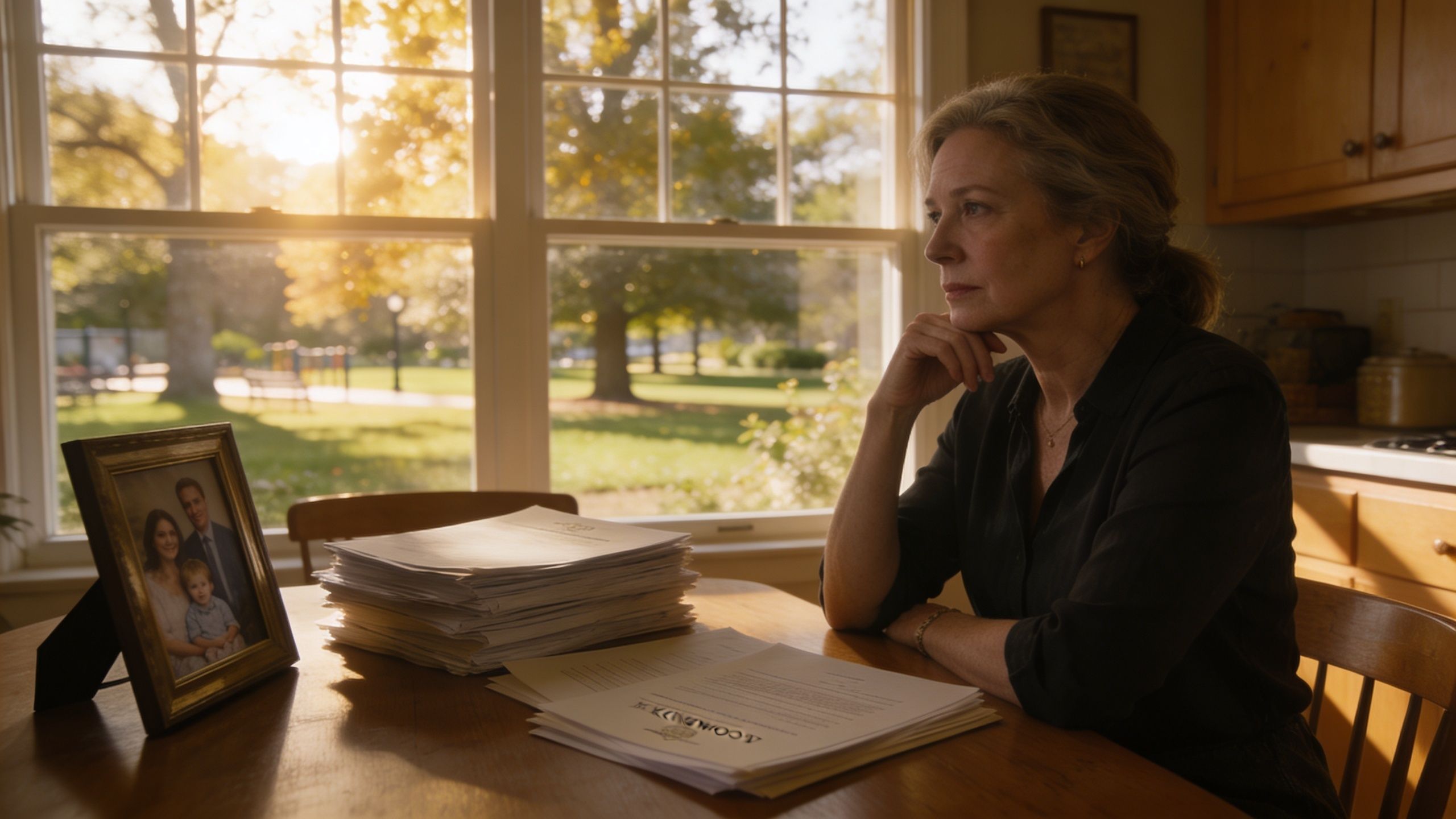
A neighbor in Kingwood loses her father. He owned a home, had a will, and kept most things in order. Still, within days, practical questions start piling up. Who files the will? How long does probate take? Can bills be paid? When do beneficiaries get involved?
Those are normal questions. Probate often arrives during one of the hardest seasons a family will ever face. The legal process can seem cold at first, but the purpose is straightforward. Texas uses probate to confirm authority, protect property, and make sure the right people receive the right assets.
For Kingwood families, local context matters. Over 25% of Kingwood residents are age 55 or older, average property values exceed $400,000, and the area is served by 24 specialized probate attorneys, which shows why clear local probate guidance matters for this community according to Avvo's Kingwood probate attorney directory. In a community with longtime homeowners, blended families, and retirees, estate issues aren't rare. They're part of everyday life.
Why families often feel stuck at the beginning
Those facing probate aren't confused about their loved one. They're confused about the system.
They usually know who the children are, what house is involved, and whether a will exists. The uncertainty comes from questions like these:
- What happens first: Do you file something with the court before talking to banks or title companies?
- Who has authority: Is the person named in the will automatically in charge, or does a judge have to approve that first?
- What if something is missing: Can probate still move forward if you can't immediately find every account statement or deed?
Probate doesn't require you to know everything on day one. It requires an orderly process.
A good local lawyer helps turn anxiety into a checklist. That's often the biggest relief. Instead of trying to solve everything at once, you focus on the next correct step.
What local guidance should feel like
If you're in Kingwood or nearby Humble, probate guidance should feel plainspoken and practical. You shouldn't need a dictionary to understand what the court expects. You should leave a meeting knowing what documents to gather, what timeline to expect, and what decisions can wait.
That kind of support matters because probate isn't just about legal forms. It's about helping a family move from uncertainty toward closure.
Understanding Probate and Its Role in Texas
Probate is the legal process of wrapping up a person's financial affairs after death. A simple way to think about it is this: probate closes the final financial chapter of a person's life. It gives the court a chance to confirm a will, recognize the right person to act for the estate, address debts, and transfer property properly.
Without that process, many assets can get stuck. A bank may freeze an account. A title company may refuse to transfer real estate. Family members may agree on what should happen, but agreement alone usually isn't enough when assets were held only in the deceased person's name.
Why probate exists
Texas probate law isn't there to create busywork. It serves a few practical purposes:
- It validates the will. The court checks whether the document can be accepted.
- It confirms authority. The executor or administrator needs legal authority to act for the estate.
- It creates an orderly process. Creditors, beneficiaries, and institutions all need clarity.
- It supports clean transfer of title. This matters a lot when a home or land is involved.
For many families in Northeast Houston, the home is the biggest concern. Even when everyone agrees the property should pass to a surviving spouse or child, title issues can linger if probate isn't handled correctly.
When probate is usually required
Probate is commonly needed when property was owned only in the deceased person's name. That often includes a house, a bank account, or other assets without a joint owner or named beneficiary.
It may be less necessary, or sometimes avoidable, when assets pass automatically outside probate. Examples can include property held in certain forms of joint ownership, accounts with beneficiary designations, or assets already placed in a trust. The key point is that every asset has its own transfer rules. One estate can contain both probate and non-probate property.
Practical rule: The question isn't "Did my loved one have a will?" The question is "What assets need court authority to transfer?"
That distinction trips people up all the time. A will doesn't avoid probate by itself. In many cases, the will is the document you bring into probate so the court can honor it.
A point people often confuse with probate
Many families also worry about taxes and assume probate means an inheritance tax bill is coming. That's a separate issue. If you're trying to understand the broader tax side of inheritance, this 2025 inheritance tax guide offers a useful plain-English overview of how inheritance tax concepts work generally.
Probate with a will and probate without one
When there's a valid will, the court's job is often more direct. The judge decides whether to admit the will to probate and whether the named executor can serve.
When there's no will, Texas law still provides a path. The estate doesn't disappear. Instead, the court and Texas inheritance rules determine who receives property and who can administer the estate. That usually creates more questions, more paperwork, and more room for disagreement among relatives.
For that reason, families in Kingwood often feel immediate relief by locating the original will and getting clear advice about whether probate is necessary. Once you know that answer, the rest of the process becomes much easier to map out.
The Texas Probate Process Step by Step in Harris County
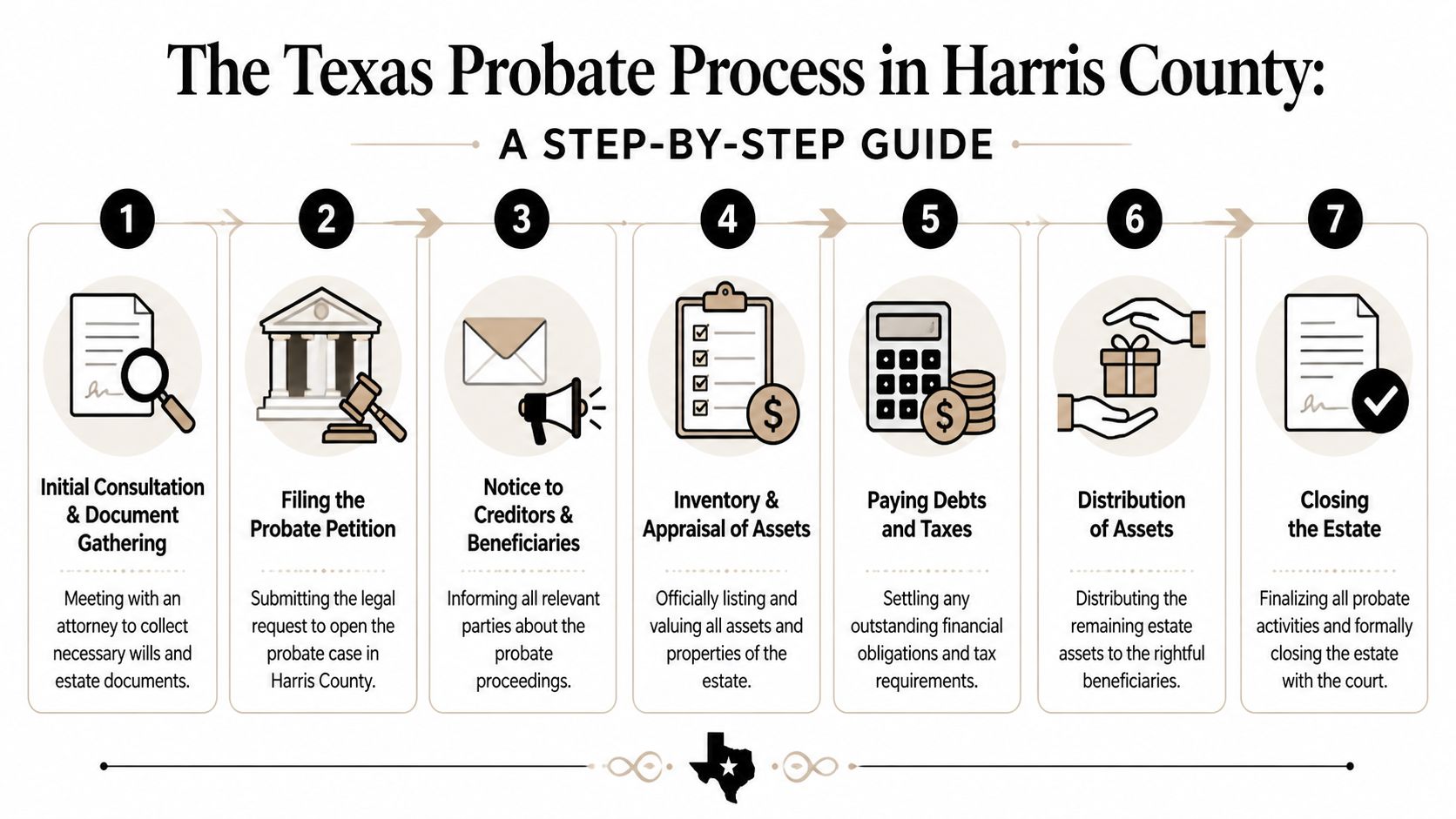
When a Kingwood family opens a probate case, the process usually runs through the Harris County probate court system. That local detail matters because probate isn't just a state-law concept. It's something that happens in a specific courthouse, with specific filing requirements, timelines, and judicial procedures.
Harris County probate courts handle over 10,000 new probate cases annually, and 70-80% of Texas probates move forward as independent administrations, which can shorten the process from over a year to about 6-9 months according to McNamara Law Office's Kingwood probate overview. For many families in Kingwood and Porter, that means the process is often more efficient than they fear.
Step one starts before anything is filed
Before a case reaches the courthouse, the executor or family usually gathers key documents. That often includes the original will, a death certificate, basic asset information, and a list of close family members.
This early stage matters more than people think. If names, dates, or property descriptions are inconsistent, delays can start before the case even gets moving.
A helpful practical reference for this stage is this guide on how to probate a will in Texas, especially if you're trying to understand what paperwork tends to come first.
Filing the application with the court
The formal process begins when an application is filed in the appropriate probate court. In plain terms, this filing asks the court to open the estate and recognize the legal basis for moving forward.
If there's a will, the filing typically asks the court to admit the will to probate and appoint the named executor. If there isn't a will, the filing asks the court to appoint an administrator under Texas law.
The posting period and hearing
After filing, the court requires a waiting period before the hearing can take place. This step gives the public notice that a probate application has been filed.
At the hearing, the judge reviews the application and supporting proof. In many uncontested cases, this is a focused, procedural hearing rather than a dramatic courtroom event. The court wants to know whether the will is valid, whether the applicant is qualified, and whether the estate should move forward in the requested form.
A probate hearing in Harris County is often less about conflict and more about confirming authority.
Official appointment and legal authority
Once the court approves the application, the executor or administrator receives official authority to act. This is the point when banks, financial institutions, and others are far more likely to cooperate because the estate representative can show court-issued proof of authority.
That authority is important for basic tasks like collecting funds, communicating with institutions, and handling property matters tied to the estate.
Inventory, notices, and early administration tasks
After appointment, the estate representative starts identifying what the estate owns and what the estate owes. This usually includes gathering account information, reviewing real property records, valuing assets, and making required notices.
Families often underestimate this part because it doesn't look dramatic. But it is here that order is created. If the inventory is sloppy, later distribution can become difficult.
Typical early tasks include:
- Locating property: homes, vehicles, accounts, personal items, and business interests if any exist
- Identifying obligations: mortgages, final bills, taxes, and other possible claims
- Communicating with beneficiaries: keeping expectations realistic and reducing misunderstandings
- Protecting assets: making sure property isn't neglected, lost, or transferred improperly
Paying valid obligations before distribution
One of the biggest misconceptions in probate is that the executor should quickly hand everything out to the family. Usually, that would be a mistake.
The estate must first deal with valid debts, expenses, and administrative requirements. This doesn't mean every demand is automatically legitimate. It means the representative has to evaluate claims carefully before making final distributions.
For Kingwood families, this issue often appears when a home is involved. The mortgage may still need attention. Insurance may need to stay in place. Utilities may need to remain active for a time. Probate is partly about legal authority, but it's also about responsible property management.
Distribution and closing the estate
Once the estate is ready, the remaining property can be distributed according to the will or, if there isn't one, according to Texas law. In an independent administration, this part is often more efficient because the executor doesn't need the same level of court approval for every act.
Final distribution can include transferring title to real estate, closing estate accounts, and documenting what each beneficiary receives. When done carefully, this gives the family a clean legal record and reduces the chance of future disputes.
Where confusion usually happens
Most delays don't happen because the court is mysterious. They happen because one of these issues appears:
- The original will can't be found
- Asset information is incomplete
- Family members expect immediate access to funds
- Real estate title issues surface
- Someone confuses independent administration with no oversight at all
Independent administration is simpler, but it still requires the executor to follow the law and act carefully.
Local insight: In Harris County probate, the smoothest cases usually come from strong preparation, accurate filings, and clear family communication.
That combination often matters as much as the legal documents themselves.
Navigating Different Types of Probate Administration
Not every estate follows the same track. Texas offers several probate paths, and choosing the right one can affect cost, timing, and how much court involvement the family will face. For a Kingwood resident, that choice often comes down to one practical question: how simple or complicated is this estate, really?
Independent administration
This is the route many families hope for. The court appoints the executor, but after that, the executor usually has more freedom to handle estate tasks without returning to court for approval at every turn.
That makes independent administration a good fit when the will supports it, the family is cooperative, and the estate isn't tangled in major disputes. It still requires organization and careful recordkeeping. It just avoids extra layers of court supervision.
Dependent administration
Dependent administration involves more court oversight. The estate representative may need approval before taking important actions.
This path can be necessary when there are disputes, concerns about handling money or property, or other complications that call for tighter supervision. It can protect interested parties, but it also tends to be slower and more burdensome for the person administering the estate.
Muniment of title
Some estates qualify for a much simpler option. For estates with no unsecured debts, probating a will as a muniment of title under Texas Estates Code § 257.001 can reduce the probate timeline to 1-3 months and cut legal fees by 50-70% compared with a full administration, as explained by Currin, Wuest, Mielke, Paul & Knapp's Kingwood probate resource.
This option can work well when the main goal is transferring title, often to real estate, and there isn't a need for a full estate administration. It isn't available in every case, but when it fits, families often appreciate how direct it can be.
Comparing Texas Probate Administration Options
| Feature | Independent Administration | Dependent Administration | Muniment of Title |
|---|---|---|---|
| Court involvement | Lower ongoing supervision | Higher ongoing supervision | Limited after court approval |
| Best fit | Cooperative estates with a workable will | Estates with conflict, risk, or complexity | Estates with a valid will and no unsecured debts |
| Executor role | Active management with fewer routine approvals | Actions often require court approval | Usually no full executor administration after approval |
| Speed | Often more efficient than heavily supervised probate | Usually slower because of added oversight | Can be very fast when the estate qualifies |
| Cost impact | Often more manageable than dependent administration | Often higher because of extra procedure | Often lower when available |
| Common concern | People may underestimate the paperwork | Families may feel the court process is heavy | Not available if the estate doesn't meet the legal requirements |
How families decide which path fits
The answer usually depends on a few facts:
- Whether there's a valid will: A clear will often opens the door to more efficient options.
- Whether debts are simple or not: Debt structure can affect whether muniment of title is available.
- Whether relatives are getting along: Even a modest estate can become difficult if family members don't trust each other.
- Whether someone died without a will: If that's your concern, this discussion of probate without a will in Texas can help you understand the starting point.
A lot of people want a one-size-fits-all answer. Probate doesn't really work that way. The better approach is to match the procedure to the estate in front of you. That's where a local lawyer can save a family from choosing a path that looks simpler on paper than it will be in real life.
The Essential Role of a Kingwood Probate Attorney
A lot of Kingwood families reach the same moment. The funeral has passed, the mail keeps coming, and someone says, "I guess we need to do probate." Then the practical questions start. Which Harris County court handles it? What has to be filed first? How long will the executor be waiting before a bank or title company accepts their authority?
A kingwood probate attorney helps turn that fog into a plan. For an executor, probate can feel like being handed the keys to a machine without an owner's manual. The job is manageable, but only if someone explains what each step does and what order it goes in.
What an attorney actually does in probate
In Harris County, small mistakes early in the case can slow everything down later. A lawyer's job is to help the executor start cleanly, respond correctly, and keep the estate moving.
That usually includes:
- Preparing the court filings: drafting the application and supporting papers so the probate case begins on solid footing
- Getting ready for the hearing: checking that the will, death certificate, and other required proof are in order before the court date
- Helping the executor qualify: walking the executor through the oath, bond questions, and the steps needed to receive legal authority
- Explaining notice and inventory duties: helping the executor understand who must be notified and what information must be gathered
- Working through delays: addressing creditor claims, title problems, missing records, or questions from beneficiaries
- Handling transfer and wrap-up: helping move property to the right people and documenting the final steps properly
A lawyer also gives families a more realistic sense of timing. Probate does not move at the speed of family expectation. It moves according to court procedure, required notices, and the details of the estate. If you want a clearer picture of the timeline, this guide on how long probate can take in Texas helps explain what affects the pace.
Why local Harris County experience matters
Probate in Texas follows state law, but the day-to-day experience still feels local. For a Kingwood resident, that often means dealing with Harris County filing practices, hearing settings, clerk requirements, and practical issues tied to property in this area.
That local context matters more than people expect.
An inherited home in Kingwood may need more than a copy of the will before a title company is comfortable. A bank may ask for letters testamentary and identification the executor did not realize would be needed. A family with relatives living outside Texas may need extra coordination to get signatures, notices, or documents handled correctly.
A lawyer who regularly helps families in Kingwood, Humble, and Northeast Houston can often spot those friction points early. That saves time, but just as important, it lowers confusion.
Good probate guidance is calm, organized, and specific. It tells a family what needs attention now, what can wait, and what the court is likely to expect next.
An attorney also brings structure to family communication
Some probate cases are legally simple and still feel tense. Grief changes how people hear things. A delayed response can look suspicious. A routine court wait can feel personal.
An attorney helps by giving the family a shared roadmap. Instead of one relative explaining everything from memory, updates can be tied to actual probate milestones. Filed. Set for hearing. Executor qualified. Inventory prepared. Property ready for transfer.
That structure often prevents small worries from turning into lasting conflict.
Many local families prefer that kind of steady help instead of piecing together forms and deadlines on their own. The Law Office of Bryan Fagan – Kingwood TX Lawyers provides probate-related legal services in Kingwood, including estate administration, wills, trusts, and related guidance for local families.
Peace of mind has practical value
People sometimes assume they only need a lawyer if someone is fighting. In reality, peaceful estates benefit too. Probate is part paperwork, part timing, and part judgment. Missing any one of those can create avoidable delays.
A probate attorney helps the executor make informed decisions instead of educated guesses. For a family already carrying enough, that clarity matters.
Common Probate Complications and How to Handle Them
The smooth version of probate is only part of the story. Real estates often come with missing papers, family tension, or property questions that don't fit neatly into a checklist. That doesn't mean the process is doomed. It means the approach has to adjust.

Will contests and beneficiary conflict
A will contest doesn't always begin with a dramatic accusation. Sometimes it starts with a quiet sentence like, "That doesn't seem like what Mom would have wanted."
When that happens, the first step is usually to stop informal arguments and get the legal issues clear. Is someone challenging the will's validity? Are they questioning capacity, execution, or outside influence? Those are legal questions, and they need a disciplined response.
If a beneficiary is merely upset or suspicious, consistent communication can help. If the dispute is more serious, the estate may need a more formal path with stronger court oversight.
Missing assets and incomplete records
Some estates look simple until the executor starts hunting for information. A deed may be in one county, a bank account in another, and old paperwork may not match current account titles.
Methodical work is vital. The executor and attorney often need to review mail, tax records, account statements, prior deeds, and digital records to create a complete picture of the estate. The process can be slow, but it is solvable.
A lot of executors also want to know whether a delay is normal. If you're trying to gauge timing concerns, this resource on how long probate takes in Texas can help put common delays into context.
Some probate problems aren't legal disputes at all. They're organization problems that need patient, thorough work.
Debts, claims, and pressure to distribute too soon
Executors often feel pressure from relatives who want the estate wrapped up quickly. But moving too fast can create personal risk if debts, taxes, or claims haven't been handled correctly.
The safer approach is to slow down, verify obligations, and document decisions carefully. A beneficiary may not love that answer in the moment, but careful administration protects everyone involved.
Digital assets are becoming a real probate issue
One area many older probate guides barely mention is digital property. Recent Texas laws expanded an executor's access to online accounts, and related search queries have risen by 40%, making digital assets an increasingly important probate issue, as noted by Super Lawyers' Kingwood probate listings page.
That matters because modern estates can include:
- Cryptocurrency holdings: access may depend on passwords, wallets, or private key information
- Online financial accounts: statements and notices may exist only in email or app portals
- Social media and cloud storage: these may hold personal records, photos, or business information
- Subscription and payment platforms: recurring charges may continue unless someone identifies them
Many executors don't realize these assets exist until they find clues on a phone, laptop, or password manager.
Here's a helpful overview of probate issues to keep in mind:
When the right move is to pause
Not every probate challenge should be solved immediately. Sometimes the smartest decision is to pause distributions, gather more records, and get legal advice before taking another step.
If something feels unclear in probate, rushing rarely fixes it. Careful review usually does.
For families in Kingwood and Humble, that's often the moment when professional guidance becomes most valuable. Complications are stressful, but they aren't unusual. They just need the right response.
Choosing the Right Probate Lawyer in the Kingwood Area
A Kingwood family often reaches this point after a long week. There is a death certificate on the kitchen table, a will in a folder, and a lot of uncertainty about what Harris County will require next. Choosing a probate lawyer can feel like one more heavy decision at the worst possible time.
A good first meeting should lower the temperature. You should come away with a clearer sense of the court process, the likely timeline, and what needs attention first.
In Kingwood, local experience matters for a simple reason. Your case will usually run through Harris County procedures, not a generic Texas checklist. A lawyer who regularly handles probate in this county can explain practical details that families here face, such as where filings go, how long it may take to get a hearing, and what paperwork tends to slow things down.
Questions worth asking in the first meeting
The first consultation is less like a sales pitch and more like checking a trail map before a long walk. You want to know where you are, what the path looks like, and where the steep parts may be.
Questions that often help include:
- How often do you handle probate cases in Harris County? Court habits and expectations can differ from county to county, so local experience is useful in a very practical way.
- What type of probate do you think this estate may need? The answer helps you understand whether your family is likely dealing with a simpler process or a more involved one.
- What usually happens first in a case like mine? This helps you sort urgent tasks from items that can wait a week or two.
- Who will keep me updated? Some firms have the attorney call directly. Others rely more on staff. Neither approach is wrong if it is explained clearly.
- What documents should I bring now? That can save you from making repeat trips and guessing at what matters.
- What problems do you see early? A careful lawyer should be able to spot missing documents, title issues, family disagreements, or questions about creditors before they grow.
Signs a lawyer is likely a good fit
Clarity matters more than polish.
A strong probate lawyer usually explains the process in plain English, ties the advice to your actual facts, and gives you a realistic picture of timing in Harris County. If the lawyer can explain probate the way a neighbor would explain a road detour, with simple directions and no extra fog, that is a good sign.
It also helps when the lawyer listens before answering. Probate cases often turn on details that seem small at first. A remarriage, an out-of-state child, a house deed that was never updated, or a bank account with a named beneficiary can all change the path.
Respect matters too. Families dealing with grief do not need a lecture. They need a steady guide who can answer repeated questions without making them feel foolish for asking.
Red flags to notice early
You can often tell in one meeting whether the relationship will be productive.
Be cautious if the lawyer is vague about the Harris County process, brushes past your questions, or offers broad promises without seeing the will and basic records. Probate is paperwork-heavy and deadline-sensitive. Carelessness at the start usually leads to confusion later.
Another warning sign is overconfidence about timing. No lawyer can reliably promise that every estate will move quickly. Court settings, missing documents, creditor issues, and family conflict can all affect the pace. A dependable answer sounds measured, not flashy.
You should leave a probate consultation feeling more oriented, not more overwhelmed.
How to make your decision easier
Many families compare two or three lawyers, which is often a wise approach. Listen for who explains the route most clearly, not who talks the longest. The right fit is often the person who can tell you, in order, what happens first, what can wait, and what could create delay in Harris County.
It may help to bring a short written list to the meeting: who died, whether there is a will, what property is involved, whether there are minor children, and whether anyone in the family already disagrees about next steps. That summary gives the lawyer something concrete to work from and usually leads to better answers.
Taking the next step
If you have recently lost a loved one, you do not need every document perfectly organized before you ask for help. Start with what you have. Bring the will if you can find it, a death certificate if one is available, and any questions that are keeping you up at night.
Law Office of Bryan Fagan – Kingwood TX Lawyers welcomes families from Kingwood, Humble, Porter, and Northeast Houston to schedule a free consultation at the Kingwood office. You can talk through your probate questions, get a practical sense of your options under Texas law, and leave with a clearer plan for what comes next.