
Being served with divorce papers is an incredibly jarring moment. For many in Kingwood, it can feel like your world has stopped. The first step toward regaining control, however, is knowing exactly how to respond to a divorce petition. In Texas, this means filing a formal document called an "Answer" with the court. Missing the strict deadline to do so can seriously jeopardize your rights, so it's critical to act deliberately and ensure your voice is heard.
You've Been Served—Now What?
That thick envelope from a process server can make your world stand still. Inside, you'll find the "Original Petition for Divorce," a document that officially kicks off a legal process that will redefine your future. For anyone living in Kingwood, Humble, or the surrounding Northeast Houston area, understanding what this petition actually is—and isn't—is the first crucial step to navigating this challenging time with confidence.
The petition lays out everything your spouse is asking the court to grant them in the divorce. It will touch on the big issues: the grounds for divorce, their proposal for dividing property and debts, and what they want for child custody and support. Read it carefully, but try to resist the urge to react emotionally. Right now, think of it as your spouse's opening offer or wish list, not the final word. Our team at The Law Office of Bryan Fagan is here to help you understand every line and what it means for you and your family here in Kingwood.
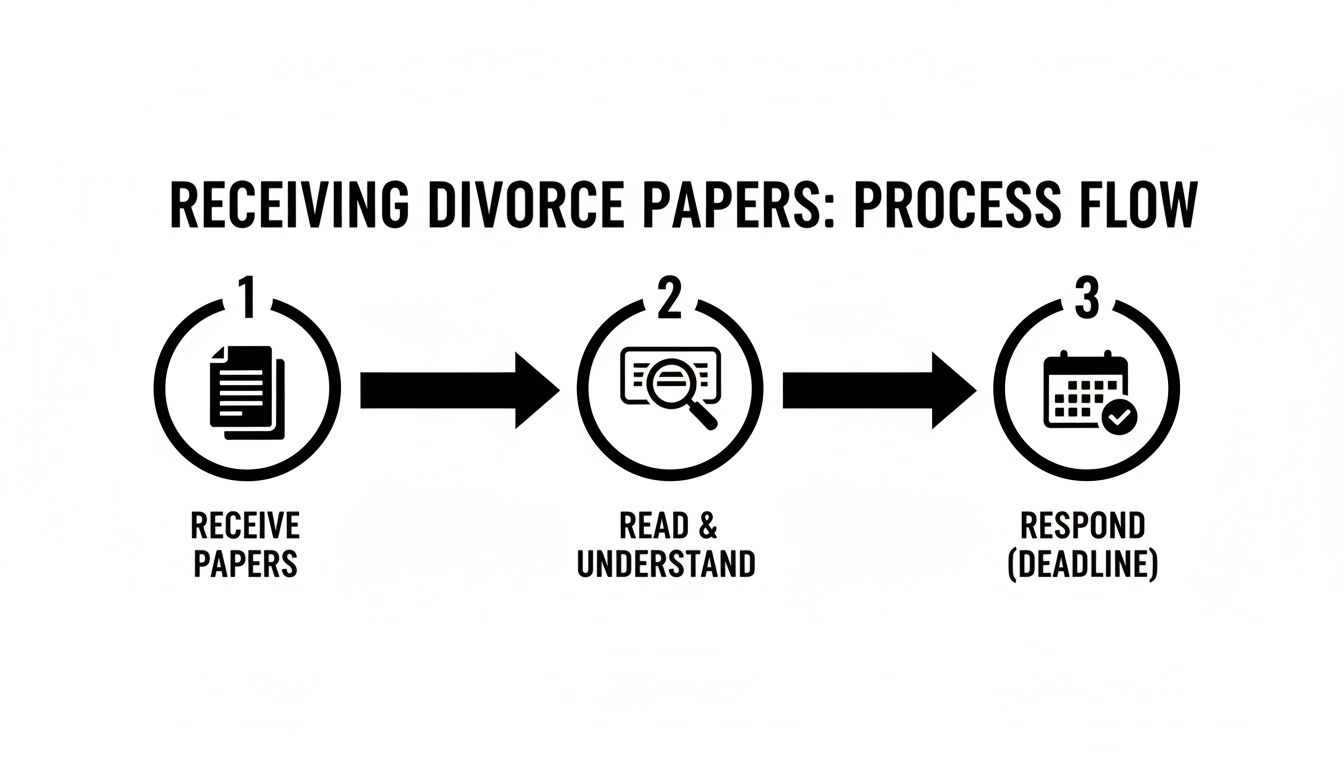
This visual breaks down the initial shock into a manageable, three-part action plan. It’s a great reminder to simply receive the papers, read them for understanding, and then prepare to respond before that all-important deadline.
Decoding the Petition and Finding Your Deadline
As you go through the paperwork, you'll run into legal jargon. The petition will identify the "Petitioner" (your spouse, who filed) and the "Respondent" (you). It will also list the specific "relief" they're seeking, which is just the legal term for the outcomes they want. This could be anything from asking for a lopsided share of your assets to requesting they be named the primary parent of your children.
But here’s the most critical piece of information for you right now: the response deadline. Texas law is very specific. Your deadline to file an Answer is by 10:00 a.m. on the Monday following the expiration of 20 days from the date you were served. If you miss it, your spouse can seek a default judgment, which is something you absolutely want to avoid.
What Is a Default Judgment and Why You Must Avoid It
Ignoring the petition is the single worst mistake you can make at this stage. If you fail to file your Answer on time, your spouse’s attorney can go to the judge and ask for a default judgment.
A default judgment means the court moves forward based only on your spouse's side of the story. Your silence is legally interpreted as agreement. A judge in Harris or Montgomery County could finalize the divorce on terms that are completely one-sided, permanently impacting your finances, property, and parental rights.
Filing an Answer prevents this. It’s your official notice to the court that you are participating and do not agree to what your spouse has requested. This one simple action preserves your right to negotiate, present your own evidence, and have your say in the outcome. It shifts you from a passive recipient to an active participant in shaping your own future.
To help our Kingwood and Humble neighbors get organized quickly, here is a quick-reference guide for your immediate next steps.
Immediate Steps After Receiving Divorce Papers
| Action Item | Why It Is Crucial | Local Tip for Kingwood Residents |
|---|---|---|
| Note the Date of Service | Your response deadline is calculated from this exact date. Write it down immediately. | Process servers in Harris and Montgomery Counties must file a "Return of Service" with the court. You can often look this up online to confirm the date. |
| Read the Entire Petition | You need to know exactly what your spouse is asking for regarding kids, property, and support. | Pay close attention to any mention of a Temporary Restraining Order (TRO), which may place immediate restrictions on your actions. |
| Do NOT Contact Your Spouse | Emotions are high. Any communication can be misconstrued or used against you later. | Let your actions—like hiring a local Kingwood attorney and filing your Answer—do the talking for now. Avoid texts, emails, and heated calls. |
| Secure Important Documents | Start gathering financial records, deeds, and tax returns. This will be essential for the next steps. | If you share a safe deposit box at a local bank like Woodforest or Chase in Kingwood, consult an attorney before accessing it to avoid accusations. |
| Consult a Local Attorney | An experienced family law attorney can explain your rights, protect you from mistakes, and file your Answer correctly. | Look for a lawyer who is familiar with the Harris County (Houston) or Montgomery County (Conroe) family court judges and procedures. |
Taking these initial actions helps ensure you are protecting your rights from day one.
The shock of being served is real, but you don't have to face this complex process alone. At The Law Office of Bryan Fagan, our Kingwood divorce lawyers are here to provide the clarity and guidance you need. We are a part of your community, and we are ready to help. We invite you to schedule a free consultation to discuss your situation and build a strategic plan for your response.
Filing Your Answer and Counterpetition
Now that you're clear on the timeline, it's time to focus on your formal response. This isn’t just about hitting a deadline—it's your first official move in the legal process. This is how you make sure the court hears your side of the story. Let’s break down what it means to prepare and file your "Answer" and how to move from a defensive position to a more strategic one.
By filing a formal response, you get to challenge the claims your spouse made in their initial petition. Instead of just reacting, you can proactively tell the court what you want when it comes to dividing property, child custody, and support. It’s a critical shift from being on the defense to becoming an active participant in shaping your future.

The Role of the Answer
Your first legal filing is called an Answer. At its core, the Answer is a "general denial." It’s a formal legal document that tells the court you don't agree with everything stated in your spouse's Original Petition for Divorce. Filing this is absolutely essential; it prevents a default judgment and protects your rights from the get-go.
Think of the Answer as officially raising your hand in the courtroom. It lets the judge and your spouse's attorney know you're present, engaged, and intend to have a say in every decision. For our clients here in Kingwood and Porter, this one document is the key that unlocks your ability to negotiate for a fair outcome.
Going Beyond the Answer with a Counterpetition
An Answer is necessary, but in our experience, it’s rarely enough. An Answer is purely reactive—it just denies the other side's claims. A much more powerful tool is the Counterpetition for Divorce. This document lets you go on the offensive by proactively telling the court what you want.
By filing a Counterpetition, you are no longer just responding to your spouse's wish list. You are submitting your own, putting your goals for property division, child custody, and financial support on the official court record. This transforms you from a Respondent into a Counter-Petitioner.
Here’s another key reason to file a Counterpetition: it gives you security. If your spouse suddenly decides to drop their divorce filing (a move called "non-suiting"), your case for divorce continues forward. It guarantees that the process moves ahead on your terms, too.
What to Include in Your Response
Whether you file a simple Answer or add a Counterpetition, the information needed is pretty straightforward. You'll provide some basic details and clearly state what you're asking the court to do.
- Identifying Information: This is the basic stuff—your name, your spouse's name, and the case number assigned by the Harris or Montgomery County District Clerk.
- Response to Allegations: The "general denial" part of your Answer handles this, formally disputing the claims made in the original petition.
- Your Requests (in a Counterpetition): This is where you get specific. Do you want to be named the primary parent for your children? Are you asking for a specific division of your Kingwood home? Do you need spousal support? This is where you lay it all out.
- Grounds for Divorce: In the Counterpetition, you'll also state your own grounds for the divorce. This can be a no-fault reason like "insupportability" or specific fault grounds if they apply to your situation.
Getting these facts down correctly is vital, as these initial documents create the foundation for your entire case. The financial and personal details you share here will also become central to the next phase of your divorce, which often involves a detailed process you can explore by learning more about what discovery is in a divorce proceeding.
Preparing Your Documents for a Northeast Houston Court
If you live in Northeast Houston, preparing these documents means getting the right forms, filling them out with 100% accuracy, and making sure they follow the local court rules for Harris or Montgomery County. While you can find standard Texas forms online, every single case has unique details that a template can't cover.
For example, a generic form won’t adequately protect your interests if you own a business in Humble or have complex retirement accounts. An experienced Kingwood attorney can draft a custom response that addresses the specific nuances of your finances and family, ensuring your goals are clearly articulated right from the start.
This isn't just about filling in blanks on a form; it’s about strategic positioning. Your Answer and Counterpetition set the tone for every negotiation, hearing, and potential settlement that follows. Taking the time to craft a thoughtful, comprehensive response is one of the most important investments you can make in your future.
What to Do While You Wait: Securing Stability with Temporary Orders
A full-blown divorce doesn't happen overnight. It can easily take months, sometimes longer, to finalize everything. But life doesn't just pause. Critical decisions about your kids, your home, and your money need to be made right now. This is exactly what Temporary Orders are for.
Think of them as the official ground rules for the separation period. They create much-needed stability and predictability while the divorce is in motion. For families here in the Kingwood area, getting these orders in place is one of the most important first steps you can take to keep things from spiraling out of control.
So, What Exactly Are Temporary Orders?
Temporary Orders are legally binding directives from a judge that tackle the most urgent issues immediately. They can stop one spouse from emptying a joint bank account, set up a temporary schedule for who has the kids and when, or decide who gets to stay in the house while the divorce plays out. Without them, the first few months of a divorce can be absolute chaos.
It's important to know these orders aren't set in stone forever—they only last until your divorce is finalized. But they are incredibly powerful because they establish the "status quo" for your family during a really tough time. They build a framework for co-parenting and handling finances that can dramatically reduce conflict and protect your rights from day one.
What Can a Judge Decide in Temporary Orders?
The great thing is that these orders are customized to your family's specific situation. A judge in Harris County or Montgomery County will look at your unique circumstances and make rulings on a whole host of immediate concerns.
Here are some of the most common issues we see addressed in Temporary Orders:
- Who Stays in the House? The judge can grant one spouse temporary exclusive use of the marital home in Kingwood.
- Kids' Schedules: A temporary possession schedule will be created, clearly outlining when each parent has the children. This is often called a temporary custody and visitation order.
- Financial Support: The court can order temporary child support and, if the situation calls for it, spousal support to make sure everyone's basic financial needs are being met.
- Paying the Bills: Orders will dictate who is responsible for the mortgage, car payments, credit card bills, and other monthly expenses.
- Protecting Your Assets: A judge can put restrictions in place to prevent either spouse from selling, hiding, or giving away community property before it can be fairly divided.
By getting these things sorted out upfront, you gain a sense of what to expect day-to-day. That predictability is invaluable, not just for you, but especially for your children as everyone adjusts to a new normal.
The Temporary Orders Hearing: Your First Day in Court
What if you and your spouse just can't agree on these initial issues? That’s when you’ll likely have a Temporary Orders Hearing. You can think of it as a mini-trial where a judge hears from both of you and then makes a decision. For folks in Kingwood, this hearing will probably be held at the courthouse in downtown Houston or over in Conroe.
At the hearing, you and your spouse (and your attorneys) will get to present evidence and testimony. This isn't just about telling your side of the story; it’s about backing it up with things like bank statements, text messages, emails, or even testimony from witnesses. When children are involved, the judge’s number one priority is making decisions that are in the best interest of the child.
A word of caution: The rulings made at a Temporary Orders Hearing often set the tone for the rest of the divorce. While they aren't technically permanent, judges really prefer to maintain stability. They're often hesitant to change a system that seems to be working, which makes it absolutely critical to put your best foot forward from the very beginning.
This is not a hearing you want to walk into unprepared. The outcome can have a massive impact on your finances and your relationship with your kids for the entire duration of the divorce. A good lawyer will help you gather the right documents, figure out what the other side might argue, and present your case clearly and effectively to the judge.
Taking Control from the Start
Knowing how to handle a divorce petition is about more than just filing the right paperwork. It’s about having a proactive strategy to protect your family, your finances, and your peace of mind—immediately. Requesting temporary orders is a huge part of that strategy. It shows the court you're serious about creating a fair and stable environment for everyone involved.
Whether you're worried about seeing your kids or just making sure the mortgage gets paid, temporary orders provide the legal backbone you need to navigate the coming months.
The team here at The Law Office of Bryan Fagan works in the Harris and Montgomery County courts every day. We know the judges and we know the process. We help our Kingwood clients walk into these crucial first hearings feeling prepared and confident. Schedule a free consultation with us today to talk through your specific situation and see how we can help you get the stability you and your family need right now.
Getting Your Response Filed and Served the Right Way
You've got your Answer and Counterpetition drafted. Now what? The next moves are all about procedure, but don't let that fool you—they are absolutely crucial. It's not enough to just have the documents ready; you have to officially file them with the court and then formally deliver them to your spouse’s attorney. This is how you legally step into the ring.
I’ve seen many folks in the Kingwood area get tripped up here. A simple mistake in filing or serving can lead to frustrating delays or, in a worst-case scenario, get your entire response thrown out. Following the proper legal steps ensures the Harris or Montgomery County court recognizes your documents and that your side of the story is officially on the record.

The Nuts and Bolts of Filing Your Answer
These days in Texas, almost everything happens online through a system called e-filing. This means either you or your lawyer will upload your signed Answer and Counterpetition directly to the District Clerk’s website for the county where the divorce was initiated.
For most of our Kingwood and Porter clients, that’s going to be either the Harris County District Clerk or the Montgomery County District Clerk. The system walks you through creating an account, finding your specific case number, uploading your documents as PDFs, and paying the required filing fee.
Heads up: Filing fees are set by the county and aren't optional. They usually cost a few hundred dollars. If you genuinely can't afford the fee, you might qualify to file a "Statement of Inability to Afford Payment of Court Costs." This is a formal request for the judge to waive the costs for you.
Once your documents are successfully uploaded and the fee is paid, you're halfway there. The next critical step is getting those papers to the other side.
What Does It Mean to "Serve" Documents?
After your papers are e-filed with the court, the law requires you to provide a copy to your spouse's attorney. This formal delivery process is known as "service of process." It’s a fundamental rule designed to make sure everyone in the case has a copy of all the paperwork and a fair opportunity to respond. You can't just text them a picture of it or drop it in the mail.
The Texas Rules of Civil Procedure are very specific about how this has to be done. Here are the typical ways to handle service for a response:
- E-service: This is the go-to method now. The state's e-filing system lets you send the documents directly to the opposing attorney's registered email, creating an instant and official record.
- Certified Mail: An old-school but still effective option. Sending the documents via certified mail with a return receipt requested gives you tangible proof they were delivered.
- Personal Delivery: This is more common for the initial petition, but a private process server or constable can also be used to physically deliver your response.
Properly documenting that you've served the other side is just as vital as filing the documents in the first place. This procedural step is a cornerstone of the legal process. If you want a bird's-eye view of the entire journey, our guide on the complete process of how to file for divorce in Texas provides a much broader look.
Filing and serving are technical hurdles, but they are the gatekeepers to having your voice heard in court. At The Law Office of Bryan Fagan, we navigate these procedures for our Kingwood clients every single day, making sure every detail is handled correctly and on time. Let us take the procedural stress off your shoulders. We invite you to schedule a free, no-obligation consultation at our Kingwood office to ensure your case starts on the right foot.
Why a Kingwood Divorce Attorney Is Your Best Advocate
Sure, Texas law allows you to respond to a divorce petition by yourself. But let’s be honest—the stakes couldn't be higher. The initial documents you file and the deadlines you meet don't just start the process; they set the entire tone for everything that comes next. Trying to handle this alone is like navigating the backroads between Kingwood and Conroe without GPS—you might get there eventually, but you're almost guaranteed to make some costly wrong turns.

Partnering with a seasoned Kingwood family law attorney is the single most important move you can make to protect your future. This isn't just about filling out forms correctly. It’s about having a skilled advocate in your corner who can craft a legal strategy built specifically for you and your family.
Beyond Paperwork: Strategic Legal Counsel
A good lawyer does so much more than just file your Answer. They are your strategist, your negotiator, and your shield, protecting you from common missteps that can have devastating, lifelong consequences. We’ve seen it happen too many times: people unintentionally sign away major rights or agree to terrible terms simply because they don’t grasp the long-term impact of the legal jargon.
For instance, a DIY response often completely overlooks the need to:
- Address Complex Assets: Properly valuing a local business, untangling retirement accounts like a 401(k), or tracing separate property brought into the marriage requires specialized financial and legal knowledge.
- Request Temporary Orders: Without these, what’s stopping your spouse from emptying the joint bank accounts or making unilateral decisions about where the kids will live while the divorce is pending? Nothing.
- Preserve Your Claims: A simple "general denial" isn't enough. A well-drafted Counterpetition is what actively asserts your requests for property division and a custody arrangement that works for you.
An attorney ensures these critical issues aren't just an afterthought—they become the foundation of your legal strategy from day one.
The real value of a lawyer isn't just in what they do, but in what they prevent. A proactive legal strategy anticipates challenges, closes loopholes, and protects you from emotional decisions that could harm your case down the road.
This is especially true for our Kingwood clients. Your life is rooted in this community. Whether it's protecting a family business in Humble, ensuring a fair outcome for the marital home in a Kingwood village, or creating a stable co-parenting plan, a local attorney understands exactly what's at stake. Knowing how to choose the right divorce attorney is the first critical step in that process.
The Advantage of Local Courtroom Knowledge
Every courthouse has its own culture, and every judge has their own way of looking at cases. An experienced Kingwood divorce lawyer from The Law Office of Bryan Fagan works in the Harris and Montgomery County court systems every single day. We know the local procedures, the judges' pet peeves and preferences, and the other attorneys in the community.
This local insight is a genuine advantage. It helps us:
- Present your case effectively: We know what kind of evidence and arguments resonate with local judges.
- Negotiate from a position of strength: Our familiarity with the local legal landscape helps us anticipate the other side's strategy.
- Navigate the system efficiently: We help you avoid the procedural mistakes and delays that frustrate so many people trying to represent themselves.
Your financial stability and your relationship with your children are far too important to leave to chance. Knowing how to respond to a divorce petition is the first step, but having a trusted advocate guide you through the maze is what truly leads to a secure outcome.
At The Law Office of Bryan Fagan, we are dedicated to serving our Kingwood neighbors with compassionate, client-focused representation. We invite you to schedule a free consultation at our Kingwood office to discuss your situation and learn how our team can protect what matters most to you.
Common Questions About Responding to a Divorce Petition
Getting served with divorce papers is a jarring experience, and it's completely natural for your mind to be racing with questions. Here in our Kingwood office, we've walked countless neighbors from Northeast Houston through this exact moment. To help bring some immediate clarity to the situation, here are the answers to the most common questions we hear.
What Happens If I Ignore the Divorce Petition Completely?
This is, without a doubt, the single worst thing you can do. When you ignore a divorce petition in Texas, you open the door for a default judgment.
If you don't file a formal "Answer" by the legal deadline, your spouse can go to court without you. They can ask the judge to finalize the entire divorce based only on what they’ve requested in their petition. A judge in Harris or Montgomery County could give them everything they've asked for—your property, your home, and even primary custody of your children—all without you ever saying a word.
The law basically sees your silence as agreement. To protect yourself, filing a timely response is absolutely non-negotiable.
Do We Have to Go to Court After I File My Response?
Not necessarily, and in most cases, you won't. Filing an Answer and maybe a Counterpetition is your way of pulling up a chair to the negotiating table. It doesn't automatically set you on a path to a courtroom showdown.
In reality, the vast majority of divorce cases right here in the Kingwood area get settled out of court through informal negotiations between attorneys or a more formal process called mediation. Your official response just secures your legal standing and guarantees your voice is heard. Court hearings really only come into play if you need temporary orders right away or if you and your spouse truly can't find common ground on the final issues.
Can I Move Out of Our Kingwood Home After Being Served?
Technically, you can, but this is a decision that requires serious caution and a conversation with an attorney first. Moving out of the marital home, particularly when you have children, can have major legal consequences you might not expect.
A judge could look at you moving out as creating a new "status quo." That snap decision could easily influence who gets temporary exclusive use of the house and might even become a factor in the final custody arrangement. It’s far more complicated than just packing a suitcase.
Before you make any drastic changes to your living situation, it's critical to get advice from a family law attorney. They can explain how a local judge might interpret that move and help you protect your rights to both your property and your children.
How Much Does It Cost to File an Answer?
When you file your Answer at the courthouse, you’ll have to pay a mandatory filing fee to the District Clerk. The exact cost can differ a bit between Harris and Montgomery counties, but you can generally expect it to be a few hundred dollars. It's a standard cost in any lawsuit.
If you're dealing with a true financial hardship and can't cover that fee, you can file a "Statement of Inability to Afford Payment of Court Costs." This is a sworn document you submit to the court asking a judge to waive the fees for you. As for what an attorney costs, that will depend on your specific situation, but our firm believes in being completely upfront about costs from our very first conversation.
Understanding how to respond to a divorce petition is a critical first step, but you don’t have to figure out the next ones by yourself. The experienced attorneys at The Law Office of Bryan Fagan – Kingwood TX Lawyers are here to offer the local insight and strong advocacy you deserve. We proudly serve our neighbors in Kingwood, Humble, and all across Northeast Houston, providing clear-headed guidance to protect your future. Schedule a free, no-obligation consultation today by visiting https://kingwoodattorneys.com.