A legal problem rarely starts in a lawyer’s office. It usually starts at a kitchen table in Kingwood, in a driveway in Humble after an arrest, or in a quiet conversation about what happens to the house, the kids, or a parent’s estate. You open a few browser tabs, read a state statute, skim a county court page, and end up with more questions than answers.
That confusion makes sense. Texas law is statewide, but people don’t live in the abstract. They live in neighborhoods, commute on familiar roads, raise families, run businesses, and deal with local courts, local procedures, and local consequences. That’s why broad legal rules can feel distant until they suddenly become personal.
Navigating the Texas Legal System from Kingwood
A statewide legal issue can feel bigger than it should. You may be dealing with divorce papers, a criminal charge, a contract dispute, or questions about a will, yet every answer online seems written for someone else. People in Kingwood, Porter, Humble, and Northeast Houston often run into the same problem. Texas law applies across the state, but the way a case unfolds still depends on deadlines, filings, county practices, and practical choices made early.
To understand the scale of modern court systems, consider this: a populous state like Florida handled over 3.2 million cases in a single year, including 211,400 family law cases and 558,651 criminal cases, and LawToolBox’s overview of legal services in the United States notes that Texas faces similar volume pressures. That matters because high-volume systems reward preparation, organization, and clear legal strategy.

A useful starting point is a broad library of general Texas law guides for Kingwood-area readers. If your issue touches immigration detention and a loved one is trying to secure release while the case moves forward, practical resources like how to get immigration bonds in Texas can also help you understand that separate process.
Practical rule: State law gives you the framework. Local guidance helps you apply it before a small mistake turns into a larger problem.
The phrase statewide topics without Kingwood angle might sound abstract, but the lesson is simple. Even when the law is statewide, your decisions are local. Where you file, what documents you gather, how you speak to police, when you update a will, or whether you send a demand letter first can shape what happens next.
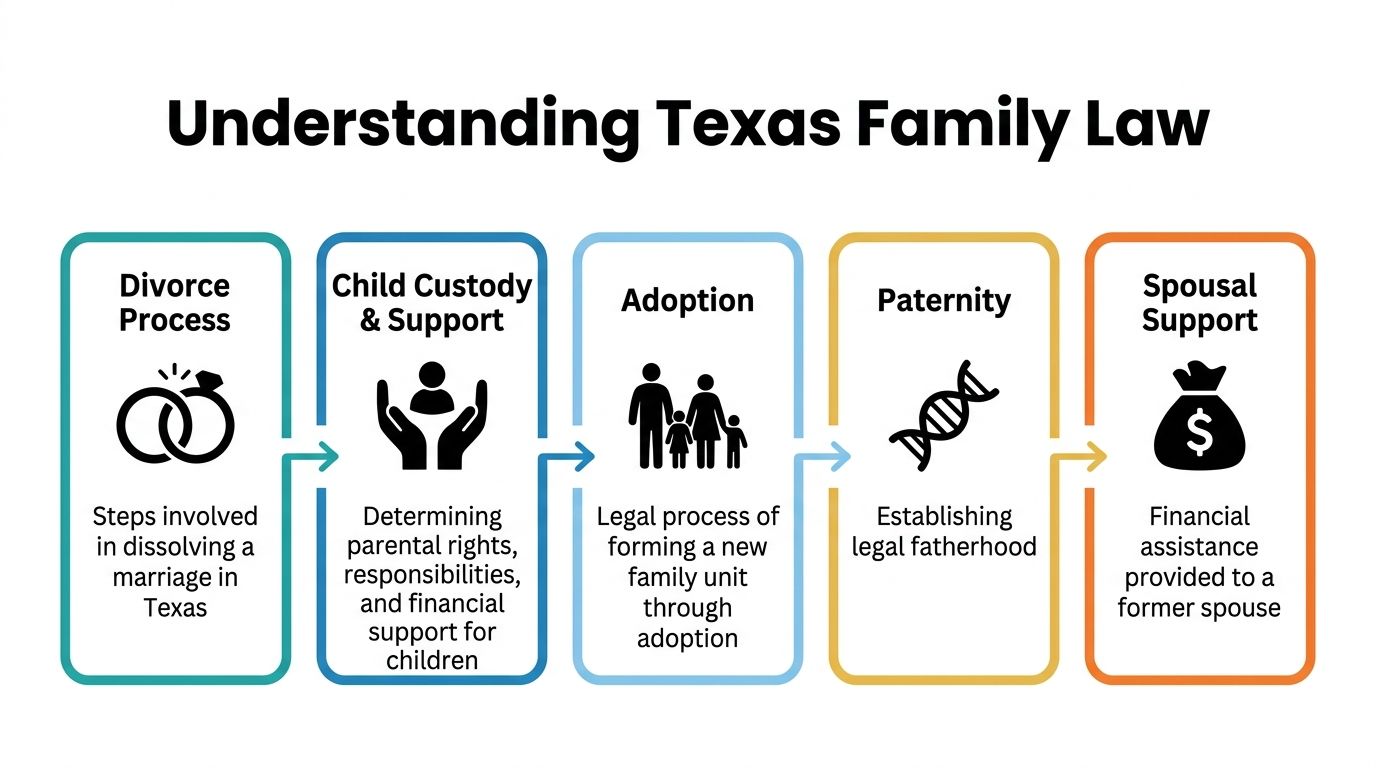
Understanding Texas Family Law
Family law is where statewide rules often collide with very personal facts. A couple in Kingwood may agree they need a divorce but disagree about the house. Parents in Humble may already share time with their child informally but need a court order that actually protects everyone. Texas law gives the basic rules, yet the hard part is understanding how those rules apply to your daily life.
Divorce in Texas starts with the right framework
Texas allows no-fault divorce, which means one spouse doesn’t have to prove the other did something wrong to ask the court to end the marriage. For many families in Northeast Houston, that lowers the emotional temperature and keeps the focus on practical questions. A helpful primer on that concept is this guide to Texas as a no-fault divorce state.
Divorce usually involves several issues at once:
- Ending the marriage: The court must enter a final divorce decree.
- Dividing property: The court addresses assets and debts.
- Addressing children: If the couple has children, the case also deals with conservatorship, possession, and support.
- Setting temporary ground rules: Early orders may address the home, bills, schedules, or communication while the case is pending.
People often assume divorce is only about who gets what. In practice, it’s also about creating a workable structure for the months and years after the order is signed.
Community property is simple in theory and complicated in real life
Texas is a community property state. In plain language, property acquired during the marriage is generally presumed to belong to the marital estate, while some property may be separate. That sounds clear until real life gets involved.
A Kingwood family might ask:
| Question | Why it matters |
|---|---|
| Was the home purchased before or during the marriage? | Timing can affect whether all or part of the equity is separate or community in character. |
| Did one spouse inherit money? | Inherited property may be treated differently from earnings received during marriage. |
| Were accounts mixed together over time? | Commingling can make tracing harder and increase disputes. |
| Who is responsible for debt? | Division involves liabilities too, not just assets. |
The most common point of confusion is this: title alone doesn’t always answer the ownership question. A car, account, or house may be in one person’s name, but the court can still examine when it was acquired and how it was paid for.
A property issue usually becomes more expensive when spouses wait too long to gather records.
Child custody is really about rights, duties, and routines
Texas uses the term conservatorship where many people say custody. The court looks at what arrangement serves the best interest of the child. That standard sounds broad because it is broad. Judges consider the child’s needs, each parent’s involvement, stability, communication, and the practical ability to meet daily responsibilities.
For parents in Kingwood and Humble, the main questions are usually concrete:
- Where will the child sleep on school nights?
- Who makes educational and medical decisions?
- How will pickups and drop-offs work?
- What happens on holidays, summer break, and birthdays?
- What process will parents use when plans change?
Texas courts often prefer detailed, realistic parenting plans over vague promises to “work it out later.” That’s because future conflict usually starts in the blank spaces.
Filing locally still matters
A family law matter may be governed by Texas statutes, but county procedure still matters. Residents in Kingwood may end up dealing with courts in Harris County or, depending on the circumstances, Montgomery County. Filing in the correct county, using the right forms, and meeting local scheduling requirements can affect momentum from the start.
Here are common early steps that help:
- Collect financial records: Gather bank statements, tax returns, pay information, mortgage records, and retirement documents.
- Write down the parenting routine: Judges and attorneys need facts, not rough impressions.
- Preserve key communications: Keep texts, emails, and calendars that clarify agreements or disputes.
- Avoid informal side deals: Verbal promises about support, possession, or property can unravel quickly.
Modifications and enforcement are part of family law too
A final order doesn’t always stay final in practice. Children grow up. Parents move. Work schedules change. One parent may stop following the order. Texas law allows some orders to be modified, but the court won’t do it just because life feels inconvenient.
If you need to change custody, support, or possession, bring facts. Show what changed, why the current order no longer works, and how the requested update helps the child or addresses the problem. If the issue is noncompliance, enforcement may be the better path.
Local insight: In family law, the strongest position usually belongs to the parent who stays organized, stays calm, and brings the court a workable solution.
Your Rights in a Texas Criminal Defense Case
A criminal case moves faster than many anticipate. An arrest in Kingwood, a traffic stop in Humble, or an accusation in Northeast Houston can turn an ordinary day into a chain of immediate decisions. What you say, what you consent to, and whether you get advice early can affect the entire case.
What happens after an arrest
Most criminal cases follow a familiar path, even though the facts differ. Common charges include DWI, assault, theft, drug allegations, and other misdemeanor or felony accusations.
A basic timeline often looks like this:
Arrest or citation
Police make an arrest or issue a charging document, depending on the allegation.Booking and initial processing
The person is identified, photographed, and entered into the system.Bond and release issues
Some people are released quickly. Others wait for a bond decision or bond conditions.First court appearance
The court addresses the case status, rights, scheduling, and sometimes counsel.Investigation and evidence review
The defense reviews reports, video, witness accounts, testing procedures, and other evidence.Negotiation, motions, or trial preparation
Some cases are resolved through negotiated outcomes. Others require hearings or trial.
A fuller overview of the sequence can help if you’re trying to make sense of court dates and courtroom language. This guide on the steps in the criminal trial process in Texas is a useful companion.
Your rights matter most in the first hours
People sometimes think a defense begins in court. It often begins at the roadside, in the station, or in the first phone call after release.
If you’re arrested or questioned, remember these basics:
- You have the right to remain silent: You don’t help yourself by guessing, explaining too much, or trying to talk your way out after the fact.
- You can ask for counsel: Once you request a lawyer, stop volunteering information.
- You should not consent casually: Searches, phone access, and “quick clarifications” can create evidence issues that are hard to undo.
- You should preserve details immediately: Write down who stopped you, what was said, who was present, and what happened in sequence.
One of the biggest mistakes people make in Northeast Houston cases is treating an accusation like a misunderstanding that will clear itself up. Prosecutors build cases from statements, documents, digital records, body-camera footage, and witness accounts. Delay gives the other side time to shape the narrative first.
If police or investigators contact you again, don’t treat it like an informal conversation. Treat it like part of the case.
Common defenses depend on facts, not labels
There isn’t one defense for every DWI or every assault allegation. Strong criminal work usually starts with careful fact review.
A defense may involve questions like:
| Issue | Why the defense looks at it |
|---|---|
| Basis for the stop | If the stop was improper, later evidence may be challenged. |
| Witness reliability | Memory, bias, lighting, stress, and timing can affect accuracy. |
| Video and audio evidence | Recordings sometimes confirm, contradict, or complicate written reports. |
| Testing procedures | Scientific evidence only helps the state if it was handled correctly. |
| Self-defense or lack of intent | The legal meaning of an event may differ from the initial accusation. |
That’s especially important in assault and theft cases, where a personal conflict, business disagreement, or family dispute can quickly become a criminal file.
What to do next if you or a loved one is charged
A practical response is better than a panicked one. Start here:
- Get the paperwork together: Bond papers, citations, conditions of release, and future court dates.
- Follow every bond condition: Don’t assume a condition is minor just because it feels inconvenient.
- Stay off social media: Posts, comments, and messages can become evidence.
- List witnesses and locations early: Small details fade quickly.
- Don’t contact the complaining witness if you’ve been told not to: That can create a second problem.
People in Kingwood often want to know whether a charge can be reduced, dismissed, or kept from defining the rest of their life. The truthful answer is that every case depends on the evidence, procedure, and timing. What never helps is inaction.
Securing Your Legacy with Texas Estate Planning and Probate
Estate planning doesn’t start with wealth. It starts with responsibility. If you own a home in Kingwood, have children in Humble, care for aging parents, or want someone you trust to make decisions in an emergency, you already have reasons to plan.
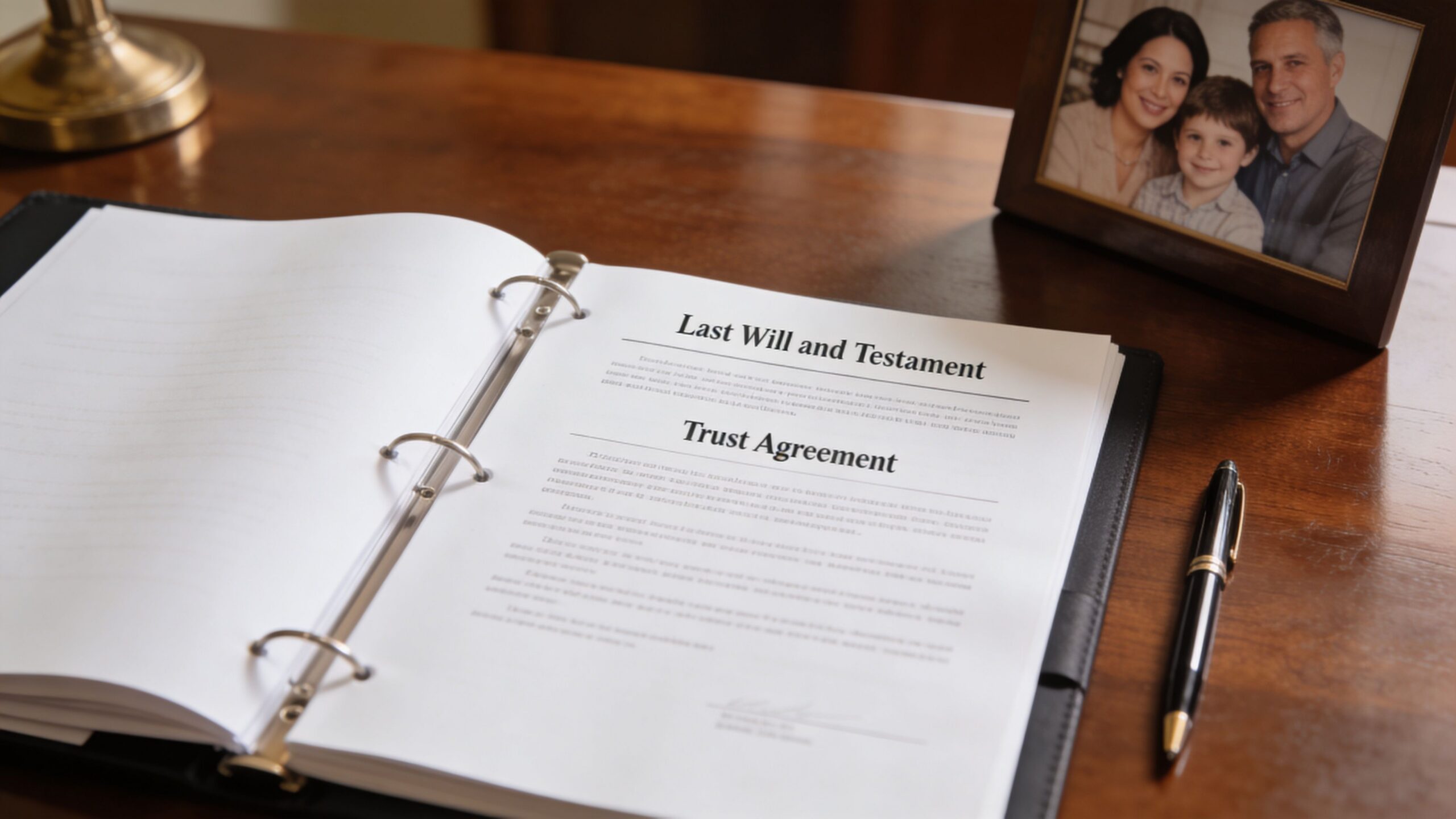
The core documents most families consider
Many people put off estate planning because they assume it requires a complex strategy. Often, the starting point is a short list of foundational documents.
Here’s what those documents generally do:
- Will: Says who should receive property through your estate and who should handle the process.
- Trust: Holds and manages property under written instructions, sometimes during life and after death.
- Financial power of attorney: Lets a chosen person handle certain financial matters if you can’t.
- Medical power of attorney: Allows someone to make health care decisions in qualifying situations.
- Directive and related documents: Express medical wishes and reduce uncertainty during a crisis.
A good way to think about this is simple. A will speaks when you’re gone. Powers of attorney help while you’re alive but unable to act. A trust can function as a management tool before and after death, depending on how it’s created and funded.
Wills and trusts are not the same tool
People in Northeast Houston often ask which one they “need.” The answer depends on goals, family structure, and the kind of control you want.
A will is often the straightforward place to begin. It can name beneficiaries, an executor, and guardians for minor children. It usually still involves a probate process, because the court may need to recognize the will and authorize the executor to act.
A trust can offer more ongoing control. It may be useful when a person wants structured distributions, privacy considerations, planning for blended families, support for a loved one with particular needs, or easier asset management across time. But a trust only works as intended if assets are aligned with the plan.
Estate planning isn’t only about who gets property. It’s also about who handles paperwork, pays bills, protects children, and keeps conflict from spreading through the family.
Probate is a process, not a punishment
The word probate worries people because it sounds technical and final. In plain terms, probate is the court-supervised process of recognizing a will and authorizing estate administration, or otherwise determining how an estate should be handled under Texas law.
For many families, probate feels like sorting and handing over a set of keys. The court wants to know who has authority to act, what property is involved, and whether creditors, taxes, and beneficiaries are being addressed properly.
A typical probate matter can involve:
- Filing the application with the proper court.
- Presenting the will if one exists.
- Having the court appoint the personal representative.
- Identifying estate property and obligations.
- Transferring or distributing property according to law.
That doesn’t mean every estate unfolds the same way. Some estates are simple. Others involve family disagreements, unclear records, unpaid debts, or property that doesn’t match the decedent’s documents.
A short video can help make those moving parts easier to picture.
Practical estate planning choices for local families
The right plan usually starts with ordinary life questions, not legal buzzwords.
Consider these examples:
| Situation | Planning concern |
|---|---|
| You have young children | Guardian designations and backup decision-makers matter. |
| You own a home | Title, transfer planning, and coordination with the estate plan become important. |
| You’re part of a blended family | Distribution choices need to be clear to reduce future conflict. |
| You help an older parent | Authority for medical and financial decisions may be needed before a crisis. |
| You run a small business | Succession and operational authority should be addressed in writing. |
When documents need an update
A plan that once made sense can become outdated. Review estate documents after major life changes such as marriage, divorce, the birth of a child, a death in the family, a home purchase, a move, or a significant shift in finances or caregiving.
People in Kingwood sometimes assume that once they signed a will years ago, they’re covered. That’s not always true. If the people named are no longer the right choices, or the property no longer matches the plan, the documents may create confusion instead of clarity.
A Practical Guide to Texas Civil Litigation
Civil litigation covers disputes between people, businesses, property owners, and other parties who need a legal remedy. In Kingwood and Northeast Houston, that can mean a contract dispute, a business disagreement, a property damage claim, or a personal injury matter. The law here is statewide, but civil cases often turn on practical decisions made long before trial.
How a civil dispute usually starts
Not every dispute begins with a lawsuit. Many begin with a broken agreement, a missed payment, a construction problem, a business fallout, or an injury that leaves one side demanding accountability.
A typical path looks like this:
- The conflict surfaces: One side believes the other failed to meet a legal or contractual obligation.
- A demand is made: Sometimes a formal demand letter helps define the issue and open settlement talks.
- The petition is filed: If informal resolution fails, the plaintiff files suit.
- The defendant answers: The responding party raises defenses and begins shaping the case.
- The parties exchange information: Discovery may include documents, written questions, and depositions.
- Settlement or trial follows: Many cases resolve before trial, but preparation matters either way.
Business owners in Humble and professionals in Kingwood often get caught off guard. They assume a strong position is enough. In reality, courts care about proof, deadlines, pleadings, and whether your theory matches the available evidence.
What civil discovery actually means
Discovery is the information-gathering phase. It’s one of the most important parts of a civil case because it forces both sides to put documents, positions, and witnesses on the table.
Common discovery tools include:
| Tool | What it does |
|---|---|
| Requests for documents | Seek contracts, emails, invoices, photos, records, and other evidence. |
| Written questions | Require the other side to answer specific factual questions in writing. |
| Depositions | Allow lawyers to question witnesses under oath. |
| Requests for admission | Narrow disputes by asking a party to admit or deny key points. |
For a small business dispute in Northeast Houston, discovery might reveal whether a contract was changed by email, whether goods were delivered, or whether one side knew of a defect and stayed silent. For a personal injury case, it may clarify treatment records, scene evidence, or competing versions of what happened.
Case posture matters: The earlier you organize contracts, messages, photos, receipts, and timelines, the more options you usually have.
Settlement is not weakness
A lot of people hear “settlement” and think compromise means surrender. It doesn’t. Settlement is often a business decision. The question isn’t whether litigation feels satisfying. The question is whether the proposed outcome is better than the cost, risk, and delay of continued fighting.
That said, early settlement only works when the other side believes you’re prepared to prove your case. Civil litigation rewards preparation, not bluffing.
When residents should act quickly
Some disputes can wait a few days while you gather your thoughts. Others shouldn’t. If you’ve been served with papers, received a demand involving money or property, discovered a serious contract breach, or believe evidence may disappear, it’s time to get specific advice.
A useful first move is to create a simple case file:
- Put every contract, amendment, invoice, text, and email in one folder.
- Write a timeline while events are still fresh.
- Save photos, videos, and names of witnesses.
- Stop sending emotional messages that may later be used against you.
That disciplined start often makes the rest of the case easier to evaluate.
When to Consult a Texas Attorney
Some legal questions are fine for self-education. Others need legal advice before you make the next move. The hard part is knowing which situation you’re in.
A good rule is this: if the issue can affect your children, your freedom, your home, your finances, or your ability to act for a loved one, don’t rely only on general internet research. Access to legal help is uneven nationwide. Statista’s legal services industry overview notes that 27 states have fewer than one civil legal aid attorney for every 10,000 people living in poverty, which helps explain why so many families struggle to get timely guidance.
Red flags that mean it’s time to stop guessing
Here are common signs that Kingwood and Humble residents should consult an attorney:
- Family law warning signs: You’ve been served with divorce papers, the other parent is withholding the child, support is disputed, or someone wants to relocate.
- Criminal defense warning signs: Police contacted you, you were arrested, bond conditions were imposed, or investigators want “just a quick statement.”
- Estate warning signs: A loved one died, no one knows where the original will is, relatives disagree about authority, or an aging parent can’t manage affairs safely.
- Civil law warning signs: You were sued, a business contract broke down, a demand letter arrived, or evidence may be deleted or lost.
Questions to ask before the first consultation
You don’t need a polished legal theory. You do need a clear summary.
Bring these basics if you can:
- Documents: Orders, contracts, citations, court notices, wills, or letters.
- Timeline: A simple sequence of events with dates if known.
- Names: Everyone involved, including witnesses or decision-makers.
- Goals: What outcome you want, even if you’re not sure it’s realistic yet.
Getting legal advice early often costs less than trying to repair avoidable mistakes later.
For residents dealing with statewide topics without Kingwood angle, local guidance matters most. The law may be statewide, but your deadlines, your family routines, your county filing issues, and your practical risks are specific.
Your Trusted Legal Partner in Kingwood
Texas law can feel sprawling when you’re facing a real problem. Divorce raises questions about property and parenting. Criminal charges put rights and reputation on the line. Estate planning asks you to make careful choices before a crisis hits. Civil disputes demand proof, strategy, and patience.
The common thread is clarity. People in Kingwood, Humble, Porter, and Northeast Houston don’t need more noise. They need plain answers, practical next steps, and someone who understands how statewide rules affect local lives.
Legal issues rarely improve from avoidance. They usually improve when someone identifies the problem, preserves the right information, and acts before deadlines or emotions take over. Whether you’re trying to protect your children, defend against a charge, organize an estate, or resolve a business dispute, timely guidance can change how manageable the situation feels.
If you’re dealing with uncertainty, start with a conversation close to home. Local support makes statewide law easier to understand, and the first step is often simpler than people expect.
If you need guidance on family law, criminal defense, estate planning, probate, or civil litigation, schedule a free consultation with Law Office of Bryan Fagan – Kingwood TX Lawyers. Their team serves Kingwood, Humble, Porter, and Northeast Houston with clear advice, compassionate support, and practical legal representation suited to your situation.