Skip to content
When a loved one names you the executor of their will, they are placing an immense amount of trust in your hands. It's a profound responsibility, and it often comes at a time when you're already navigating the grief of losing someone important. In simple terms, your job is to wind down their final affairs according to Texas law: gathering their assets, paying their debts, and making sure what's left goes to the right people as outlined in their will.
For families in Kingwood and the surrounding communities, understanding this role is the first step toward fulfilling your loved one's wishes with confidence and care.
Understanding Your Role as an Executor in Texas
Think of yourself as the captain of a ship, tasked with one last, important journey. Your mission is to ensure every piece of cargo—the assets of the estate—is delivered to its rightful destination. For families here in Kingwood, Humble, and Northeast Houston, being named an executor is both a true honor and a serious legal commitment. It's a role that demands integrity, a sharp eye for detail, and a steady hand to carry out your loved one's final wishes.
This can all feel incredibly daunting, especially while you're grieving. The process is much more than just reading a document; it involves court filings, managing finances, and keeping all the beneficiaries informed every step of the way. The Law Office of Bryan Fagan is a local Kingwood firm dedicated to helping our neighbors through these challenging times.
Your Core Responsibilities
As an executor, you have a fiduciary duty. That's a legal term that simply means you are required to act in the best interest of the estate, not yourself. Your own interests must take a backseat.
Here’s a practical breakdown of what you’ll be doing:
- Finding the Will: Your very first step is to locate the original, signed will. Then, you'll need to file it with the proper Texas probate court—for most of us in Kingwood, that will be in Harris or Montgomery County.
- Managing Estate Assets: You are responsible for identifying and securing all of the deceased's property. This could be anything from a bank account at a local Kingwood branch to a piece of real estate in Porter.
- Notifying Everyone: You must formally notify all the beneficiaries named in the will. You'll also need to publish a legal notice in a local newspaper for any potential creditors.
- Paying Off Debts and Taxes: Before a single dollar can be distributed to the heirs, you must use the estate's funds to pay off all the deceased's final bills. This includes taxes, credit card balances, and any outstanding medical expenses.
The emotional and logistical weight of these tasks is significant. It’s a lot to take on when you've just lost someone. Courts across the U.S. handle over 1.2 million probate cases each year, and the vast majority of executors are family members, not legal or financial professionals. This often adds a layer of strain on top of an already tough situation. Discover more insights about how this impacts families on ProbateCourtBond.com. This reality highlights why having a clear, supportive guide is so important for families in our community.
To give you a quick overview, here are some essential facts about serving as an executor in our area.
Executor Quick Facts: What Kingwood Residents Need to Know
| Key Aspect | What It Means for a Texas Executor |
|---|---|
| Fiduciary Duty | You are legally obligated to act in the estate's best interest, not your own. This is a very high standard of care. |
| Probate Court | You must file the will and other required documents with the probate court in the county where the person lived (e.g., Harris, Montgomery). |
| Independent Administration | Texas law favors this streamlined process, which allows you to act with minimal court supervision. Most modern wills request it. |
| Creditor Notification | You are required to publish a notice in a local newspaper and send direct notices to any known secured creditors. |
| Inventory of Assets | You have 90 days from the date you are officially appointed to file a detailed inventory of all estate assets with the court. |
| Personal Liability | You can be held personally responsible if you mismanage the estate's assets, such as paying heirs before settling all debts. |
This table is just a starting point, but it shows how many moving parts are involved.
The bottom line is this: as an executor, you are legally accountable for your actions. A simple misstep, like distributing inheritance money before paying off all creditors, could make you personally liable for the estate’s debts. Following the proper legal steps isn't just about bureaucracy; it’s about protecting yourself and the estate.
At the Law Office of Bryan Fagan in Kingwood, we are here to offer the clear, compassionate guidance you need. We help Kingwood residents make sense of every step, so you can fulfill your duties correctly and with confidence. You can dig deeper into the formal requirements in our guide on how wills are executed in Texas.
If you’ve been named an executor and aren't sure where to start, schedule a free consultation at our Kingwood office. We're here to help you get on the right track.
Your Step-by-Step Executor Checklist for Kingwood Estates
Taking on the role of an executor can feel overwhelming, a bit like being handed a complex puzzle without the picture on the box. To help our neighbors in Kingwood, Humble, and Porter, we’ve laid out a clear, step-by-step checklist. Think of this as your roadmap for honoring your loved one’s wishes while navigating the Texas legal landscape.
The entire process breaks down into three main phases: gathering everything the person owned, paying off their final bills, and then passing the rest on to the beneficiaries.
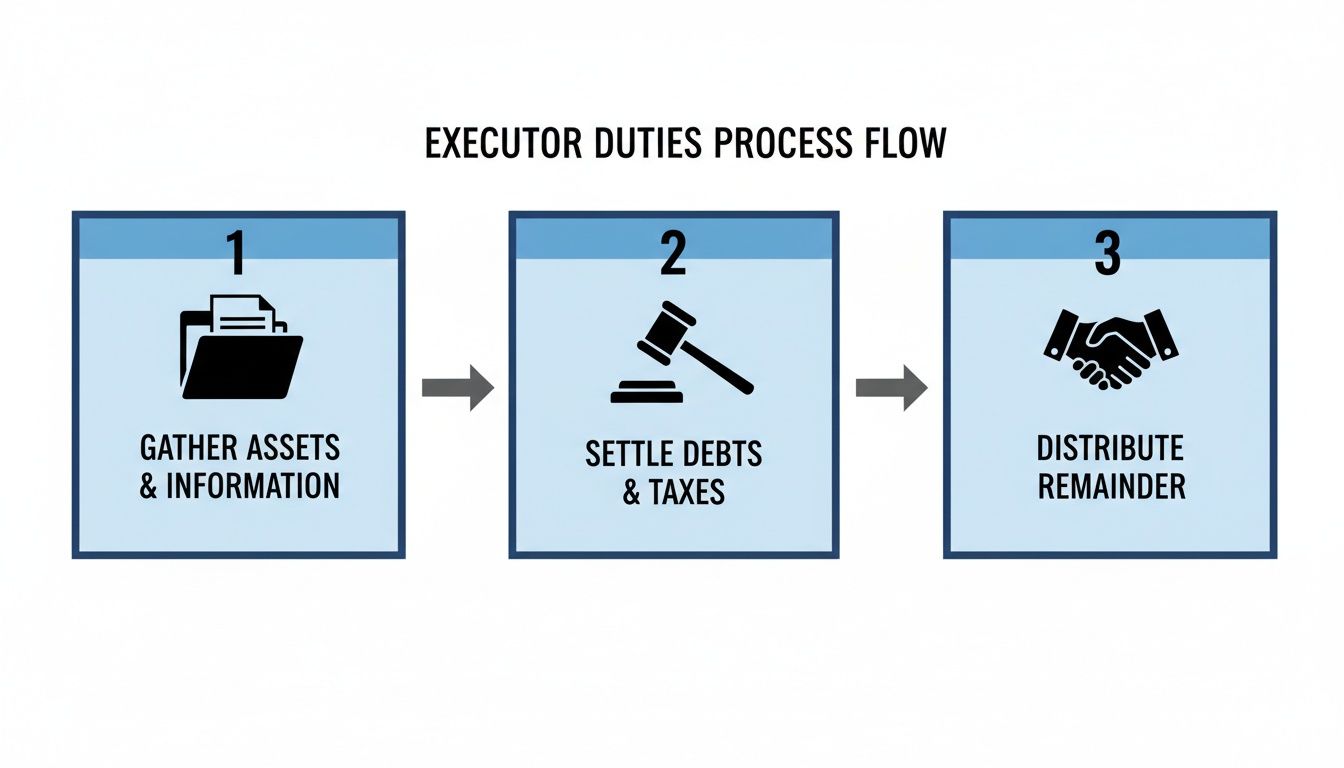
This visual gives you a bird's-eye view, showing how one step naturally leads to the next. Let's dig into the details of what each phase actually involves for a Kingwood-area estate.
Phase 1: Initial Steps and Legal Filings
As soon as you agree to be the executor, the clock starts ticking. These first few moves are critical because they set the stage for everything that follows. It's all about finding the right paperwork and getting the legal process officially underway.
Locate the Original Will: First things first, you need the original, signed will. Copies won't cut it for the court. Check common spots like a safe deposit box, a fireproof safe at home, or with the attorney who drafted it. The probate courts in Harris or Montgomery County will only accept the real deal.
File for Probate: With the will in hand, your next move is to file an Application to Probate Will with the correct Texas court. This is the formal petition that asks a judge to confirm the will is valid and officially appoint you as the executor of the will. This is the action that formally kicks off the probate process.
Notify Heirs and Beneficiaries: Once the court gives you the green light, Texas law requires you to send a formal notice to every beneficiary named in the will, usually within 60 days. This isn’t just a courtesy; it's a legal step to ensure everyone involved knows the process has started and has an opportunity to see the will.
Phase 2: Managing the Estate
After the initial court filings, your hat changes from "organizer" to "manager." You are now in charge of finding, securing, and managing everything the deceased owned. This part of the job demands careful attention to detail and a commitment to your fiduciary duty—your legal obligation to act in the estate's best interest.
As the executor, you are legally required to manage the estate’s property with care. This means safeguarding real estate, securing valuable personal items, and managing financial accounts responsibly until the estate is ready for distribution.
Here are your core management tasks:
Create a Detailed Inventory: You’ll have 90 days from your appointment to file a complete "Inventory, Appraisement, and List of Claims" with the court. This is essentially a detailed spreadsheet of every single asset—from bank accounts and real estate in Northeast Houston to cars, jewelry, and furniture—along with its fair market value.
Open an Estate Bank Account: This is non-negotiable. You must open a new bank account in the name of the estate to avoid commingling funds, which is a serious legal mistake. All cash from the deceased’s accounts goes in, and all estate bills get paid out of this single, dedicated account.
Notify Creditors: Texas law requires you to publish a notice in a local newspaper. This is a formal announcement to any potential creditors, giving them a chance to file a claim against the estate. For any known, secured debts, like a mortgage, you'll need to send a direct notice to the lender.
Phase 3: Settling and Distributing the Estate
The final phase is all about closing the books. You’ll use the estate's funds to pay all legitimate debts and taxes before you can distribute what’s left to the beneficiaries. While this is the moment the heirs have been waiting for, it must be done meticulously.
Rushing this stage is a common pitfall that can leave an executor personally liable for unpaid debts. You have to be sure every last "t" is crossed.
Here’s how to properly close out the estate:
Pay All Debts and Taxes: Using the estate's bank account, settle all valid creditor claims, final medical bills, and funeral expenses. You'll also be responsible for filing the deceased’s final income tax return and, if the estate is large enough, a federal estate tax return.
Distribute Assets to Beneficiaries: Only after every bill and tax is paid can you finally distribute the remaining property to the beneficiaries as outlined in the will. It's a smart move to have each person sign a receipt confirming they’ve received their inheritance, which protects you and provides a clean record.
This checklist provides a solid framework, but every estate comes with its own unique challenges. If you're a Kingwood resident facing these responsibilities, you don't have to go it alone. The Law Office of Bryan Fagan is here to help. Schedule a free consultation with us to ensure you're handling every step correctly and with peace of mind.
Navigating the Texas Probate Process
Once you've filed the will with the court, you'll quickly realize that the Texas probate system isn't a one-size-fits-all ordeal. Think of it like picking a route on a map; some paths are straightforward and quick, while others have more detours and require a guide. For families here in Kingwood and Northeast Houston, knowing which path to take is the first step toward saving time, money, and a lot of headaches.
The route you'll follow depends almost entirely on the instructions left in the will and the complexity of the estate itself. The good news is that Texas law offers several options, including some much simpler routes designed to make an executor's job far less stressful.
Independent vs. Dependent Administration
The most common fork in the road you'll face is choosing between an independent administration and a dependent administration. The difference between them is massive and boils down to a single question: how much court supervision is required? A well-drafted will is your ticket to the easier, more direct route.
Independent Administration: This is the gold standard in Texas and the path we see most often for our clients in the Kingwood area. If the will specifically calls for it, the executor can manage the entire estate—paying off debts, selling property, and distributing assets—with very little interference from a judge. It’s faster, less expensive, and gives the executor the freedom to get things done efficiently.
Dependent Administration: This path is the scenic route, and not in a good way. It involves constant court supervision. Every significant action, from paying a routine bill to selling the house, needs a judge's sign-off. It’s a slow, cumbersome, and costly process, usually only necessary when there’s a family fight brewing or when the will fails to authorize an independent administration.
For most Kingwood families, independent administration is the clear winner. It empowers the executor to act decisively without getting bogged down in endless court hearings, which is why our firm emphasizes its importance when drafting wills for our clients.
The job of an executor is tough enough without unnecessary delays. Unfortunately, probate backlogs are a real problem, with some complex or contested Texas estates taking 12-24 months to resolve. With probate fees averaging 4-7% of an estate's value nationally, these delays can have a significant financial cost. You can discover more insights about these probate trends from Quilter.
Simpler Alternatives for Smaller Estates
What if the estate is simple, with just a few assets and no real debts? For many families in Humble or Porter, going through a full-blown probate process is like using a sledgehammer to crack a nut. Texas law understands this and provides a couple of simpler, less formal alternatives.
These options can be a perfect fit when the circumstances are right.
Small Estate Affidavit: If the person passed away without a will and their property (not counting their primary home) is worth $75,000 or less, this is a fantastic option. It lets the heirs collect the assets without ever having to go through a formal court process, which saves a tremendous amount of time and money.
Muniment of Title: This is a unique Texas procedure. It works when there’s a valid will but no unpaid debts (other than a mortgage or other loans secured by property). The court essentially just validates the will, which then acts like a deed, legally transferring ownership of the property to the beneficiaries. The will itself becomes the title document, bypassing the need for a full administration.
Picking the right path forward is a critical first step. To get a deeper understanding of the formal court process, you can read our guide on how to probate a will in Texas.
Trying to sort through these legal options on your own can feel overwhelming, but you don't have to guess. The Law Office of Bryan Fagan is here to help our Kingwood neighbors understand their choices. Schedule a free consultation, and we can walk you through the most efficient and cost-effective path for your family's situation.
Managing Timelines, Taxes, and Compensation
Stepping into the role of executor means you're now in charge of managing time, money, and the expectations of everyone involved. For families here in Kingwood, getting a handle on the practical side of this job is key to making the whole process run smoothly. How long will it all take? What's the deal with taxes? And do you get paid for all this work? These aren't just details; they're at the very heart of doing the job right.

One of the very first questions we hear from clients in Northeast Houston is, "So, how long is this going to take?" There's no single answer, but a relatively straightforward, uncontested probate in Texas generally wraps up in about nine to eighteen months. That window gives enough time for all the necessary court filings, notifying creditors, and settling the estate in an orderly way.
To give you a clearer picture, here's what the journey typically looks like for an executor in Texas.
Typical Texas Probate Timeline for Executors
This table outlines the key phases and expected timelines for estate administration in Texas, helping executors from Kingwood to Humble understand their journey.
| Phase | Typical Duration in Texas | Key Executor Actions |
|---|---|---|
| Phase 1: Initial Filings & Appointment | 1-2 Months | File the will for probate, attend the initial court hearing, and receive Letters Testamentary. |
| Phase 2: Inventory & Notice | 2-4 Months | Publish notice to creditors. Compile a detailed inventory of all estate assets and file it with the court. |
| Phase 3: Debt & Expense Management | 4-9 Months | Wait for the creditor claim period to expire. Evaluate all claims, pay valid debts, and handle ongoing estate expenses. |
| Phase 4: Tax Filings | Throughout the Process | File the deceased's final personal income tax return (Form 1040) and the estate's income tax return (Form 1041) if needed. |
| Phase 5: Distribution & Closing | 1-3 Months | Distribute remaining assets to beneficiaries according to the will. File final reports and formally close the estate with the court. |
This timeline is a guide, and a lot depends on the specifics of the estate. But it shows how the process unfolds step by step.
Navigating Tax Responsibilities
A huge part of your job is making sure the deceased's final tax obligations are met. It starts with their personal income taxes, not just estate taxes. You're responsible for filing a final Form 1040 federal income tax return for the deceased, which covers the time from January 1st of the year they passed away until their date of death.
On top of that, you might need to file an income tax return for the estate itself. This is done on Form 1041. This becomes necessary if the estate generates more than $600 in gross income during the year—which can easily happen if there are assets like rental properties or investment accounts still earning money.
When you're handling the estate's finances, it's a good idea to understand all the taxes that might come into play. A helpful resource on this is Understanding Inheritance Tax.
Luckily for Texas residents, there's some good news on the tax front:
- Estate Tax: This is a federal tax, and it only applies to very large estates. For 2024, an estate has to be worth more than $13.61 million to even be on the hook. The vast majority of estates in the Humble and Porter areas will fall well below this mark.
- Inheritance Tax: Texas has no state inheritance tax. This is a huge relief for beneficiaries, as they won't owe the state anything on the property they receive from the will.
Your Right to Compensation as an Executor
Let’s be clear: being an executor is a demanding job that takes a lot of time and mental energy. Texas law recognizes this, and you are not expected to do it for free.
The Texas Estates Code sets a default rule for compensation when the will is silent on the matter. An executor is typically entitled to a commission of five percent (5%) of all cash the estate receives and all cash it pays out.
This structure is meant to be straightforward. For example, if you collect $100,000 in cash for the estate and pay out $50,000 in debts, your commission would be calculated on that total cash movement. This is why keeping meticulous records of every single transaction is so critical—it justifies your fee and keeps things transparent for the beneficiaries.
This payment comes directly from the estate's assets, and it's considered taxable income for you. Being upfront about this fee from the start can head off potential conflicts and build trust with the heirs, as it acknowledges the very real work you're putting in.
Managing timelines, taxes, and your own compensation can feel like a lot to juggle, but you don't have to do it alone. At The Law Office of Bryan Fagan, our Kingwood attorneys are here to give you clear, practical support every step of the way. Schedule a free consultation with us today, and let us help you handle these duties with confidence.
Common Executor Pitfalls and How to Avoid Them
Being named an executor is a profound sign of trust. It's an honor, but one that comes with serious responsibility. For families here in Kingwood, even well-meaning executors can make simple mistakes that spiral into costly delays, financial losses, and deep family rifts. Knowing where the potential traps are is the best way to avoid them and protect both the estate and your own peace of mind.

Most of these pitfalls aren't about bad intentions; they stem from not knowing the specific rules of the road in Texas. These legal requirements aren't just red tape—they’re designed to protect everyone involved. A little proactive planning can keep a manageable duty from turning into a legal mess.
Pitfall 1: Mingling Estate and Personal Funds
This is one of the biggest and most common mistakes an executor can make. Mixing your personal money with the estate’s funds is known as commingling funds, and it's a huge breach of your legal duty. It could be as simple as paying a personal bill from the estate's account or depositing an estate check into your own. Either way, it creates an accounting nightmare and can get you into serious trouble.
- The Solution: The moment the court officially appoints you, your first stop should be the bank. Open a brand-new checking account solely in the name of the estate. Every penny of income goes into this account, and every legitimate bill gets paid out of it. This simple step creates a clean, transparent paper trail that protects you and the estate.
Pitfall 2: Distributing Assets Too Early
When everyone is grieving, it’s completely understandable to want to give beneficiaries their inheritance right away. But handing out assets before all the estate's debts, final expenses, and taxes are paid can be a disaster. If a surprise creditor claim or a tax bill pops up after the money's gone, you, the executor, could be held personally liable for that debt.
- The Solution: Patience is your best friend here. Follow the legal timeline for notifying creditors and let the official claim period pass. You should only start distributing what’s left to the heirs after every single valid debt and tax obligation has been fully settled.
An executor’s primary duty is to the estate itself, which includes settling all outstanding obligations before fulfilling bequests to beneficiaries. Acting out of order puts you at significant personal financial risk.
Pitfall 3: Failing to Communicate Clearly
More often than not, probate disputes start with poor communication. When beneficiaries are kept in the dark, their minds can start to wander. They might assume you're hiding something or mishandling money, even if you’re doing everything by the book. That suspicion can erode trust and grind the whole process to a halt for your Northeast Houston family.
- The Solution: Be proactive with updates. Send a brief email or make a quick call to let beneficiaries know what's been done, what's coming next, and a realistic timeline. A little transparency goes a long way in building confidence and keeping the peace.
In Texas, an executor can be held personally liable for mistakes, like missing the critical nine-month deadline for certain creditor notices. The risk gets even higher when there's no solid estate plan to begin with. National surveys show a huge gap: while 56% of people think estate planning is vital, a shocking 73% have no plan. This is a recipe for family conflict. You can discover more about these estate planning statistics on LegalZoom.com. At The Law Office of Bryan Fagan, we guide Kingwood families through this exact process to avoid these traps.
Getting through this takes diligence and a steady hand. If you're a Kingwood resident serving as an executor and you feel even a little unsure, don't guess. Schedule a free consultation with The Law Office of Bryan Fagan. We’re here to give you the local, experienced guidance you need to do the job right.
When a Kingwood Executor Should Bring in a Lawyer
Stepping into the role of an executor is a huge responsibility, but no one expects you to suddenly become a legal expert overnight. Knowing when to ask for professional help isn't a sign of failure—it's the mark of a smart, responsible executor who's protecting the estate. For many families here in Kingwood, what starts as a straightforward process can get complicated fast, and that’s when legal guidance becomes essential.
Think of it like a home renovation. You might be perfectly capable of painting the walls and handling minor fixes, but you’d call in a licensed professional for the electrical or foundation work. A probate attorney is that specialist, making sure every step you take is legally sound and in line with Texas law.
Red Flags: When to Call an Attorney Immediately
Some situations are immediate red flags, signaling that it's time to get professional legal advice. Trying to handle these issues on your own can lead to expensive errors, personal liability, and deep family rifts that may never heal. If you run into any of these scenarios, your first move should be to call a probate lawyer.
- Someone is Contesting the Will: The moment an heir or potential beneficiary officially challenges the will's validity, you're in a legal battle. You absolutely need professional representation to defend the will and the estate in court.
- The Estate Has Complex Assets: Are you dealing with a family business in Humble, commercial real estate over in Northeast Houston, or a tangled web of investments? These assets require specialized expertise to value, manage, and distribute correctly.
- The Estate has Significant Debt: When the debts outweigh the available cash, you're faced with the tricky task of selling assets to pay creditors. A lawyer can guide you through this process and help protect you from mistakes that could leave you personally responsible for the estate's bills.
- Family Disputes are Brewing: If conversations are turning into arguments and beneficiaries are becoming hostile or suspicious, an attorney can step in as a neutral mediator. They can handle communications and ensure the process remains fair and impartial, stopping disagreements from boiling over into a full-blown lawsuit.
Bringing in legal counsel is a protective move. It shields you from personal liability and ensures the estate is settled properly, honoring your loved one’s wishes without creating more conflict.
At The Law Office of Bryan Fagan, we're proud to be the local Kingwood firm families trust during these difficult moments. We offer the experienced, steady hand you need to navigate the probate process and bring it to a peaceful resolution.
You don't have to manage this burden alone. If you're dealing with a complicated estate or just feel uncertain about what to do next, we're here for you. We invite you to schedule a free, no-obligation consultation at our Kingwood office. Let us help you carry out your duties with confidence and peace of mind.
Common Questions for Texas Executors
When you're named the executor of a will, a million questions can start running through your head. To help our neighbors in Kingwood and the surrounding communities, we've put together answers to some of the things people ask us most often when they take on this important role.
Can I Say No to Being an Executor?
Yes, you absolutely can. Being named an executor is a huge vote of confidence, but it's not a legal summons. If you don't have the time, feel overwhelmed by the responsibility, or just don't think you're the best person for the job, you have every right to decline.
To do this, you’ll file a formal document with the court called a renunciation. Once you've officially stepped aside, the job usually falls to the alternate executor named in the will. If there isn't one, the court will appoint an administrator to make sure everything is handled properly.
How Long Does It Take to Settle an Estate in Kingwood?
There's no single, strict deadline under Texas law, but it's good to have a realistic timeline in mind. Most estates in the Kingwood, Humble, and Porter areas that don't have major complications are typically wrapped up within nine to eighteen months.
A few things can really stretch out that timeline:
- Complex Assets: An estate with a family business, out-of-state property, or intricate investments will take longer to sort out than one with just a few bank accounts.
- Creditor Claims: Texas law requires a waiting period for creditors to come forward, which is a built-in part of the process.
- Family Disputes: Unfortunately, disagreements among beneficiaries are one of the most common reasons for major delays.
Understanding these factors from the get-go helps you manage everyone's expectations and keep the beneficiaries in the loop.
Do I Really Need a Lawyer to Be an Executor in Texas?
While the law doesn't always force you to hire an attorney, it is highly recommended. Think of a good probate lawyer as your professional guide through a legal maze—a partner who's there to protect both you and the estate.
A seasoned probate attorney does a lot more than just fill out forms. They make sure you're meeting every single requirement of Texas law, help you untangle any tricky financial situations, and can act as a neutral buffer if family tensions start to run high.
Hiring a local Kingwood probate attorney is one of the smartest things you can do to protect yourself from personal liability. One simple mistake—like distributing money to heirs before a forgotten tax bill shows up—could leave you on the hook for that debt personally. An attorney helps you sidestep those kinds of expensive mistakes.
Taking on the role of an executor is a tough job, but you don't have to do it by yourself.
At The Law Office of Bryan Fagan – Kingwood TX Lawyers, we offer the clear-headed, compassionate, and experienced advice you need to carry out your duties confidently. If you've been named an executor and aren't sure what to do next, schedule a free, no-obligation consultation at our Kingwood office. You can find us online at https://kingwoodattorneys.com.