
Your current custody order may have made perfect sense when it was signed. Then life changed. A parent changed jobs, a child started struggling in school, pickup times stopped matching a new work schedule, or one home no longer feels stable. That’s usually when people in Kingwood, Humble, Porter, and Northeast Houston start asking the same question. Can this order be changed, and if so, what will the court consider?
A custody modification kingwood case isn’t about proving that the old arrangement is annoying or inconvenient. It’s about showing that something meaningful has changed and that the child needs a different plan now. In Montgomery County, that means preparation matters as much as emotion. Parents who come in with organized facts, clear goals, and realistic expectations usually move through the process more effectively than parents who rely on frustration alone.
Is a Custody Modification Right for Your Kingwood Family?
Texas courts don’t modify custody because co-parents disagree more often than they used to. The legal question is whether there has been a material and substantial change in circumstances since the last order.
In plain English, that means the court wants to see a real change, not a temporary inconvenience. The change must matter enough that the current order no longer fits the child’s life or the parent’s ability to follow it. In Kingwood and nearby communities, that often shows up in ways families recognize immediately. A parent’s work schedule changes because of a new position in the Houston area. A child develops educational or medical needs that make the current school or exchange routine harder to manage. A remarriage changes household dynamics in a way that affects parenting time, transportation, or decision-making.

What usually counts as a meaningful change
Some situations tend to get a judge’s attention faster because they affect the child’s day-to-day life in a direct way.
- A major schedule shift: If one parent now works nights, rotating shifts, long-distance assignments, or a commute that makes school drop-off impossible, the old possession schedule may no longer be workable.
- A child’s needs changed: A learning issue, counseling need, medical treatment plan, or school transfer can make the existing arrangement too rigid.
- A parent relocated or plans to relocate: Even a move within the broader Houston area can change school routes, exchange logistics, and time with the other parent.
- A home environment changed: Remarriage, a new baby, another adult moving into the home, or recurring instability can affect the child’s routine.
- Safety concerns developed: If a child is being exposed to dangerous conduct, substance abuse, or repeated instability, modification may become urgent.
Not every hard moment meets the legal standard. Parents often feel hurt because the other parent is difficult, late, or rude. That may be real, but a judge usually wants more than proof that co-parenting has become unpleasant.
Practical rule: Ask whether the problem changed the child’s routine, safety, schooling, health, or the parent’s ability to exercise custody as ordered. If the answer is yes, you may have a modification issue. If the answer is no, you may be dealing with enforcement or communication problems instead.
What doesn’t usually justify filing by itself
Some facts matter emotionally but don’t always support a filing on their own.
| Situation | Why it may not be enough alone |
|---|---|
| The other parent is irritating or uncooperative | Courts expect tension after separation |
| A child had one bad week or one argument | Temporary events usually don’t show lasting change |
| A parent wants “more fairness” | Judges focus on the child’s needs, not equal feelings |
| One missed exchange or occasional late pickup | That may support enforcement, not modification |
The strongest cases don’t rely on labels like “unstable” or “selfish.” They rely on specifics. Research on custody decision modeling supports a practical point family lawyers see in real cases. Success in custody modification depends heavily on documenting changes with concrete metrics rather than vague assertions, such as schedule changes, relocation distance, or income shifts, because courts evaluate these disputes through structured evidence and binary custody outcomes in many settings (custody determination modeling research).
A quick self-check before you file
If you’re thinking about a custody modification in Kingwood, start with these questions:
- What changed since the last order was signed?
- When did it change?
- How has it affected the child’s daily life?
- What proof do you have right now?
- Are you asking to change the rules, or do you need the current rules enforced?
That last question matters more than commonly realized. Filing the wrong type of case can waste time and money.
Parents in Kingwood often know something is wrong before they know the legal name for it. The first useful step isn’t filing paperwork. It’s identifying the exact change and matching it to the right legal remedy.
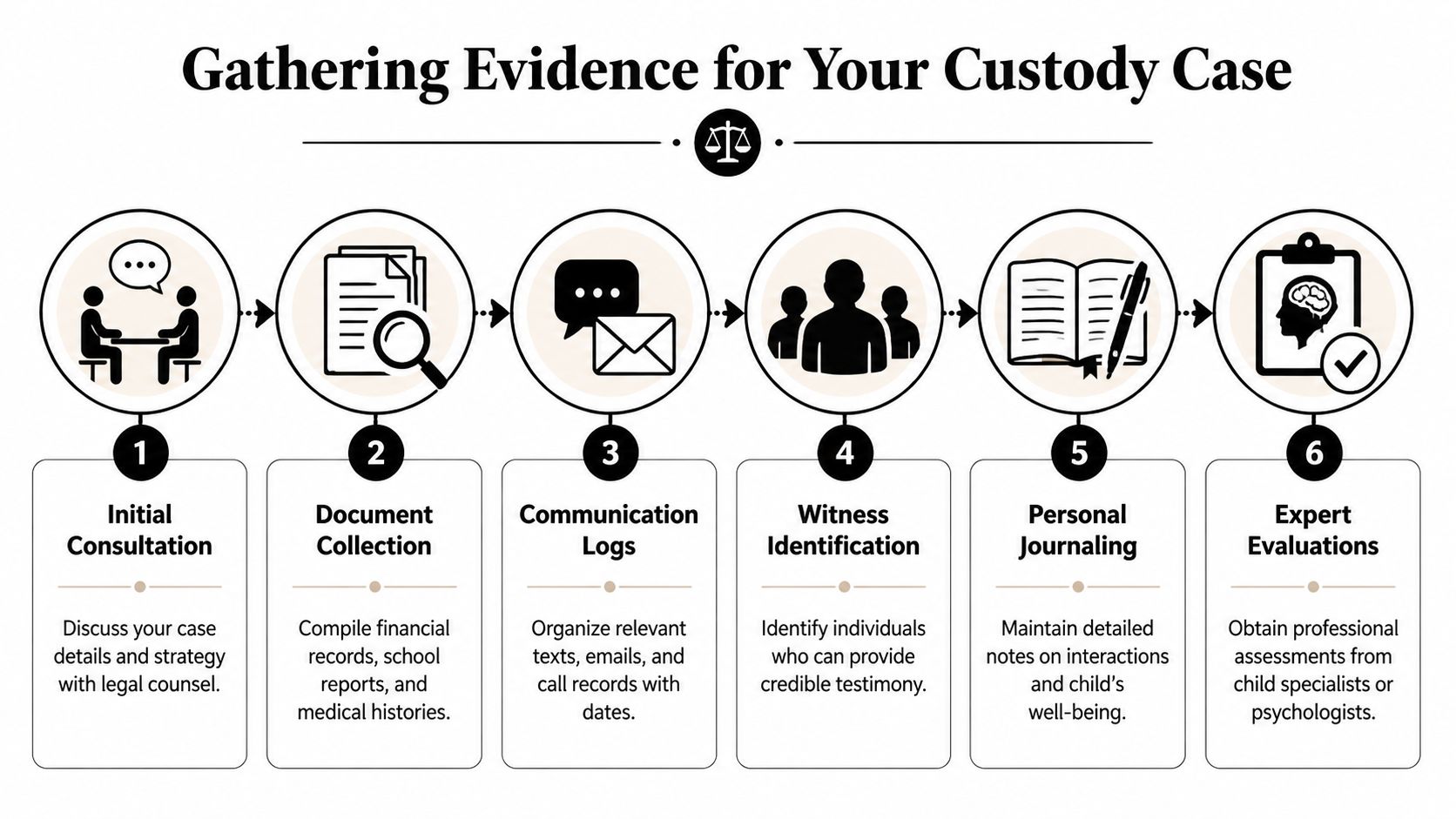
Gathering Evidence for Your Custody Case
A modification case is won or lost in the paper trail long before a final hearing. Judges in Montgomery County need a clear story backed by records, not a stack of screenshots dumped into a folder the night before court.
The strongest approach is simple. Build a timeline, collect documents that support each event on that timeline, and organize them so someone unfamiliar with your family can understand what happened quickly.
Start with a timeline, not a pile
Before you print anything, write out the major events in order. Include the date of the current order, the date the new issue started, and the moments that show why the old arrangement no longer works.
That timeline might include a school transfer discussion, a doctor recommendation, repeated exchange problems, a new job schedule, or a move from one part of Northeast Houston to another. Once you have those events listed, gather the record that proves each one.
The evidence that usually matters most
Different cases need different proof, but these categories come up often in custody modification kingwood cases:
- School records: Attendance reports, disciplinary notices, teacher emails, report cards, special education records, and counselor communications can show a child’s changing needs or how one schedule affects school performance.
- Medical and therapy records: Appointment summaries, treatment recommendations, medication instructions, or therapist letters may help explain why the current order no longer fits.
- Work and schedule records: Updated work calendars, offer letters, shift assignments, travel schedules, and childcare changes can show that the original plan has become unrealistic.
- Communication records: Text messages, emails, and parenting app messages can show a pattern. They’re more useful when they establish dates, requests, refusals, or repeated noncompliance.
- Financial documents: Pay records or business records may matter if your requested change is tied to schedule, transportation, or the ability to provide care.
- Witnesses: Teachers, coaches, counselors, doctors, relatives, or childcare providers may have useful observations if they can testify to facts rather than taking sides.
How to organize texts and recordings carefully
Parents often overestimate how helpful random screenshots will be. A court doesn’t want two hundred hostile messages with no explanation. A court wants a short set of messages, in order, tied to a specific issue.
Use a folder system by topic. For example: school, medical, exchanges, schedule changes, communication problems. Label each document with the date and a short note about why it matters.
If you’re thinking about recording conversations, stop and make sure you understand the legal and privacy issues first. A practical primer on privacy expectations for recording audio can help you think through consent and setting before you rely on a recording in any dispute.
Don’t hand the court raw chaos. Hand the court a clean sequence of events with proof attached.
Personal notes can help, if you do them right
A simple journal can be useful if it’s factual and consistent. Write down dates, times, what happened, who was present, and how it affected the child. Keep opinions separate from facts.
Good note: “March 14, exchange scheduled for 6:00 p.m. Child arrived at 8:10 p.m. without homework folder. Teacher emailed next day about missing assignment.”
Weak note: “Other parent is always selfish and trying to ruin school.”
That distinction matters. Judges trust contemporaneous notes more when they sound like observation, not argument.
Your filing documents matter too
In a Texas modification case, the core pleading is usually the Petition to Modify the Parent-Child Relationship. That document tells the court what order exists now, what changed, and what you want changed.
It needs to match your evidence. If your petition asks for a major schedule revision but your documents only show communication friction, the case feels misaligned from the start.
For parents dealing with interference issues, alienating behavior, or repeated attempts to damage the child’s relationship with the other parent, this guide on how to prove parental alienation may help you identify what kind of documentation is persuasive.
A practical file setup
Many parents do well with a simple structure like this:
- Master timeline
- Current court orders
- School records
- Medical and counseling records
- Work schedules
- Communication exhibits
- Witness list
- Journal and incident log
The Law Office of Bryan Fagan – Kingwood TX Lawyers handles family law matters including custody-related disputes, and a local attorney can help sort evidence into what the court is likely to consider important versus what will only create noise.
The Formal Legal Process in Montgomery County
Once you’ve decided a modification is necessary, the process becomes more procedural. That’s often where parents in Kingwood get anxious. The good news is that family court runs on structure. When you know the order of events, it feels less mysterious.
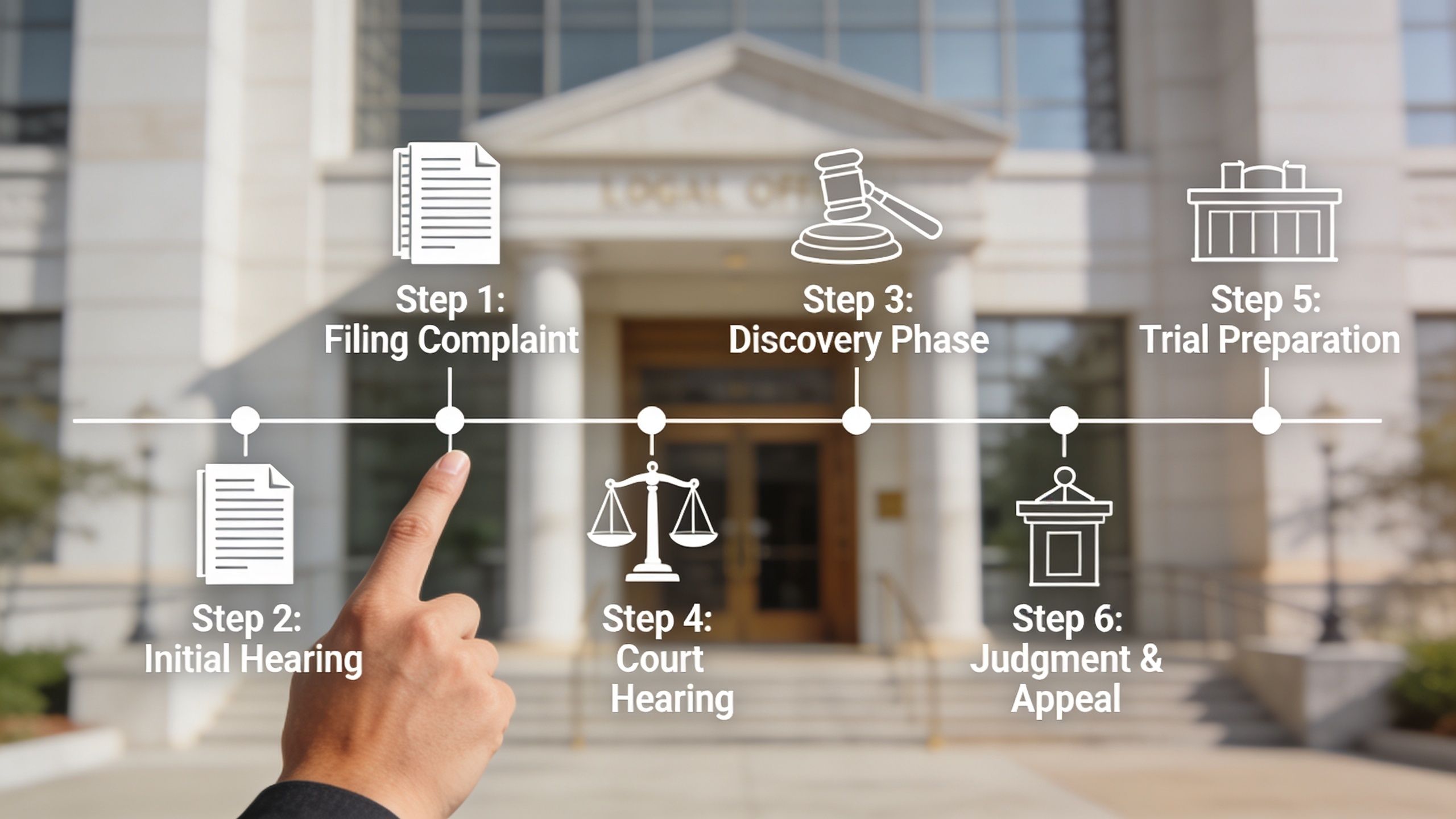
A typical case starts with identifying the right court, drafting the petition, filing it with the clerk, and making sure the other parent is served correctly. If there’s already a Texas order in place, the modification usually belongs in the court with continuing jurisdiction unless a transfer applies.
Filing the petition and opening the case
For many Kingwood families, that means dealing with Montgomery County court procedures even when life overlaps with Humble or Northeast Houston. The first filing has to be accurate. Wrong party names, incomplete requests, and vague allegations create avoidable delay.
Parents are often tempted to file first and “fill in the details later.” That usually backfires. The petition should tell the court, in plain terms, what has changed and what relief you’re requesting. It doesn’t need courtroom drama. It needs precision.
A useful comparison point comes from child support modification research. In Maryland data, approximately 33% of modifications occurred within the first year of order establishment, suggesting that the earliest post-order period often becomes the key window when real-life changes show up and force families to revisit the original arrangement (child support modification timing research). That isn’t a Texas custody statistic, but it does match what many family lawyers see in practice. The first year after divorce or final orders is often when the original plan gets stress-tested.
Service matters more than people expect
After filing, the other parent must receive formal notice. This is called service. It usually happens through a process server, constable, waiver, or another legally recognized method.
This step matters because the court can’t move properly if notice wasn’t handled the right way. Parents sometimes assume that a text saying “I filed something” counts. It doesn’t.
| Step | What it means in practice |
|---|---|
| File petition | Open the modification case and state your requested changes |
| Issue citation | Create the formal notice documents |
| Serve the other parent | Deliver legal notice in a recognized manner |
| Wait for answer | Give the responding parent time to appear and respond |
| Set temporary issues if needed | Address urgent schedule or safety concerns early |
| Move toward mediation or hearing | Work toward settlement or trial |
A modification suit is not a free-form argument. It’s a sequence. If you skip a procedural step, even a strong factual case can stall.
What happens after the other parent responds
Once the other parent files an answer, the case begins to take shape. Sometimes the response is cooperative. Sometimes it denies everything and raises competing requests.
At that point, the case may involve temporary orders, discovery, mediation, status conferences, or a hearing schedule. Local practice matters here. General Texas guides can explain the law, but they usually don’t tell you how local courts expect filings to look, how scheduling works in practice, or how judges in this area tend to approach evidence and preparation.
Parents with matters crossing county lines sometimes also need context on neighboring court systems. This overview of navigating Harris County family court from Kingwood can help if your situation touches both sides of the Kingwood and Northeast Houston area.
A short overview can also make the process feel less abstract:
Temporary relief and pacing
Some cases can wait for the normal schedule. Some can’t. If the child’s safety, schooling, medical care, or living situation needs immediate court attention, a temporary hearing may come early.
Other cases move more gradually. That doesn’t always mean something is wrong. It often means the court expects the parties to exchange information, mediate, and narrow the dispute before asking a judge to decide.
For Kingwood parents, the most useful mindset is this. The court process isn’t designed to punish one parent for being difficult. It’s designed to gather enough reliable information to issue a workable order for the child.
Navigating Mediation and Court Hearings
Most custody modifications don’t begin and end with a judge making a dramatic final ruling. Many are resolved in mediation, where both parents try to negotiate a revised plan with the help of a neutral mediator. That matters in Kingwood and Montgomery County because mediation often gives families more control over school schedules, holiday exchanges, and transportation details than a judge’s limited hearing time will allow.
Mediation also tends to reduce the emotional temperature. That matters when you still have years of co-parenting ahead.
What mediation does well
Mediation works best when both sides are willing to negotiate around facts instead of old grievances. A good session focuses on practical issues. Which exchange times fit work schedules. Which school-week routine keeps the child rested. How holidays should be split if one parent now lives farther away.
Parents often do better in mediation when they come in with three things:
- A clear primary goal: Know what matters most. It might be school stability, weekday overnights, decision-making rights, or a safer exchange process.
- A fallback position: You should know what you can live with if you don’t get everything you asked for.
- Documents, not speeches: A calendar, school record, work schedule, and concise timeline usually help more than a long personal narrative.
For many families in Kingwood, mediation is the first place where the case becomes less abstract. The schedule gets tested line by line.
If you want a broader look at how the process works in Texas family cases, this page on divorce mediation in Texas offers helpful background that also applies to many modification disputes.
Some parents think compromise means weakness. In custody cases, a smart compromise can protect the child faster than a court fight that drags on.
When mediation is not enough
Some cases won’t settle because the disagreement is too serious. Safety concerns, relocation disputes, credibility problems, and deep parenting conflicts often push the case toward a court hearing.
A hearing is more formal and less flexible. The judge listens to testimony, reviews exhibits, applies Texas law, and decides what order serves the child’s best interest. That phrase matters because it shapes every argument. The court is not asking which parent feels more offended. The court is asking which arrangement better supports the child’s stability, safety, development, and ongoing relationship with both parents when appropriate.
How to prepare for a hearing in Montgomery County
Courtroom preparation is part substance and part discipline. Parents who present well usually do a few simple things consistently:
- Answer the question asked. Don’t turn every response into a history lesson.
- Stay child-focused. Judges notice when a parent uses the hearing to attack the other adult instead of explaining the child’s needs.
- Use exhibits that match the testimony. If you mention missed school, bring the attendance record.
- Dress and behave like the setting matters. It does.
- Avoid coaching language. If a child’s preference or statement becomes relevant, the court can usually tell when an adult shaped the message.
Mediation versus hearing
| Issue | Mediation | Court hearing |
|---|---|---|
| Tone | Collaborative, private | Formal, structured |
| Control over outcome | Parents keep more control | Judge decides |
| Speed | Can resolve issues quickly if both sides engage | Depends on docket, evidence, and complexity |
| Best for | Scheduling, practical compromises, custom solutions | Safety disputes, relocation fights, deadlocked cases |
A lot of anxiety drops once parents understand that neither path is automatically “better.” The right path depends on the dispute. If the other parent is difficult but negotiable, mediation may save time and stress. If the child is at risk or the facts are sharply contested, hearing preparation becomes the priority.
Special Scenarios in Texas Custody Modifications
Some cases don’t fit the ordinary pattern. They involve emergencies, repeated order violations, a child who has strong preferences, or a parent who wants to move. These situations need more than generic Texas advice. General family law guides are useful, but they often miss the local context that matters in Montgomery County, including how local judges view urgency, proof, and practical parenting details in Kingwood-area cases.
Emergency modifications and temporary restraining orders
An emergency modification may be appropriate when waiting through the normal court schedule would put the child at risk. That can include endangerment, serious neglect, exposure to violence, or conduct that creates immediate danger.
Courts don’t treat every family conflict as an emergency. The word itself won’t carry the motion. The proof must show why immediate intervention is necessary.
A temporary restraining order may be part of that strategy in the right case. But it should be used carefully. If the allegations are serious, they need support from records, witness testimony, photographs, police involvement where applicable, or other reliable evidence.
Urgent cases require calm lawyering. The parents who do best in emergencies are usually the ones who bring focused proof, not the loudest accusations.
Modification versus enforcement
Parents mix these up all the time. If the current order is wrong for the child now, you may need modification. If the current order is fine but the other parent won’t follow it, you may need enforcement.
Custody Modification vs. Enforcement What's the Difference?
| File a Petition to Modify When… | File a Motion for Enforcement When… |
|---|---|
| The existing schedule no longer fits current reality | The existing schedule still works, but one parent ignores it |
| A child’s school, health, or developmental needs changed | Exchanges are denied or withheld in violation of the order |
| A parent’s work, residence, or home environment materially changed | Support, possession, or required communication terms are not followed |
| You need the court to create new rules | You need the court to require compliance with current rules |
That distinction changes everything. It affects pleadings, evidence, and the remedy the court can grant.
When a child is 12 or older
Texas law allows a child who is at least 12 to express a preference about which parent they want to live with, but that does not mean the child gets to decide the case. Judges consider the child’s wishes as one factor among many.
That means parents should manage expectations carefully. A teenager’s preference may matter, especially if it connects to school stability, emotional health, or a long-running routine. But if the preference appears impulsive, coached, or detached from the child’s best interests, a judge may give it limited weight.
The best approach is to avoid turning the child into the messenger, advocate, or decision-maker. Courts notice when adults pull children into the litigation.
Relocation in the Kingwood and Northeast Houston area
Relocation issues are common because jobs, housing, and family support systems shift. A move might be across the Houston metro area or much farther. Either way, relocation cases are rarely simple if the move changes the child’s school, commute, or access to the other parent.
The court will usually look closely at why the move is happening, how it affects the current schedule, what alternatives exist, and whether the proposed plan protects the child’s relationship with both parents. Moves that sound reasonable to an adult can still create serious school-week and travel problems for a child.
In some families, counseling and mental health care also become part of the relocation conversation. Access matters. If a child receives services remotely, it helps to understand current telehealth rules and practical implications. This overview of the impact of Texas HB 4224 on telehealth is a useful starting point when treatment logistics intersect with parenting plans.
Local details can change strategy
A relocation case in Kingwood is not just a “move-away” question. It may involve Humble-area schools, commute pressure, after-school care, grandparents who help with childcare, or a new work arrangement that changes weekday parenting. That’s why broad legal content often falls short. Strategy has to fit the local facts, the court’s expectations, and the child’s actual routine.
Frequently Asked Questions About Custody Modification
How much does a custody modification cost?
There isn’t one set price. Cost usually depends on how contested the case is, whether emergency orders are needed, how much evidence must be gathered, whether expert input becomes necessary, and whether the case settles in mediation or goes to a final hearing.
A narrow, agreed modification is usually less expensive than a fight over relocation, safety, or a major shift in primary custody. The cheapest path is rarely “do everything yourself and hope the paperwork works out.” Mistakes in pleadings, service, or evidence often create more expense later.
How long will a custody modification take in Montgomery County?
That depends on the court’s calendar, whether temporary issues need immediate attention, how quickly the other parent responds, and whether the case settles. Some move steadily. Some slow down because one side delays, the facts are disputed, or the court needs more information.
Local conditions can matter too. Recent economic shifts affecting Houston’s job market and housing affordability are creating new custody modification scenarios for Kingwood families, and those real-world pressures can add complexity to timing, scheduling, and the kind of relief parents request.
What if the other parent refuses to cooperate?
That’s common. Refusal to cooperate doesn’t stop the case. It usually means your documentation becomes even more important.
If the issue is refusal to follow the current order, enforcement may be the better tool. If the issue is that the current order no longer works at all, modification may still be the right route even if the other parent opposes it.
Do I need a lawyer for a custody modification kingwood case?
You’re not legally required to hire a lawyer, but these cases turn on details that are easy to underestimate. A parent may know the family history very well and still struggle to convert that history into admissible evidence, a proper petition, a realistic settlement position, or a focused courtroom presentation.
Can I change custody just because my child wants to live with me?
Not automatically. A child’s wishes may matter in some cases, especially with older children, but the court still decides based on the child’s best interests. The judge looks at the full picture, not one preference in isolation.
If your current order no longer fits your child’s life in Kingwood, Humble, Porter, or Northeast Houston, it may be time to get clear advice before taking the next step. Law Office of Bryan Fagan – Kingwood TX Lawyers offers free consultations for parents dealing with custody modifications, enforcement issues, and related family law concerns. A local conversation can help you sort out whether you need to modify the order, enforce it, or prepare for mediation or court in Montgomery County.