Skip to content
A lot of parents in Kingwood ask the same question in a quiet, worried voice. If we divorce, and the kids are still in school here, who gets the house?
Usually that question shows up late at night. You're thinking about the mortgage, the neighborhood, the kids' rooms, the drive to school, and whether they can stay close to the life they know in Kingwood, Humble, Porter, or Northeast Houston. You're also wondering if being the parent with the children most of the time means you'll automatically keep the home.
It doesn't work that way in Texas. But that doesn't mean the answer is random.
There is a legal framework, and there are practical steps you can take to protect yourself. The hard part is that the legal answer and the practical-life answer are not always the same. A judge might decide one parent should keep the house, but that parent still has to afford it and deal with the mortgage company.
If you've been searching for who gets the house in divorce with kids texas kingwood, the most useful answer is this: the court looks at what kind of property the house is, what arrangement is fair, what supports the children, and whether anyone can realistically carry the costs.
Navigating the Toughest Question in a Kingwood Divorce
A parent in Kingwood might live in the same house for years, raise children there, know every shortcut to school and soccer practice, and still have no idea what happens to that house if the marriage ends. That's normal. Texas family law is generally not learned until one has to.
One of the most painful parts of divorce is that the house means two different things at once. It's a major financial asset, and it's also where your children sleep, study, and feel at home. Parents in Humble and Porter often tell me they can handle dividing bank accounts or furniture, but the house feels different because the kids connect it to safety and routine.
Practical rule: Start by separating emotion from process. You can care deeply about the home and still make clear decisions about title, equity, payments, and the children's day-to-day needs.
In many cases, the first fear is based on a myth. Some parents think the mother automatically gets the house. Others think the spouse whose name is on the deed automatically keeps it. Neither assumption is a safe way to evaluate a Texas divorce.
What helps is treating the problem in pieces:
- Figure out how the home is classified
- Look at the children's living arrangement
- Compare the realistic options
- Deal with the mortgage, not just the divorce decree
- Get temporary orders in place early if needed
That structure matters whether your case is filed in the Harris County system that serves most of Kingwood and Humble, or in Montgomery County for addresses that fall there. The courthouse process may vary, but the core Texas property rules stay the same.
Is Your Kingwood Home Community or Separate Property
A house can feel like one thing to a family and a very different thing to a court. In a Texas divorce, the first question is not who wants to stay there. It is whether the home is community property or separate property.
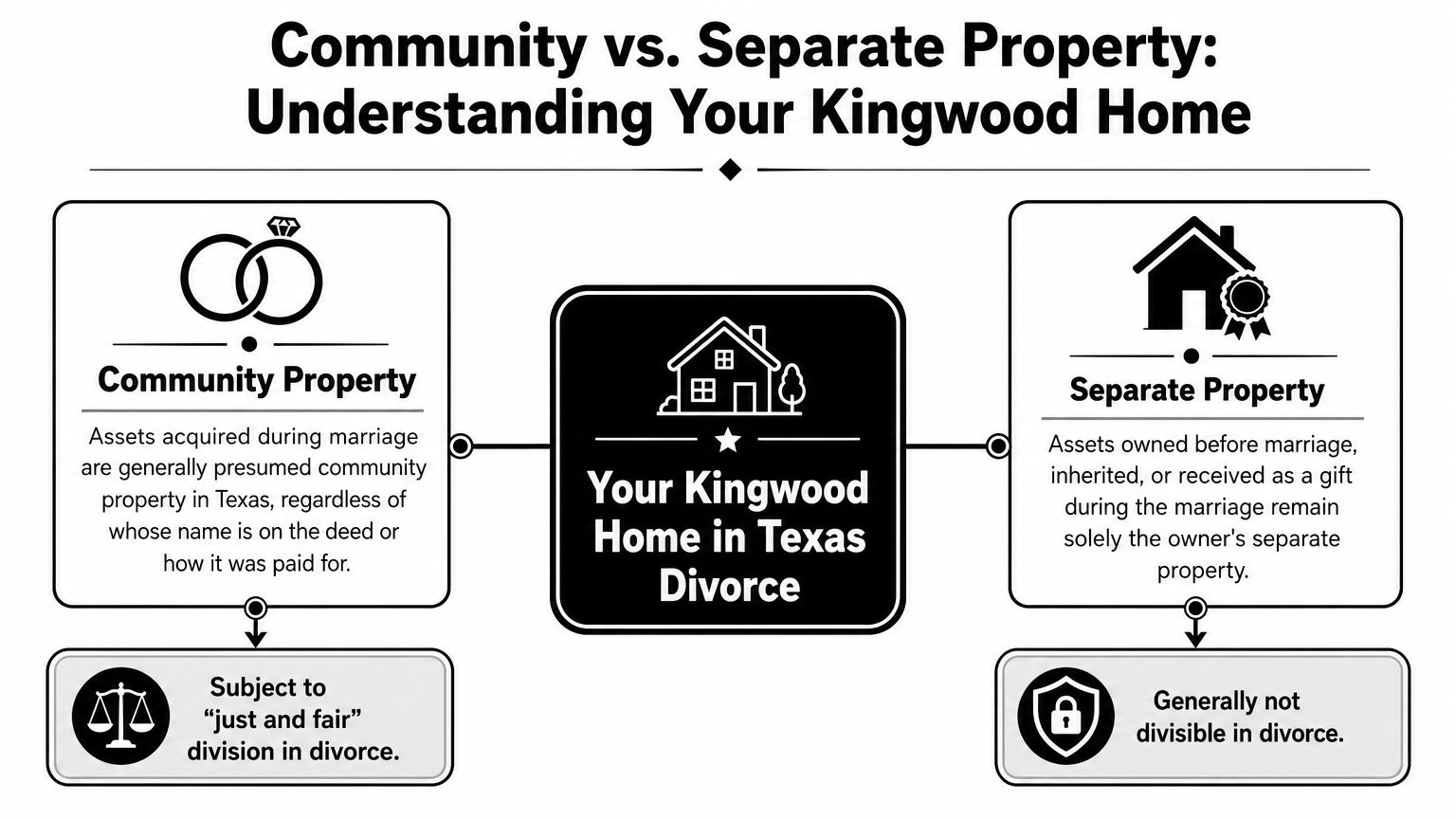
That classification sets the boundaries of the conversation. If a house is separate property, a judge cannot hand ownership to the other spouse because that result feels fair. If it is community property, the court can divide the value in a just and right way, which may include awarding the house to one spouse, ordering a buyout, or requiring a sale.
A simple way to sort this out is to start with timing and source of funds.
Community property usually includes a home bought during the marriage. That is true even if only one spouse signed the deed or handled the closing paperwork.
Separate property may include a home one spouse owned before marriage, or a home received during marriage by gift or inheritance.
That sounds clean on paper. Real life is rarely that clean.
Many Kingwood, Humble, and Porter spouses assume the deed answers the question. It usually does not. Title matters, but Texas courts look past the front page of the deed and ask how the property was acquired and what evidence supports the claim. As noted in this Texas discussion of classifying the marital residence, the spouse claiming separate property has to prove that claim with clear and convincing evidence.
That burden matters more than people expect. If you say, "I bought this house before we married," you need records that trace the ownership and the money. Courts in Harris County and Montgomery County apply the same Texas property rules, even though the filing process and courtroom routines may feel different depending on which side of the Kingwood area your case lands.
Here are the two questions that usually matter most:
- When was the home acquired?
- What money paid for the purchase, mortgage, repairs, taxes, and insurance?
Those questions often expose the underlying issue. A spouse may have brought the house into the marriage as separate property, but years of marriage can blur the paper trail. Mortgage payments from earned income during the marriage, major repairs paid from joint accounts, or refinance documents signed later can all complicate the analysis.
Commingling is where many separate-property claims run into trouble. Separate and community funds get mixed together, and the court has to sort out what can still be traced clearly. A pre-marriage home does not automatically lose its separate character because community money was used on it, but the reimbursement claims and proof problems can become complicated fast.
Here is a common example. One spouse bought a home in Porter before the wedding. After marriage, both spouses used income earned during the marriage to pay the mortgage, replace the roof, and remodel the kitchen. The house may still begin as separate property, but the community estate may have a claim tied to those contributions. That is one reason these cases often require more than a quick look at the deed.
Paper beats memory in these disputes.
If the house may be separate property and you want to protect that claim, gather the deed, closing documents, mortgage statements, refinance papers, bank records, tax statements, insurance records, and receipts for major repairs. If the house is likely community property, those same records still matter because they help show equity, reimbursements, and whether keeping the home is financially realistic after divorce.
For a closer look at how these issues are handled locally, review this guide to property division in a Kingwood divorce.
How Child Custody Influences Who Stays in the House
A Kingwood parent sits at the kitchen table after school pickup, looking at backpacks by the door and wondering the same thing many mothers and fathers ask first. Will the kids have to leave this house if the marriage ends?
That question matters because the house is not just an asset on a spreadsheet. For children in Kingwood, Humble, or Porter, it is the place tied to bus routes, familiar bedrooms, nearby grandparents, and the routines that make a hard season feel a little less shaky.
Texas courts focus on the children's best interests in custody decisions, but that does not create an automatic rule that the parent with the children most of the time gets the house. A judge may consider whether keeping the children in the home reduces disruption, especially if one parent handles more of the school-week routine and daily care, as explained in this Texas family-law overview on divorce, kids, and the house.
In plain terms, custody can strengthen a house claim. It does not settle it.
A judge looking at a Kingwood family often wants to know practical details. Who gets the children up for school at Woodland Hills or Bear Branch. Who handles homework, therapy appointments, and soccer practice. Whether staying in the current home would keep the same school, commute, and neighborhood support system in place. Those facts help show why one parent may ask to stay in the house with the children.
Then the court asks the question people often miss. Can that parent afford to keep it?
That is where many families get surprised. Being awarded the right to stay in the home is a little like being handed the keys to a truck without knowing whether you can cover the payment, insurance, gas, and repairs. The order may solve the possession issue, but it does not make the monthly bills smaller. In Harris or Montgomery County courts, that financial reality matters a great deal because judges know a house only helps children if the parent remaining there can keep it stable month after month.
Here is the practical comparison many courts and attorneys look at:
| Factor | Why it matters |
|---|---|
| Primary daily parenting role | Shows which home setup may cause the least disruption for the children |
| School and neighborhood ties | Supports keeping children near their current campus, activities, and support network |
| Current and post-divorce budget | Helps show whether one parent can cover mortgage, taxes, insurance, utilities, and upkeep |
| Ability to refinance or offset equity | Addresses whether keeping the home is realistic, not just emotionally appealing |
That last point deserves extra attention for local families. In real cases, the hardest part is often not getting a judge to award temporary use of the house or even final possession. The hard part is removing the other spouse from the mortgage and qualifying for a refinance on one income. A parent may have a strong custody position and still face a sale if the lender will not approve the loan.
So avoid a common mistake. Do not build your house strategy on the assumption that custody decides everything, and do not build your custody strategy around the assumption that staying in the house is always best. Courts look at the whole picture.
If you need a clearer explanation of the parenting roles Texas courts use, this guide to a custodial parent vs non-custodial parent helps explain the labels. If keeping the house will not work financially, it may be smarter to plan for a sale and sell your house quickly after divorce than to fight for a home that becomes a burden a few months later.
Your Three Main Options for the Marital Home
Texas starts with community-property rules and requires a just and right division rather than an automatic equal split. For the marital home, the most common outcomes are selling the house and dividing proceeds, awarding the house to one spouse with an equity offset, or having one spouse refinance and buy out the other, as summarized in this Texas overview of who gets the house in divorce.
That gives most Kingwood families three practical paths.

Option one, sell the house
Selling creates the cleanest break in many divorces. The home is listed, sold, and the proceeds are divided according to the final agreement or court order.
This option often works best when neither spouse can afford the home alone, when the equity is needed to fund two separate households, or when conflict is high and continued financial ties would only create more problems.
A sale also avoids one common trap. People sometimes fight hard to keep a house they can't really afford after divorce, then end up facing late payments and stress a few months later.
If you're weighing how to sell your house quickly after divorce, that guide can help you think through timing, logistics, and the practical side of moving the property once the legal decision is made.
Option two, one spouse keeps the home
This is usually the most emotionally appealing option when children are involved. One parent remains in the house, the kids stay in familiar surroundings, and the other spouse receives value for their share of the equity.
That value may be handled through cash from refinancing, by offsetting other property, or through another negotiated equalization method. The appeal is obvious. The children may experience less disruption, especially if the remaining parent can manage the home comfortably.
But this option is only as strong as the numbers behind it. If the spouse keeping the house can't refinance or can't manage the full monthly cost, the arrangement may fail after the divorce is final.
Option three, delayed sale or temporary co-ownership
Some couples agree to keep joint ownership for a period of time. One parent may remain in the home with the children until a later event, such as a move, graduation, or another agreed milestone, and the house is sold later.
This can work in narrow situations, but it requires careful drafting and a high level of cooperation. You still need answers to hard questions:
- Who pays the mortgage
- Who handles repairs
- What happens if one parent misses a payment
- How sale timing gets decided later
- How the equity will be calculated when the sale happens
Ongoing co-ownership after divorce can preserve short-term stability for children, but it also keeps former spouses financially connected. That tradeoff needs to be intentional, not accidental.
Comparing your options for the family home
| Option | Best For | Key Challenge | Child Stability |
|---|---|---|---|
| Sell the house | Couples who need a clean financial break | Moving the children and dividing sale logistics | Lower in the short term, but can create clearer long-term budgeting |
| One spouse buys out the other | Families where one parent can truly afford the home | Refinancing, valuation, and equity payout | Often stronger if the children remain in the same home |
| Co-ownership with delayed sale | Parents who can cooperate and want short-term continuity | Ongoing conflict risk and shared financial exposure | Can preserve routine for a period, but requires detailed rules |
Which option fits most Kingwood families
There isn't one answer for every household in Northeast Houston. A family with steady income, manageable debt, and a realistic refinance path may prefer a buyout. A family already stretched thin may be safer selling. A delayed sale can help in rare cases, but only when the order is detailed and both parties are likely to follow it.
The key is choosing the option that works six months after the decree, not just the one that feels best today.
The Buyout Process The Mortgage and Refinancing Reality
Many people think the hardest part is getting the judge to award them the house. In truth, the harder part may come after that.
A divorce decree can decide who gets the home. It does not force the mortgage lender to release the other spouse from the loan. That difference between title and mortgage liability causes a lot of post-divorce trouble in Kingwood, Porter, and across Northeast Houston.
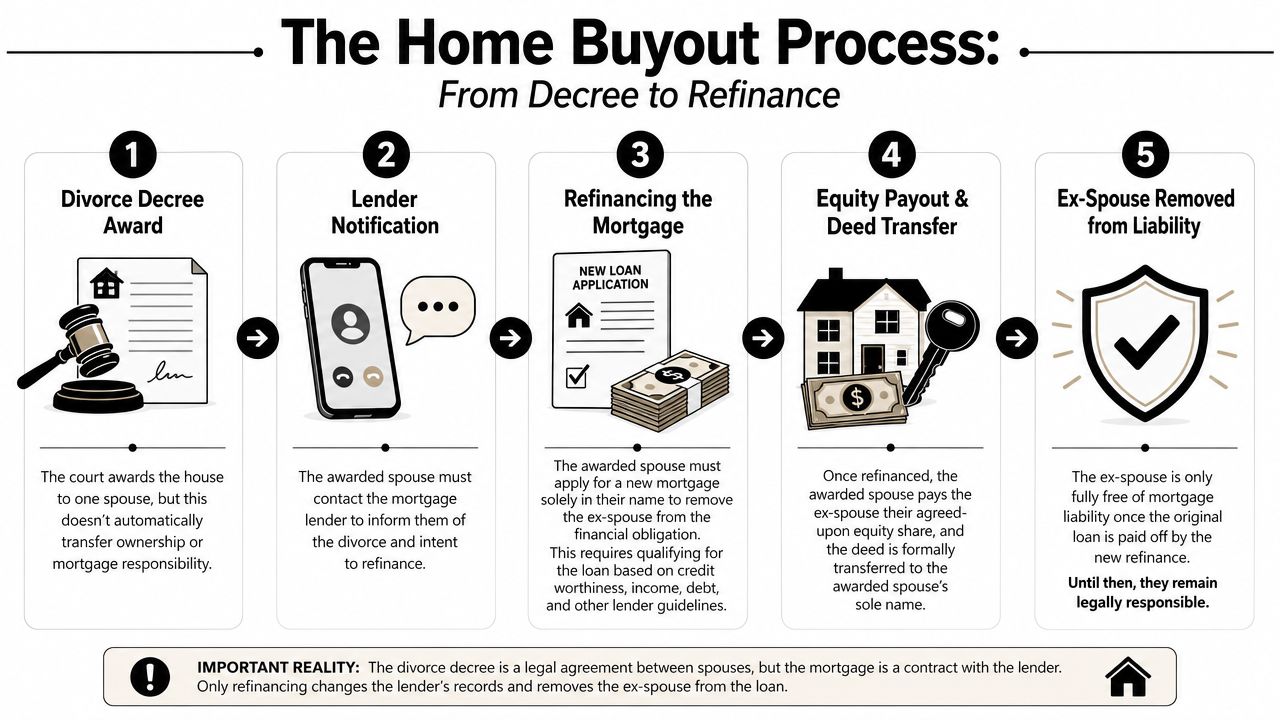
The decree, the deed, and the loan are not the same thing
Texas guidance explains that the final decree should say who gets the house, the spouse not keeping it should sign a deed transferring title, and the spouse keeping the home usually must refinance to remove the other spouse from the mortgage. It also recommends using a Deed of Trust to Secure Assumption until the refinance is complete, according to TexasLawHelp's guidance on divorce and real estate.
That means three separate layers may exist at once:
- The divorce decree says who the court awarded the house to.
- The deed transfers ownership interest.
- The mortgage note keeps both names liable until the old loan is paid off or replaced.
A spouse can sign over title and still remain legally exposed on the mortgage if the refinance never happens.
Important distinction: Getting the house and getting the loan into your sole name are different jobs. If you don't complete both, the other spouse may still be tied to the debt.
For readers who want to better understand lender terms that can affect transfers and refinancing, this plain-English explanation of an alienation clause definition is helpful background.
A realistic buyout timeline
The buyout process usually works better when you think of it as a project with documents, deadlines, and lender requirements.
Start with a practical sequence:
- Confirm the equity numbers: You need a defensible value for the house and a clear plan for the other spouse's share.
- Review your income and credit: The spouse keeping the home has to qualify for the refinance on their own, unless another lawful arrangement is in place.
- Draft decree language carefully: Deadlines for refinance, deed transfer, and remedies for missed deadlines matter.
- Use security tools when appropriate: A Deed of Trust to Secure Assumption can protect the spouse staying on the loan temporarily.
- Finish the refinance promptly: The old loan is the primary liability problem.
Here is a short explainer that helps many clients understand the lending side before they talk to a bank:
Questions to ask before you fight for the house
A buyout can be smart, but only if you pressure-test it first.
Ask yourself:
- Can I qualify for the refinance alone
- Can I cover principal, interest, taxes, insurance, HOA dues, and repairs
- What happens if rates or lender requirements make refinancing harder
- What other assets would I trade away to keep the house
- If I miss the refinance deadline, what remedy should the decree include
This is also where asset-protection planning matters. If you're trying to think beyond the house itself, this page on how to protect assets in a divorce can help you look at the broader picture.
The Law Office of Bryan Fagan – Kingwood TX Lawyers handles divorce and property-related family law matters for clients who need help evaluating these house and refinance issues as part of an overall divorce strategy.
Securing Your Rights Temporary Orders and Next Steps
The final decree gets most of the attention, but many families in Kingwood feel the true pressure much earlier. They need to know who stays in the house now, who pays the bills now, and how the children will live while the divorce is pending.
That's where temporary orders matter.
Why temporary orders can shape the whole case
In Texas divorce cases involving children, the house is not automatically awarded to the parent with custody. Courts apply a just and right community-property division and often look at who can carry the home's long-term costs, including mortgage principal and interest, property taxes, insurance, HOA dues, and maintenance, as described in this Texas discussion of divorce, children, and home affordability.
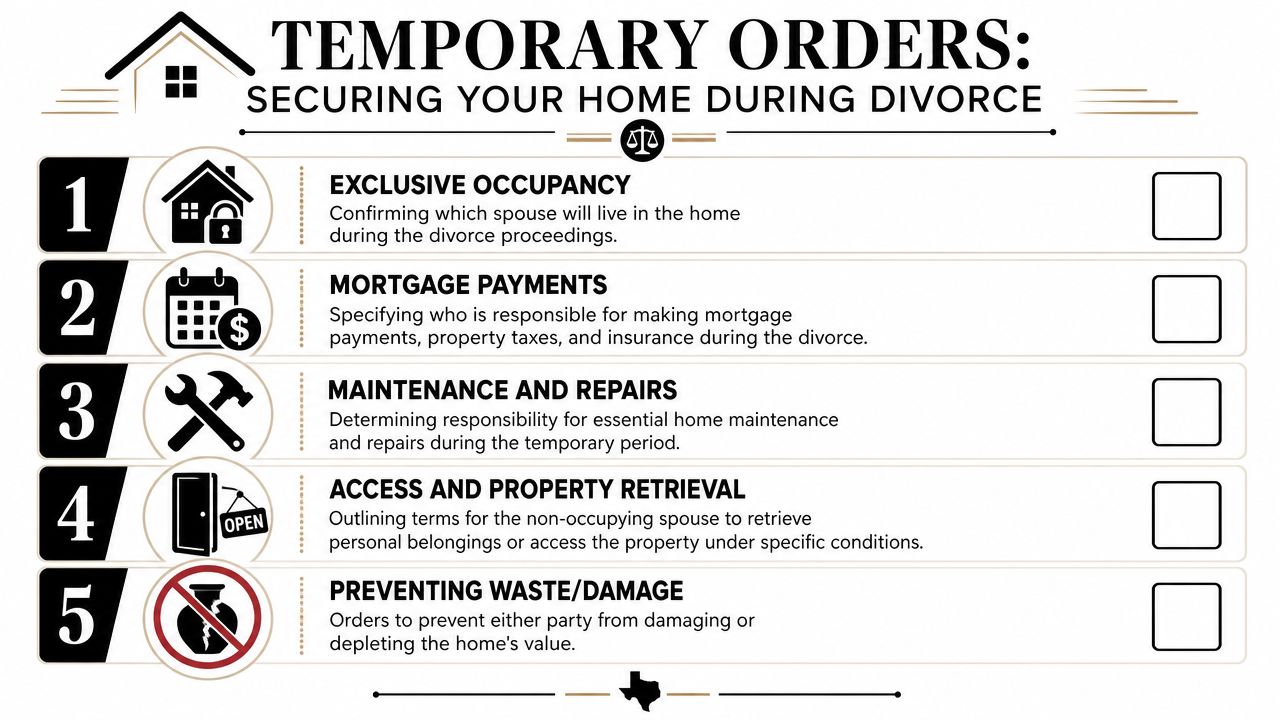
Temporary orders don't usually decide final ownership, but they often establish the lived reality of the case. If one parent is granted temporary use of the home, pays the bills, and keeps the children stable there during the divorce, that can become an important part of the overall story the court sees.
What temporary orders often address
A temporary orders hearing can address daily issues that can't wait for final trial or settlement.
Common topics include:
- Exclusive occupancy: Which spouse stays in the home during the divorce.
- Payment duties: Who covers mortgage payments, taxes, insurance, and utilities while the case is pending.
- Maintenance responsibility: How essential repairs and upkeep will be handled.
- Access rules: When the non-occupying spouse can retrieve belongings or enter the property.
- Protection of value: Orders preventing waste, damage, or financial neglect.
If you're the parent asking to stay in the house with the children, don't just say the move would be hard on them. Bring facts that show the arrangement is workable.
The strongest request for temporary use of the home combines two things. A child-centered reason and a believable payment plan.
Documents to gather now
The fastest way to feel more in control is to start building your file. A solid home-related case is often won through paperwork, not speeches.
Gather these items early:
- Mortgage statements showing the current loan, payment amount, and account status
- Property tax and insurance records so you know the true carrying cost
- HOA statements and utility bills because those monthly obligations matter
- Pay stubs and income records to show what you can afford
- Bank statements reflecting who has been paying housing expenses
- Repair invoices and maintenance records if condition or upkeep is disputed
- School and activity information if continuity for the children supports your request
- Any refinance prequalification information if you hope to keep the home permanently
A grounded next step for Kingwood families
Parents in Humble and Northeast Houston often feel pressure to decide the house question immediately. You usually don't need a final answer on day one. You do need a clear short-term plan.
That plan should answer four questions:
| Immediate issue | What to pin down |
|---|---|
| Living arrangement | Who remains in the home during the case |
| Bills | Who pays what, and by when |
| Children's routine | How school, transportation, and daily care will work |
| Property protection | How to avoid missed payments or damage to the home |
When those points are addressed early, the rest of the case becomes easier to manage.
Conclusion Building a Stable Future for Your Family in Kingwood
When parents ask who gets the house in divorce with kids texas kingwood, they're usually asking something deeper. They're asking how to protect their children, their finances, and some sense of normal life.
The answer in Texas comes from a mix of property law, parenting realities, and affordability. First, the house has to be classified correctly. Then the court looks at what arrangement is just and workable. When children are involved, stability matters. So does the parent's ability to carry the home.
For some families in Kingwood, Humble, or Porter, the right answer is to sell and start fresh. For others, a buyout makes sense if refinancing is realistic. In a smaller group of cases, temporary co-ownership may buy time, but only with clear rules.
The biggest mistake is assuming the answer will take care of itself. It won't. Good records, thoughtful planning, and early action around temporary orders can make a major difference.
If you're facing this decision, a local conversation can help you turn fear into a plan.
Frequently Asked Questions About the House in a Texas Divorce
Some questions come up in almost every consultation, especially when children and a family home are involved. Quick answers can help you spot the issues that need closer attention.
Quick answers to common questions
| Question | Answer |
|---|---|
| If I'm the parent the kids live with most, do I automatically get the house? | No. Parenting time and stability may help your argument, but the house is not awarded automatically based on custody. |
| If only my spouse's name is on the deed, can I still have a claim? | Yes, sometimes. Title alone doesn't always control if the house was acquired during the marriage with marital funds. |
| Can the judge give my separate-property house to my spouse because of the children? | Generally, no. If the home is truly separate property and that claim is properly proven, the court can't simply award it to the other spouse. |
| Can I keep the house and just remove my ex from title later? | Title transfer is only part of the issue. If both of you are on the mortgage, the lender usually has to be dealt with separately through refinance or another lender-approved solution. |
| What if neither of us can afford the home alone? | In many cases, selling the house becomes the most practical option. |
| Do temporary orders matter if the final decree will decide everything later? | Yes. Temporary orders often shape who stays in the home, who pays the bills, and what living arrangement becomes the pattern during the case. |
If your case involves a house, children, and uncertain finances, don't guess your way through it. Small details in the decree, deed language, and temporary orders can affect your family for years.
If you're dealing with divorce, custody, and the future of your home in Kingwood, Humble, Porter, or Northeast Houston, talk it through with a local team that handles these issues every day. Law Office of Bryan Fagan – Kingwood TX Lawyers offers free consultations at the Kingwood office so you can discuss your situation, understand your options, and build a practical plan for your family and home.