Skip to content
A lot of families in Kingwood put this off for the same reason. Life is full. You're working, helping kids with school or activities, checking on aging parents, and trying to enjoy a quiet weekend in Humble or Northeast Houston. Then one conversation changes the tone. Who would handle the house? What happens to the bank accounts? Would the children have to deal with court?
Those questions aren't only for wealthy families or retirees. They come up for homeowners, blended families, young parents, business owners, and adult children helping parents get organized. If you've started searching for a will and trust attorney in Kingwood Texas, you're probably not looking for abstract legal theory. You want clear answers, a practical plan, and a process that feels manageable.
Securing Your Family's Future in Kingwood Texas
A Kingwood couple takes an evening walk through the neighborhood after dinner. They've worked hard, bought a home, built savings, and started talking more seriously about what would happen if one of them got sick or passed away unexpectedly. They assume they'll “get to it soon,” but they're not sure whether they need a will, a trust, or both.
That conversation is common here. Kingwood has more than 57,000 residents, a median household income of $98,500, and over 18% of residents are age 65 or older, which helps explain why so many local families are actively looking for will and trust guidance in Kingwood and nearby communities like Humble and Northeast Houston (Kingwood estate planning market overview).
Estate planning can feel heavy because it asks you to think about illness, death, and family conflict. But the work itself is often simpler than people expect when it's broken into small decisions. Who should receive what. Who should manage things if you can't. Who should step in for minor children. Which assets should pass privately, and which need written instructions.
Practical rule: A good estate plan doesn't just transfer property. It gives your family a roadmap during a stressful time.
That's also why local legal guidance matters. Texas has its own probate rules, witness requirements, community property laws, and trust funding rules. A family in Porter or Humble may face the same broad questions as someone anywhere else, but the answers depend on Texas law and the facts of that household.
The same local office that helps clients with estate planning may also guide families through related legal issues, from probate administration to family law concerns that affect remarriage, children, and property rights. In real life, those issues often overlap.
Wills and Trusts What Every Kingwood Family Should Know
A Kingwood parent with a house, retirement accounts, and two children usually asks a practical question first. Which document helps my family the most, a will or a trust? The answer depends on what you own, who depends on you, and how much court involvement you want your family to deal with later.
A will is a written set of instructions that takes effect after death. A revocable living trust starts working during your lifetime once it is created and funded. In plain terms, a will says who should receive property and who should be in charge. A trust can also do that, but it adds a management layer if you become incapacitated and for assets held in the trust after death.
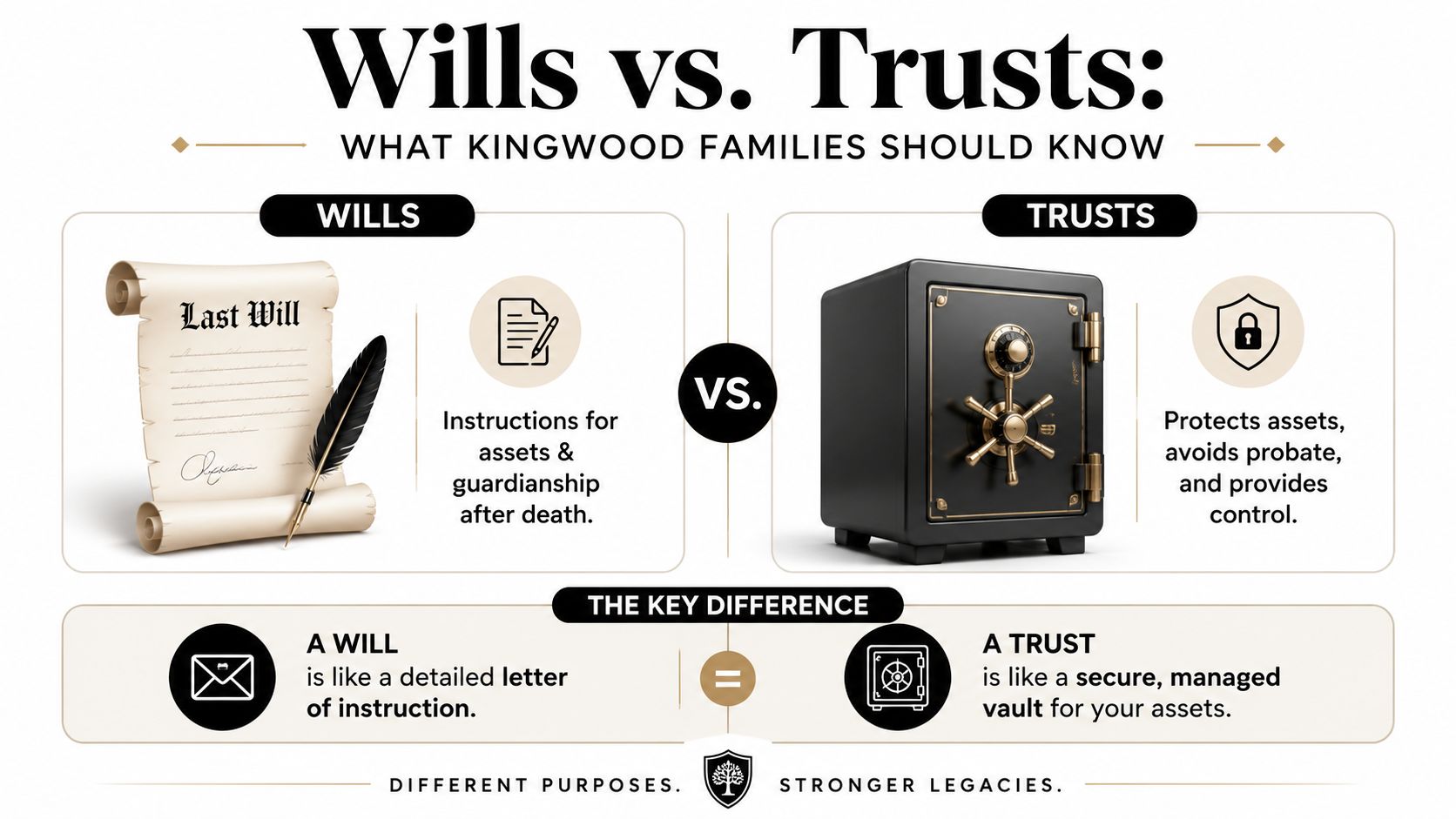
What a will does in Texas
For many families in Kingwood, a will handles the core decisions. It lets you name beneficiaries, choose an executor, and nominate guardians for minor children. That last point matters for parents because a trust does not replace the need to name who should care for children if both parents die.
Texas also requires a will to be signed with the formalities set out in the Estates Code. If those steps are skipped, the document may create problems instead of solving them. You can review the state rule directly in Texas Estates Code Section 251.051 on will execution.
Kingwood families also need to keep Texas community property rules in mind. If you are married, some assets may belong partly to your spouse by law, even if the title or account statement only shows one name. A will can direct your share. It cannot give away an interest you do not own.
If you want a clearer side by side explanation before meeting with counsel, this guide on the difference between a will and trust is a helpful starting point.
What a trust does differently
A revocable living trust is often useful for families who want continuity. If the person who created the trust becomes ill, the successor trustee can step in and manage trust assets under the instructions already written into the document. That can be especially helpful when a family is trying to keep bills paid, protect a home, and avoid last-minute confusion.
Privacy is another reason some Kingwood residents choose a trust-based plan. A will usually has to be filed with the court after death. A trust generally handles funded assets outside that public filing process.
The word funded is where confusion usually starts. Signing a trust is only part of the job. Deeds may need to be updated. Some accounts may need new ownership or beneficiary designations. Without that follow-through, a beautifully drafted trust can sit on a shelf while the assets still pass through probate.
A good preparation step is managing important family records so you can locate deeds, account statements, insurance information, and beneficiary forms before legal drafting begins.
Will vs Revocable Living Trust in Texas
| Feature | Last Will and Testament | Revocable Living Trust |
|---|---|---|
| Effective upon | After death | During life, once created and funded |
| Probate | Usually goes through probate | Can help avoid probate for funded assets |
| Privacy | Probate filings are generally public | Administration is usually more private |
| Guardianship nominations | Yes, commonly used for minor children | Usually paired with a will for this purpose |
| Asset control during incapacity | Limited by itself | Can provide ongoing management through a successor trustee |
| Best fit | Simpler distribution plans | Families seeking privacy, continuity, and probate avoidance |
Here is the practical way I explain it to local families. A will is often enough when the plan is straightforward and the household mainly needs guardian nominations and clear instructions. A trust often makes more sense when the family owns a home, wants to reduce probate exposure, expects incapacity planning to matter, or has a blended family where timing and control of distributions need more care.
In Kingwood, that often comes up with second marriages, adult children from prior relationships, and homes that are part separate property and part community property. Those are not unusual situations. They just need documents that match real life.
A will directs who should receive property after death. A funded trust can also provide ongoing management and keep many assets out of the probate process.
The Truth About Texas Probate Court
A Kingwood family loses a parent, and before anyone can close an account, sell a home, or retitle property, the court may need to approve the next step. That is probate. In Harris County and Montgomery County, probate usually means filing documents, meeting deadlines, notifying the right people, and waiting for the court to sign off before certain assets can move.
For many families, probate is manageable. It is still a process with rules, public filings, and delay at a time when people are already dealing with funeral plans, bills, and family questions. That burden often feels heavier when no will exists, because Texas intestacy rules decide who inherits and in what shares.

Why families try to avoid probate
The goal is usually practical. Families want less paperwork, fewer court appearances, and fewer points where a title problem or missing document can slow everything down.
Privacy matters too. Probate filings are generally part of the public record, which can surprise people who assumed family financial details would stay private. A funded trust often reduces that exposure for assets titled in the trust and can make the handoff from one decision-maker to the next much smoother during incapacity or after death.
Insurance adds another layer of confusion. If you are sorting out is life insurance part of an estate, the answer often depends on who is named as beneficiary and whether the policy pays directly or flows back into the estate.
What probate looks like in real life
Here is the part that catches families off guard. Probate is not one form and one hearing. It works more like a checklist that has to be completed in the right order.
A surviving spouse or adult child may need to find the original will, identify which assets were owned individually, request authority from the court, notify heirs or beneficiaries, gather account statements, deal with creditor issues, and wait for court approval before certain transfers can happen. In Kingwood, real estate questions come up often, especially when a home may involve both community property and separate property interests. That issue can affect who owns what and whether a simple transfer is even possible.
If there is no will, Texas default inheritance rules step in. For blended families, second marriages, and families with children from prior relationships, those rules do not always match what the household expected. A spouse may inherit one portion, children another, and the family home may need a closer title review before anyone can decide the next step.
For a local explanation of filings, hearings, and what families can expect in this area, see this overview of probate court in Kingwood Texas.
For many Kingwood homeowners, the real concern is simple. They want their family spending time settling life, not standing in line to settle court paperwork.
Your Estate Planning Journey with a Local Attorney
Individuals often feel more comfortable about estate planning once they know what the process looks like. It's usually a series of conversations and follow-up tasks, not one intimidating legal event.
Early in the process, many families want to compare background, communication style, and planning approach. This resource on how to choose an estate planning attorney can help you prepare for that first meeting.
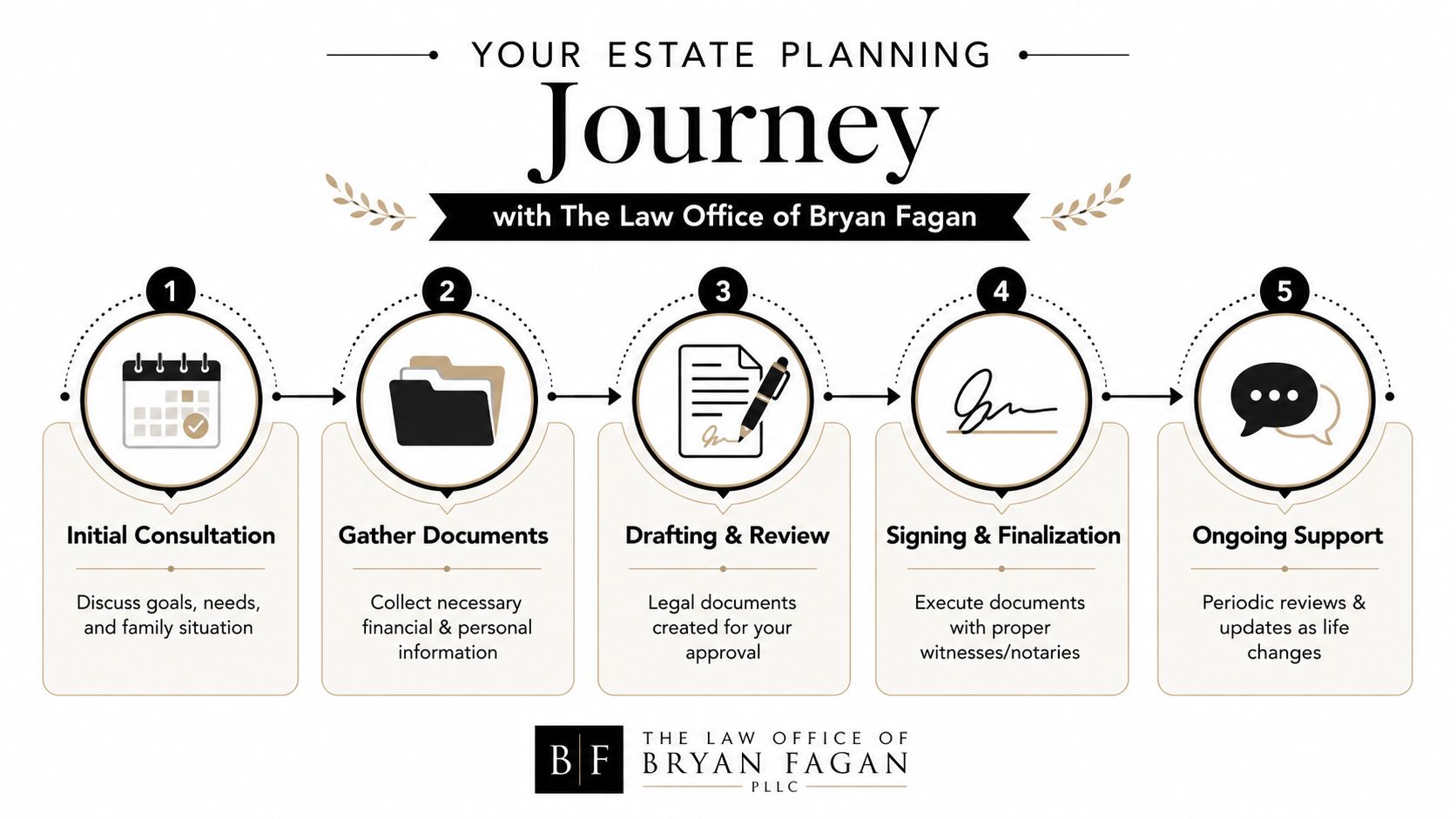
What to bring to the first meeting
You don't need a perfect binder. A rough list is enough to start. Most attorneys will want to know:
- Who's in your family. Spouse, children, stepchildren, former spouses, and anyone with special care needs.
- What you own. Home, bank accounts, retirement accounts, life insurance, business interests, and real property in or outside Texas.
- Who you trust. Executor, trustee, guardian, and agents under powers of attorney.
- What worries you most. Probate, privacy, blended family concerns, incapacity, or keeping things simple for your children.
That first conversation should feel practical. A local attorney should ask follow-up questions that connect your goals to Texas law, especially if you live in Kingwood, Humble, Porter, or Northeast Houston and own community property with a spouse.
Here's a short overview many families find useful before they sign documents:
The five working stages
Discovery and goal setting
During this phase, the facts come out. Second marriage, adult children, a child with special needs, a rental property, or concerns about family conflict. The structure of the plan usually starts here.Strategy design
Some clients need a straightforward will package. Others need a trust, survivorship review, powers of attorney, and updated beneficiary designations. It is by matching the documents to the actual family situation that a will and trust attorney in Kingwood Texas earns their keep.Drafting and review
You receive documents to review, ask questions about, and revise where needed. Good planning should feel understandable. If a term seems confusing, the explanation should be in plain language.Signing and formalities
Texas formalities matter. Witnesses, notaries where needed, and correct execution all need attention so the documents hold up later.Funding and follow-through
This step gets overlooked too often. Deeds may need to be updated, account ownership may need review, and beneficiary forms may need coordination with the estate plan.
One local option families consider during this process is the Law Office of Bryan Fagan – Kingwood TX Lawyers, which handles estate planning among its broader Kingwood-area legal services. What matters most is that the attorney you choose explains the documents clearly and helps you finish the implementation work, not just the drafting.
Key Questions to Ask a Will and Trust Attorney
The right questions can save you from expensive mistakes later. A polished website doesn't tell you how carefully an attorney handles trust funding, blended family planning, or client communication.
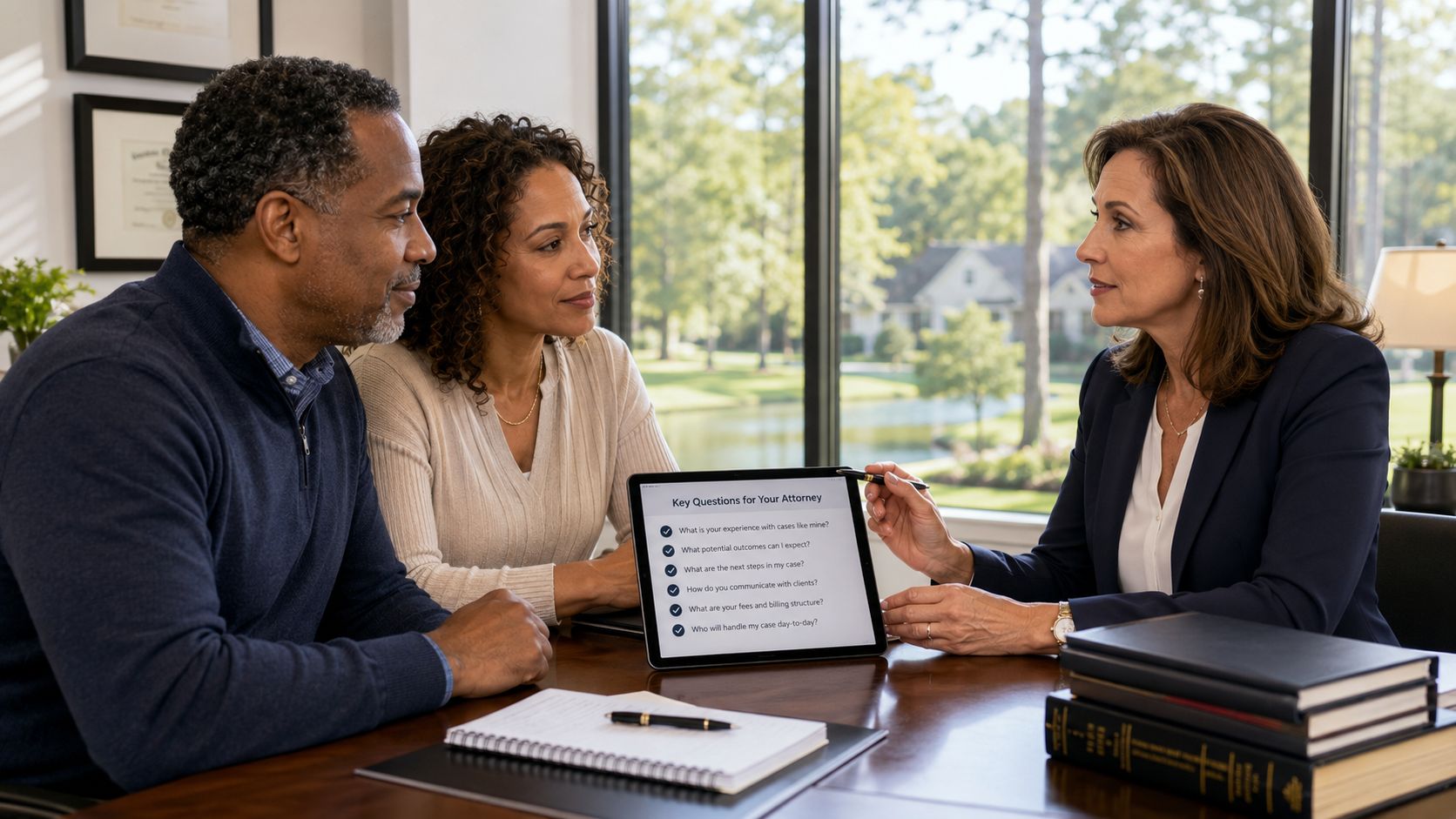
Questions that reveal how the attorney works
Ask direct questions and listen for direct answers.
How much of your practice is devoted to estate planning and probate?
You want someone who handles these issues regularly, not occasionally.How do you approach blended family planning in Texas?
This matters if you have children from a prior relationship, separate property, or concerns about community property.Will you help make sure the trust is funded?
Drafting the trust is only part of the job. You need to know what happens after signing.How do you coordinate wills, trusts, powers of attorney, and beneficiary designations?
A plan can fail when each document points in a different direction.
Questions about communication and local fit
Some of the best questions aren't about doctrine. They're about process.
- Who will be my main point of contact?
- How do you explain documents before signing?
- What happens if I need updates after marriage, divorce, a move, or a new child?
- Do you regularly work with families in Kingwood, Humble, Porter, and Northeast Houston?
Ask the attorney to explain one complicated issue in plain English. Their answer usually tells you how the whole relationship will feel.
You can also ask whether the attorney handles only estate planning or whether the office also sees related issues like probate, guardianship, family law, or civil disputes. That broader perspective can help when an estate plan intersects with remarriage, child custody questions, inherited property conflicts, or contract issues involving family businesses.
What a strong answer sounds like
A strong answer is usually specific and calm. It sounds like: “Here's how Texas treats this asset. Here's where confusion happens. Here's how we'd address it in your documents.” It doesn't sound rushed, vague, or overly technical.
If you leave a consultation understanding your next step, that's a good sign.
Common Estate Planning Pitfalls to Avoid
A Kingwood parent signs a will, puts it in a drawer, and assumes the family is covered. Years later, there is a remarriage, a refinance, a new retirement account, and a child turns 18. The documents stayed the same. The life around them did not.
That is how estate planning problems usually start. Not with neglect, but with a plan that no longer matches actual circumstances.
DIY documents that do not fit Texas rules
Online forms can be useful for learning the vocabulary. They are much less reliable for building a plan that has to work under Texas law.
Texas draws sharp lines between separate property and community property. It also has specific rules for signing and proving a will in probate court. A document that looks fine on a screen may create confusion later if it does not match how Texas treats a homestead, a second marriage, mineral interests, or accounts with named beneficiaries. That risk is higher for families in Kingwood who own a home, have moved from another state, or want to provide for both a spouse and children from a prior relationship.
Trusts only work if assets are actually moved into them
A trust works like an empty container until you place assets inside it.
This is one of the easiest mistakes to make because signing feels like the finish line. In reality, funding the trust is part of the job. If the deed to the house is never updated, or financial accounts stay titled in an individual name, those assets may still have to be handled outside the trust. Families are often surprised by this after a death, especially when they thought the trust would avoid probate altogether.
Community property and beneficiary designations can pull against the plan
Texas community property rules create confusion because different assets pass in different ways.
Some assets move by beneficiary designation. Some depend on title. Some follow the terms of a will or trust. A married couple may believe everything will flow neatly into one trust, but a retirement account, life insurance policy, or survivorship arrangement can send property somewhere else. In blended families, that mismatch can produce exactly the result the parents were trying to avoid.
Separate property, community property, account titles, and beneficiary forms all need to work together.
Out-of-date plans cause avoidable conflict
Estate plans should be reviewed after life changes. Marriage, divorce, a death in the family, a new child or grandchild, a business purchase, or a move within the Houston area can all affect what your documents should say.
Even smaller changes matter. A different bank account, a paid-off mortgage, or a child who is now mature enough to serve in a fiduciary role can change good drafting choices. A plan does not need constant rewriting, but it does need periodic checkups, much like a roof after storm season in Kingwood. You do not inspect it because you expect disaster. You inspect it so small issues do not turn into expensive ones later.
Frequently Asked Questions About Texas Wills and Trusts
Do I still need a will if I have a trust
Usually, yes. Many people with a trust still use a will, often called a pour-over will, to catch assets that weren't transferred into the trust during life and to nominate guardians for minor children. The trust does a lot of the management work, but the will still plays a practical role.
What happens to digital assets
Digital assets often include email accounts, cloud storage, photos, online financial tools, reward accounts, social media, and sometimes cryptocurrency. The smartest move is to create an inventory, store access information securely, and give your fiduciaries legal authority through properly drafted documents. Families in Humble and Kingwood often remember the bank accounts and forget the phone, laptop, or password manager until it's too late.
My estate isn't large. Do I really need a trust
Sometimes yes, sometimes no. A trust isn't only for tax planning or very large estates. It can also help with privacy, smoother management during incapacity, and simpler handling of a home or assets for younger beneficiaries. A modest estate with the wrong structure can still create major hassle for a surviving spouse or children.
What if I own property outside Texas
That's one of the situations where trust planning often becomes more attractive. Property in another state can create additional administrative work after death. A coordinated estate plan can reduce the chance that your family will have to sort through multiple legal systems at once.
Is signing a trust enough to make it work
No. A trust becomes effective only when the trust property is formally transferred to the trustee, which means creating the document alone isn't enough. For many Kingwood families, that means real estate and other assets must be legally re-titled into the trust's name (Texas trust funding requirement).
What happens if I die without a will in Texas
Texas law decides for you. That may sound simple, but it often doesn't match what a person would have chosen, especially in second marriages, blended families, or situations involving separate property. If you want your own wishes followed, the plan has to be written and executed correctly.
If you're ready to stop guessing and start organizing, a conversation with a local attorney can make the process far less intimidating. Families in Kingwood, Porter, Humble, and Northeast Houston usually feel relief once they understand the path forward and know what documents fit their lives.
If you'd like to talk through your options with a local team, schedule a free consultation with Law Office of Bryan Fagan – Kingwood TX Lawyers. The Kingwood office works with families on wills, trusts, probate, and related legal issues, and the goal is simple: help you understand Texas law, protect the people you love, and leave your family with a plan they can use.