Skip to content
TL;DR: If you live in Kingwood, your divorce is handled by the Harris County Family District Courts, because Kingwood is part of Harris County. The main courthouse is at 201 Caroline Street, Houston, TX 77002, and Texas law also requires that one spouse lived in Texas for 6 months and in Harris County for 90 days before filing.
When people in Kingwood, Humble, or Porter start thinking about divorce, the first question is often very practical. Where do I even file this? Not what happens at trial, not how property gets divided. Just, what court handles divorce in Kingwood?
That question matters because filing in the wrong place can slow everything down. For families in Northeast Houston, especially those with a spouse in another county or property spread across county lines, the answer is straightforward at first and more nuanced once real life enters the picture.
The First Step Navigating Divorce in Kingwood
A lot of neighbors call a lawyer only after spending hours online and getting more confused than when they started. One spouse may still be in the Kingwood house. The other may be staying with family in The Woodlands or working out of Humble. Children may be enrolled in school nearby, while a rental property sits in another county. It can feel like every detail changes the answer.
That overwhelmed feeling is normal. Divorce combines legal rules with very personal decisions, and those two things rarely move at the same pace.
For many Kingwood families, the hardest part is not the paperwork. It’s the uncertainty. You’re trying to keep life stable, get the kids where they need to go, and figure out whether downtown Houston is really where your case belongs.
A practical starting point: Before worrying about final outcomes, confirm the correct court, the right county, and whether you meet the filing requirements.
That first piece of clarity can take a lot of pressure off. Once you know which court has authority over your case, the process becomes more manageable. You can start gathering documents, planning next steps, and making decisions with less guesswork.
If you're searching for what court handles divorce in kingwood, the short answer is Harris County family court. The more helpful answer is understanding why that’s true, and what changes when your family has ties to Montgomery County or other parts of Northeast Houston.
The Simple Answer Your Harris County Connection
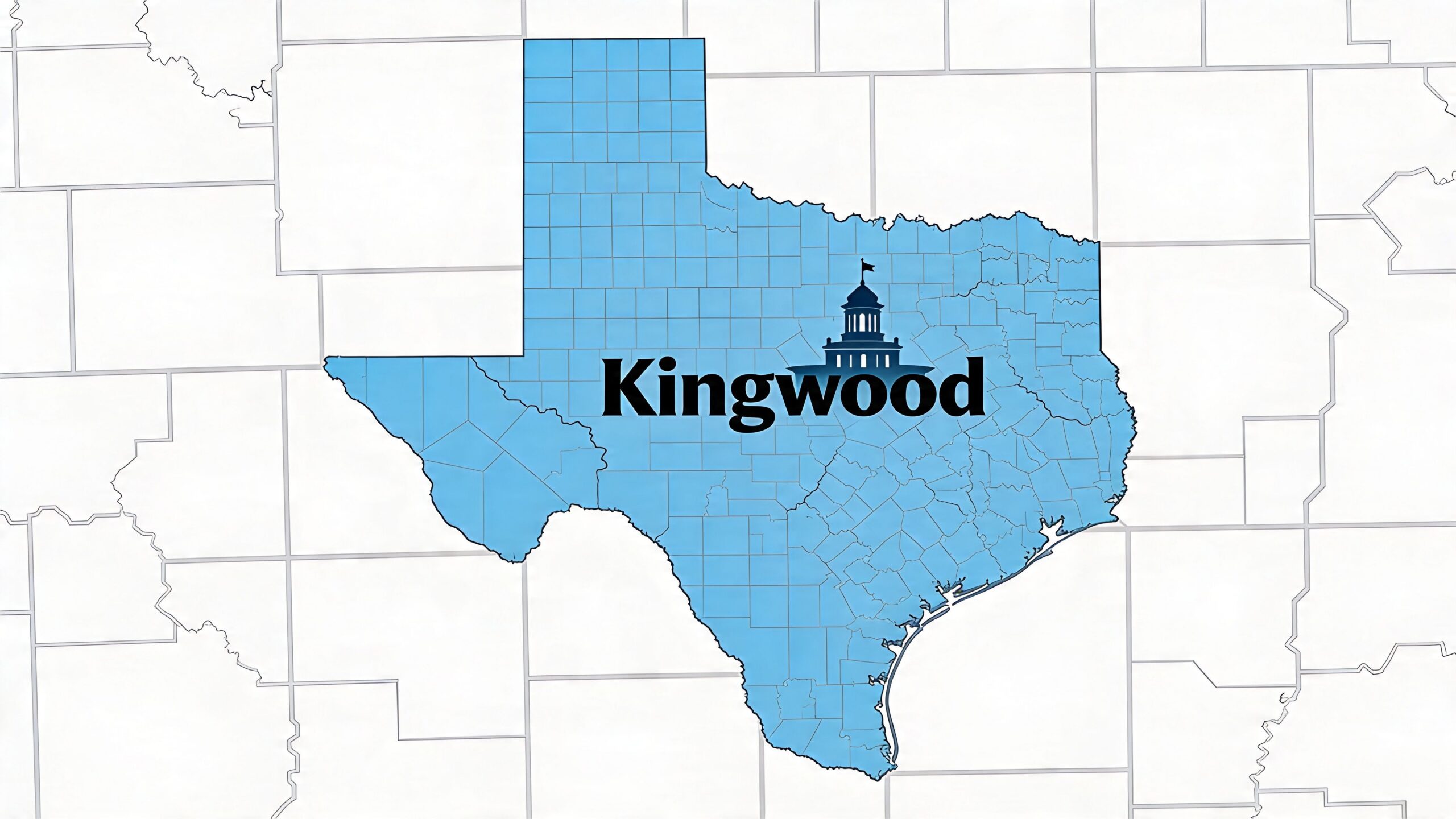
If you live in the Harris County side of Kingwood, your divorce is usually filed in the Harris County Family District Courts. That is the short answer many people need at the start.
What that means in plain English
Jurisdiction means the court has legal authority to hear your divorce and sign orders that both spouses must follow. For many Kingwood families, that authority is tied to Harris County because that is where the Kingwood address sits on the map.
In practical terms, many divorce filings connected to Kingwood are handled through the family courts in downtown Houston, including the courthouse at 201 Caroline Street, Houston, TX 77002. That can feel inconvenient if your daily life stays centered around Kingwood, Humble, or Atascocita. Still, the filing location usually follows county lines, not commute times.
This is also where Kingwood cases can get more complicated than online guides make them sound. A spouse may now be staying in Montgomery County. The children may be going to school in Northeast Houston. You may own property in more than one county. Those facts matter, but they do not automatically move the divorce out of Harris County if the filing rules point back to a Harris County residence.
One procedural detail people often miss
Harris County family courts often require motions to include a Certificate of Conference. That means the filing party tells the court whether they tried to resolve the issue with the other side before asking the judge to step in.
That requirement is not just paperwork. It encourages spouses and their lawyers to work out smaller disputes first, such as scheduling, document exchange, or temporary possession issues, before setting a hearing.
For Kingwood families, that can save time, stress, and another trip downtown.
Understanding Jurisdiction vs Venue in Your Divorce
People often use jurisdiction and venue like they mean the same thing. They don’t.
A simple way to think about it is this. Jurisdiction is the doctor’s specialty. Venue is the office location where you’re supposed to go. A family court may have authority to hear divorce cases, but venue decides which county is the proper place to file.
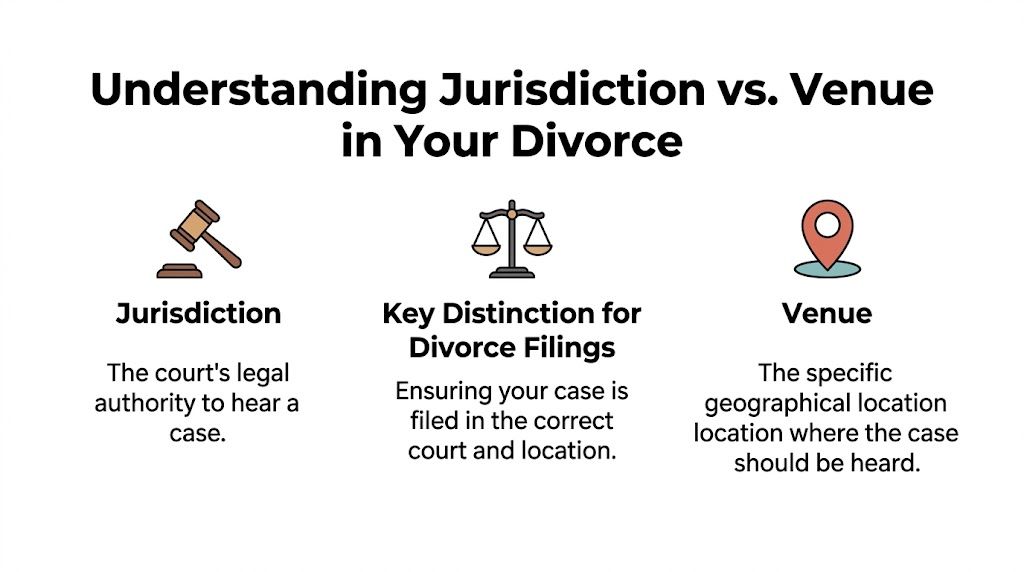
Why the distinction matters
Texas law requires one spouse to have lived in Texas for the preceding 6 months and in the filing county for the prior 90 days before filing, under the explanation summarized by Bryan Fagan’s discussion of Texas divorce venue and jurisdiction. That source also notes that nearly 15% of initial filings that miss these thresholds are dismissed statewide.
So if you live in Kingwood and meet the Harris County residency rule, Harris County is usually the proper venue. You don’t get to pick another county just because it feels more convenient.
Filing in the wrong county doesn’t usually create a clever shortcut. It usually creates a delay.
A quick comparison
| Question | Jurisdiction | Venue |
|---|---|---|
| What does it ask? | Does this court have legal power over the case? | Is this the correct county to file in? |
| Why does it matter? | Without it, the court can't decide your divorce. | Without proper venue, the case may be challenged or transferred. |
| Kingwood example | Harris County family courts can hear the divorce. | A Kingwood resident usually files in Harris County, not Montgomery County. |
Where people in Northeast Houston get tripped up
The confusion usually starts when family life crosses county lines. Maybe one spouse moved to Porter. Maybe the family owns land in Montgomery County. Maybe one parent left Kingwood recently and now says the case belongs somewhere else.
Those facts can affect venue disputes, but they don’t automatically move the case. The starting point is still the same. Figure out where the spouses lived, when they lived there, and whether the filing county is supported by the residency facts.
Meeting the Texas Residency Requirements to File
Residency is the part that trips up a lot of Kingwood families because it sounds simple until real life gets involved. One spouse may still be in the Kingwood house, the other may have moved to Porter or Conroe, and the family may own property in both Harris and Montgomery Counties. Before you file anything, the court wants a clear answer to one basic question: who has been living where, and for how long?
Texas uses two time-based rules for filing a divorce. One spouse must have lived in Texas for at least 6 months before filing. One spouse must also have lived in the filing county for at least 90 days before filing.
Those dates matter more than people expect.
If you have been living in the Harris County side of Kingwood long enough, Harris County is usually available. If you recently moved from Dallas into Humble, you may need to wait until the 90-day county requirement is met. If your spouse left the marital home but you stayed in Kingwood, your residency may still support filing here.
A simple way to look at it is this: the court is checking your timeline before it looks at your paperwork. Move-in dates, lease dates, utility records, and the date a spouse changed addresses can all matter if the filing county is questioned. For many Northeast Houston families, that becomes especially important when one spouse crosses into Montgomery County and assumes the case must be filed there. That is not always true.
If you want a clearer picture of how local filing works, this guide to the Harris County family court process for Kingwood residents can help connect the residency rules to the actual court system.
Check the calendar before the forms. Filing too early can cause delay, added expense, or a fight over whether the case belongs in Harris County at all.
The child-related rule is a separate question
Parents are often surprised by this part. The divorce itself and the custody portion of the case do not always rise or fall on the same facts.
As explained on the Harris County court information page, Texas generally must be the child’s home state before a Texas court can make initial custody orders. In plain English, that usually means the child has lived in Texas for the last 6 consecutive months.
So a spouse may qualify to file for divorce in Harris County, while the court still has to take a closer look at whether it can make child custody decisions right away. That issue comes up often in this part of town when a parent recently moved across county lines, or even across state lines, with the children.
For Kingwood families, the safest approach is to build the timeline first. Where did each spouse live? Where did the children live? On what dates? Once those answers are clear, the filing decision usually becomes much easier.
The Specific Courts That Handle Kingwood Divorces
Once your case is filed in Harris County, it will be handled by one of the county’s specialized family courts. For Kingwood residents, that makes the process feel less abstract. You’re not filing into some vague statewide system. You’re entering a defined local court structure.

Which courts are we talking about
Harris County uses specialized Family District Courts, including the 245th, 246th, and 247th, according to Justex court information for Harris County family courts. That same source explains that this specialization helps judges apply the Texas Family Code more consistently in areas like property division and child support.
For someone in Kingwood, that matters. A judge who handles family cases all day is used to the issues that come with divorce, parenting schedules, support disputes, and contested property questions.
What this looks like in practice
Your case is assigned within the Harris County family court system. The courthouse commonly associated with this process is at 201 Caroline Street in downtown Houston. For many Kingwood families, it’s a manageable trip, but still far enough away to feel intimidating the first time.
Here’s the encouraging part. Family court is structured for exactly these cases. You’re not trying to explain a divorce in a court that mostly handles something else.
If you want a clearer picture of the local court system, this guide to Harris County family court for Kingwood residents gives a more focused overview.
A quick reference list
- 245th Family Court: One of the specialized Harris County family courts.
- 246th Family Court: Another court that may handle family law matters for county residents.
- 247th Family Court: Also part of the family court structure serving Kingwood divorces.
The court number matters for scheduling, procedures, and judicial preferences. It’s one reason case strategy often becomes more specific after assignment.
Your First Steps in the Filing Process
Once you know the right court, the next question is usually what to do first. Many anticipate a complicated maze. The early steps are more orderly than they seem.
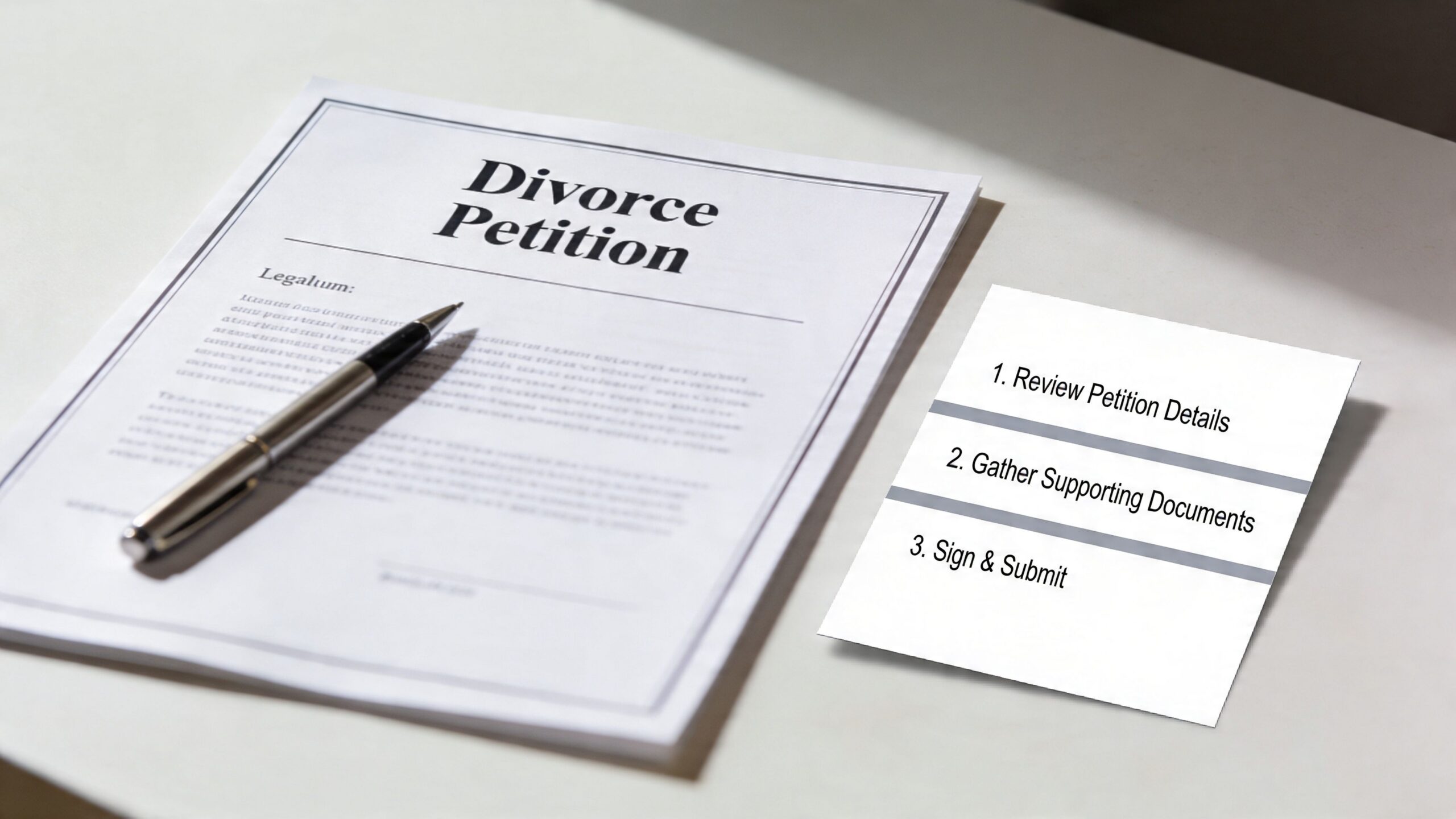
Step one begins with the petition
The opening document is usually called the Original Petition for Divorce. This tells the court that one spouse is asking for a divorce and identifies the broad issues involved, such as children, property, or requests for temporary orders.
It doesn’t need to argue the whole case on day one. It starts the case and frames it.
If you want a practical local walkthrough, this page on how to file for divorce in Kingwood, Texas can help you understand the filing sequence.
Then the case is filed with the clerk
After the petition is prepared, it’s filed with the Harris County District Clerk. Some people file electronically. Others work through counsel so the filing, service planning, and next deadlines are handled in one coordinated step.
A careful filing matters because the case information entered at the beginning affects what happens next. Wrong addresses, weak venue allegations, or incomplete family details can create problems that are avoidable.
The other spouse has to be served
After filing, the other spouse usually must be formally served with the divorce papers unless service is waived properly. Service is the legal notice that tells the other side a case has been filed and gives them the chance to respond.
People sometimes think texting a copy or telling the other spouse about the filing is enough. It usually isn’t.
Service isn’t about drama. It’s about due process and making sure the court can move forward cleanly.
For readers who prefer to hear the basics explained out loud, this short video is a useful companion:
A simple roadmap
- Confirm eligibility to file based on residency and any child-related jurisdiction issues.
- Prepare the petition with accurate facts about the marriage, children, and requested relief.
- File with the clerk in Harris County.
- Arrange service so the other spouse receives legal notice.
- Address early court requirements such as hearings, deadlines, and any needed conferences before contested motions are set.
For families in Kingwood and Northeast Houston, that sequence gives structure to a moment that often feels chaotic.
Navigating Complexities for Northeast Houston Families
A Kingwood divorce can start in Harris County and still involve facts from three different places by the time the paperwork is reviewed. One spouse may still live in Kingwood. The other may have moved to The Woodlands or Porter. The family may own a rental house in Montgomery County, a business interest in Houston, or land somewhere else in Texas. That mix is common for Northeast Houston families, and it is where simple online answers stop being enough.
The key point is this. County lines matter, but they do not control every part of the case in the same way.
When your spouse lives in another county
A common situation looks like this. You remained in Kingwood after separation, and your spouse moved to Montgomery County for work or to stay with family. People often assume that means the divorce has to be filed where the other spouse lives now. Often, that is not the full picture.
The court will care about facts such as where each spouse has lived, for how long, and which county fits the legal filing rules. It helps to gather the kind of documents that answer those questions clearly. Utility bills, leases, school records, voter registration, and mail sent to the home can all matter if the other side questions where the case belongs.
That issue can show up early.
Property across county lines
Families in Kingwood often own property outside Harris County. That alone does not shift the divorce to another county. Filing location and property location are related, but they are different questions. A Harris County family court can still divide property located elsewhere.
A helpful way to view it is this. The court is deciding the divorce between the spouses, then addressing the property as part of that case. The fact that a cabin, rental home, or vacant lot sits in another county does not automatically send the whole case there.
Concerns about hidden communications or possible infidelity can add another layer. If someone is trying to preserve messages, account activity, or other digital information before talking with a lawyer, a general educational resource on how to catch a cheater may help with organizing facts and questions. It is not legal advice, but it can help a spouse document concerns in a more orderly way.
Military service, commuting, and split-home routines
Northeast Houston families also run into residency questions that are less obvious. A spouse may work in another county during the week, stay with relatives part-time, or serve in the military and keep ties to more than one place at once. In those cases, the address on a driver’s license is only one piece of the story.
That is why these divorces deserve careful review before filing. The goal is to match the legal rules to real life, not to guess based on where someone slept last week.
If your facts are spread across Kingwood, Humble, Montgomery County, or beyond, it helps to speak with a Kingwood divorce lawyer for cross-county filing questions who can sort out residency, venue disputes, and property issues before those details turn into delays.
Get Trusted Legal Guidance Here in Kingwood
For those searching what court handles divorce in kingwood, the answer starts with one point. Kingwood divorces are filed in Harris County Family District Courts.
What makes the difference is everything around that answer. Residency dates. Cross-county living arrangements. Children who may have lived in more than one state. Property outside Harris County. Those are the details that turn a simple filing into a contested fight if they aren’t handled correctly from the start.
If you're in Kingwood, Humble, Porter, or another part of Northeast Houston, it helps to talk through your facts before you file. A local attorney can spot venue issues, explain court assignment, and help you avoid delays that come from preventable mistakes.
If you need more direct help with your options, you can speak with a Kingwood divorce lawyer about your specific situation.
If you're facing divorce and want clear answers from a local team, schedule a free consultation with Law Office of Bryan Fagan – Kingwood TX Lawyers. We help Kingwood and Northeast Houston families understand where to file, what steps come next, and how to move forward with confidence.