
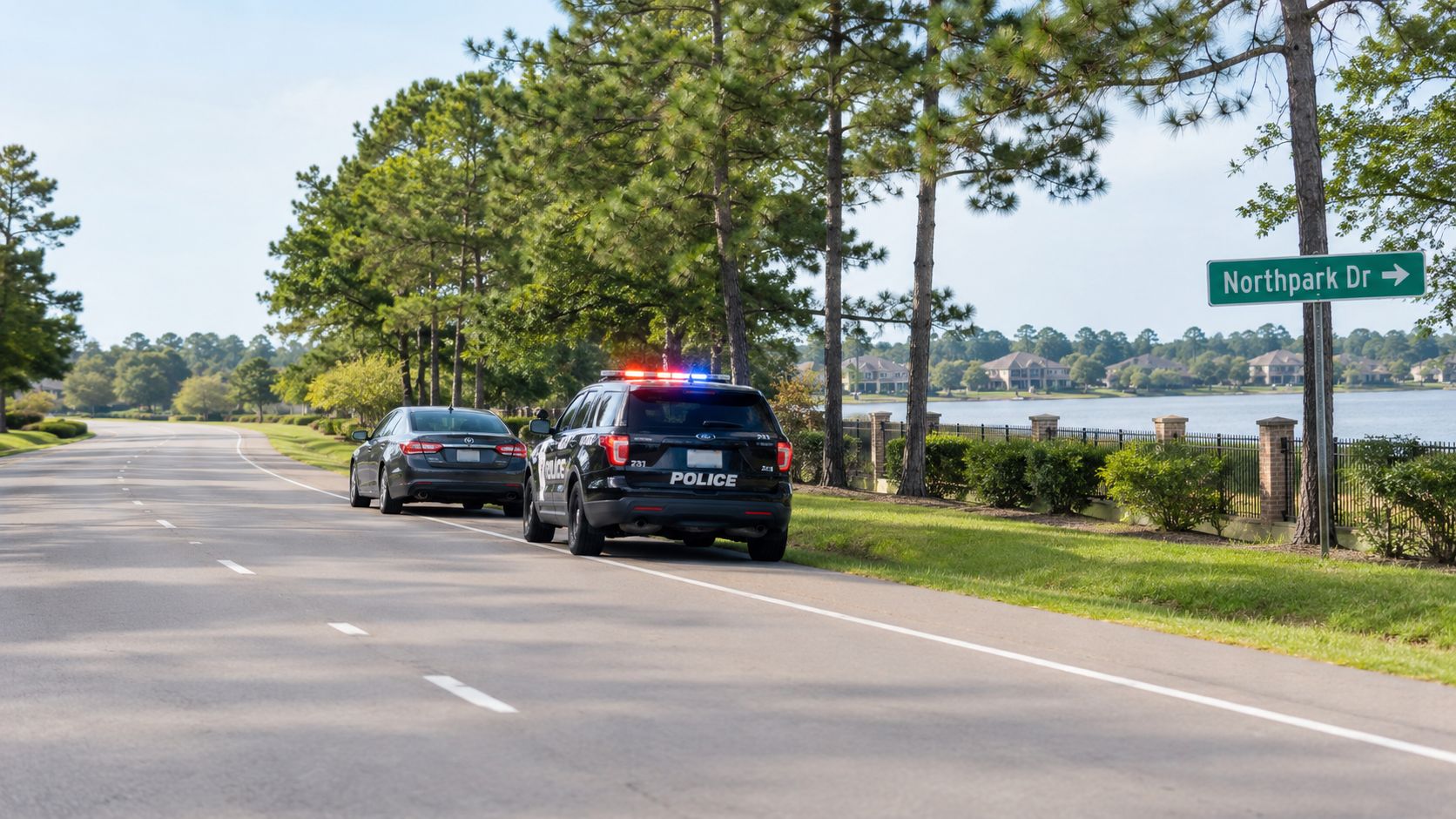
A traffic stop near Northpark Drive can change in seconds. An officer asks about a firearm in the vehicle, searches the passenger area, and suddenly you're facing questions about unlawful carrying, prohibited possession, or a restricted location. For a Kingwood resident, the uncertainty can spread quickly to family, employment, and plans for the future.
The presence of a gun doesn't automatically answer whether a crime occurred. Texas law looks at who possessed it, where it was located, how it was carried, what kind of weapon it was, and whether the person had a legal disqualification. Those details matter for people in Kingwood, Humble, Porter, and Northeast Houston because Harris County prosecutors continue to file weapons cases in significant numbers.
The Law Office of Bryan Fagan – Kingwood TX Lawyers approaches these cases with local accessibility and a client-focused plan. The first step isn't panic or a rushed statement. It's identifying the statute, preserving evidence, and testing whether the state can prove every required element.
Introduction When a Routine Stop Becomes a Weapons Case in Kingwood
You're driving home through Kingwood after work. The traffic stop might begin with a broken taillight or a question about the vehicle. Then an officer notices a firearm, asks who owns it, and searches the car. Even if the gun belongs to a family member, sits in a locked case, or was carried for protection, the encounter may lead to arrest and booking.
That situation feels frightening because the word “weapons” can make the case sound predetermined. It isn't. A prosecutor still has to connect the evidence to a specific Texas offense, and the facts surrounding the stop may affect whether the firearm can be used in court.
Why the first hours matter
An officer's report may describe the firearm as being “in possession,” but that phrase doesn't resolve every legal question. A defense lawyer will want to know whether the officer had a lawful reason to extend the stop, whether the search was consensual or supported by probable cause, who controlled the area where the gun was found, and whether the alleged weapon fits the statute cited.
Your release conditions and court dates also matter. Missing a Harris County setting can create a new problem even when the underlying weapons case remains defensible. Family members should preserve paperwork, avoid discussing the facts on social media, and help gather records without contacting witnesses or investigators on their own.
Practical rule: Don't explain the case from the roadside, in a recorded jail call, or online. Ask for counsel and let the evidence be reviewed first.
A local Kingwood attorney can coordinate with the Harris County court system while keeping communication accessible to residents in Humble, Porter, and Northeast Houston. The aim is to replace uncertainty with a clear assessment of the charge, the evidence, and the paths toward dismissal, reduction, or trial.
Understanding Texas Weapons Laws That Apply in Kingwood
Texas weapons law works like several layers of permission. A person may be allowed to possess a handgun generally, yet still be prohibited from carrying it in a particular place or prohibited from possessing it because of a prior conviction. Permitless carry, which Texas has recognized since 2021 for eligible adults 21 and older, doesn't erase those other layers.
The main state-law questions
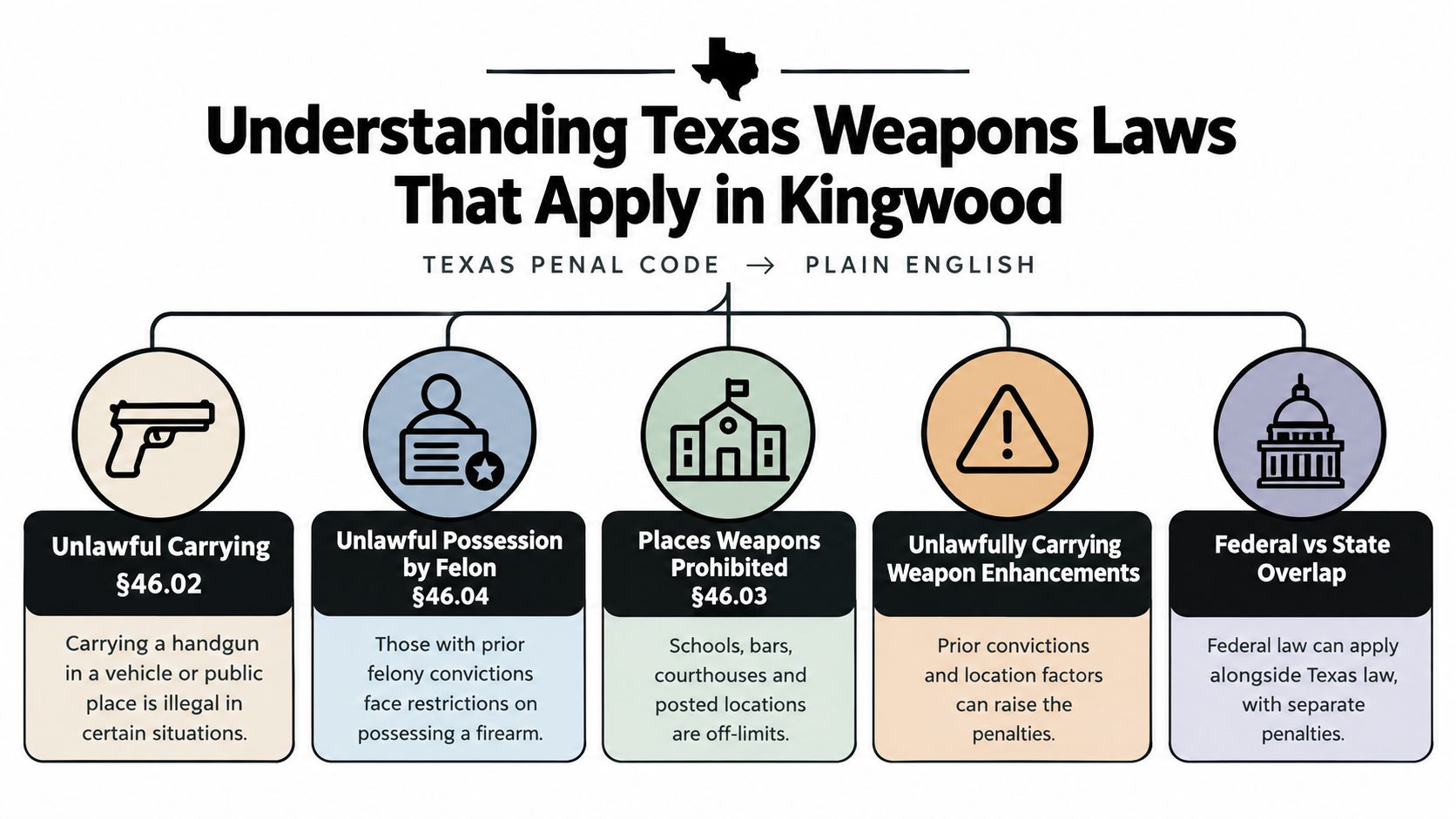
Unlawful carrying under § 46.02 generally makes unlawful carrying of weapons a Class A misdemeanor. The analysis can involve the type of object, the way it was carried, and the location. A handgun that is lawful at home may create a different issue in a public place, vehicle, school, courthouse, or alcohol-licensed premises.
Felon-in-possession under § 46.04 applies to a person convicted of a felony. Texas treats unlawful possession of a firearm by a felon as a third-degree felony, carrying 2 to 10 years in prison and a fine of up to $10,000. The statute creates a historical threshold that can be easy to miss: for the first five years after release from confinement or supervision, possession is prohibited, and after that period, possession is allowed only at the person's residence. Texas Penal Code § 46.04 makes the release date, parole status, and community-supervision history central facts.
Prohibited weapons under § 46.05 involve the object itself. The statute addresses categories such as explosive weapons, machine guns unless federally registered, short-barrel firearms unless NFA-registered, armor-piercing ammunition, chemical dispensing devices outside ordinary personal-defense spray, zip guns, and non-registered improvised silencers. The statute also covers knowingly possessing, manufacturing, transporting, repairing, or selling listed items. Texas Penal Code § 46.05 is the key starting point for cases involving more than ordinary handgun possession.
Prohibited places under § 46.03 add another layer. Schools, polling places, courts, secured airport areas, correctional facilities, and certain alcohol establishments can create separate criminal exposure. The same handgun may be lawful in a residence but unlawful in a restricted venue.
State rules, federal rules, and changing law
A state-law defense doesn't automatically eliminate federal risk. Federal restrictions may apply to particular firearms, registration issues, or a person's status, so counsel should identify both systems before recommending a strategy. A related resource, the gun trust attorney service for Kingwood residents, addresses a different planning need and shouldn't be treated as a substitute for criminal defense after an arrest.
Texas law changed in 2025. SB 1596, effective September 1, 2025, removed short-barreled firearms from the state prohibited-weapons list, although federal NFA requirements can still matter. SB 1362 barred enforcement of most red-flag-style orders, creating another reason to check the date and legal basis of an alleged violation. Older online explanations may no longer describe the current state position accurately.
For readers handling a separate family matter, Harris County Family Courts: A Kingwood Resident's Guide explains how family law cases proceed in the Harris County courts serving Kingwood.
Types of Weapons Charges and Penalties You Could Face
The charge level can change when one fact changes. A routine unlawful-carry allegation may be a misdemeanor, while prior felony status, a prohibited weapon category, or a restricted location can move the case into state-prison exposure.
| Offense Type | Classification | Punishment Range |
|---|---|---|
| General unlawful carrying under § 46.02 | Class A misdemeanor | Texas law generally treats the offense as a Class A misdemeanor |
| Unlawful carrying by a person prohibited under § 46.04(a) | Second-degree felony | Mandatory minimum of 5 years in prison |
| Unlawful possession of a firearm by a felon under § 46.04 | Third-degree felony | 2 to 10 years in prison and a fine up to $10,000 |
| Handgun on certain 51% alcohol premises | Third-degree felony | 2 to 10 years in prison and a fine up to $10,000 |
The classification for general unlawful carrying comes from Texas Penal Code § 46.02. That statute also provides a serious escalation when the accused is already prohibited from possessing a firearm under § 46.04(a). In that situation, the offense becomes a second-degree felony with a mandatory minimum five-year prison term.
Why the label doesn't tell the whole story
A third-degree felony for possession by a felon involves more than proving that a gun existed. The state must connect the person to possession and establish that the legal disqualification applied at the relevant time. Release records, supervision paperwork, the date of the prior conviction, and the location of the firearm can all affect the analysis.
A location can also raise exposure even when the firearm itself would ordinarily be lawful. Carrying a handgun on premises licensed to sell alcohol for on-site consumption can trigger a third-degree felony under the circumstances described by Texas law. The location-based alcohol-premises rule and its potential punishment show why counsel needs to verify the venue rather than rely on assumptions about a restaurant or bar.
Consequences beyond the sentence
A weapons conviction can affect employment, housing, family stability, professional licensing, and future firearm rights. Those consequences depend on the specific result and the person's circumstances, so a lawyer shouldn't promise a particular outcome. The practical point is that bond strategy, plea negotiations, and trial preparation should begin with the correct classification, not with a generic assumption that every gun case is the same.
How a Weapons Case Moves From Arrest to Court in Harris County
A Kingwood weapons arrest usually develops through several stages. Each stage gives the defense a chance to identify errors, preserve evidence, and challenge the state's theory before the case reaches trial.
The usual sequence
Detention and search: The officer stops the vehicle or person, asks questions, and may search based on consent, probable cause, a warrant, or another claimed exception. The body-camera recording and dispatch information may show whether the search exceeded the lawful scope of the encounter.
Arrest and booking: The person is transported for intake, fingerprinting, property processing, and formal booking. Statements made during this period may be recorded, especially through jail communications, so discussing the facts with friends or family can create avoidable risks.
Magistration and bond: A judge addresses the charge, warnings, and release conditions. A defense lawyer may need to present information relevant to community ties, court appearance, safety conditions, and the person's ability to comply.
Filing and the first court setting: The Harris County District Attorney's Office decides whether and how to file the case. The initial police narrative isn't the final word, but it often shapes early plea discussions.
Discovery and motions: Counsel reviews bodycam footage, photographs, laboratory or registration records, search documents, witness accounts, and venue classifications. Motions may challenge the stop, search, statements, or admission of the firearm.
Resolution: The case may end through dismissal, a negotiated plea, or trial. The steps in the criminal trial process provide broader context for how a criminal case can proceed in Texas courts.
Local enforcement and early leverage
Harris County prosecutors reported 5,980 weapons charges in 2024 and 5,325 in 2025, along with 3,870 aggravated charges involving guns in 2024 and 3,452 in 2025. Those figures appear in the Harris County District Attorney's gun-violence release. The volume means prosecutors handle these cases routinely, but it doesn't mean the evidence in your case is automatically sufficient.
Families may need help communicating accurate information quickly, particularly when English isn't the preferred language. Bilingual legal intake support can help organize basic facts and route an inquiry to the appropriate legal team through Virtual Legal Assistants. Intake support isn't legal advice, and it doesn't replace direct communication with a defense attorney.
Common Defenses a Kingwood Weapons Charge Lawyer May Use
A gun found during an arrest doesn't end the defense analysis. The state must prove the specific offense charged, and different defenses target different parts of that proof.
The object may not fit the charged category
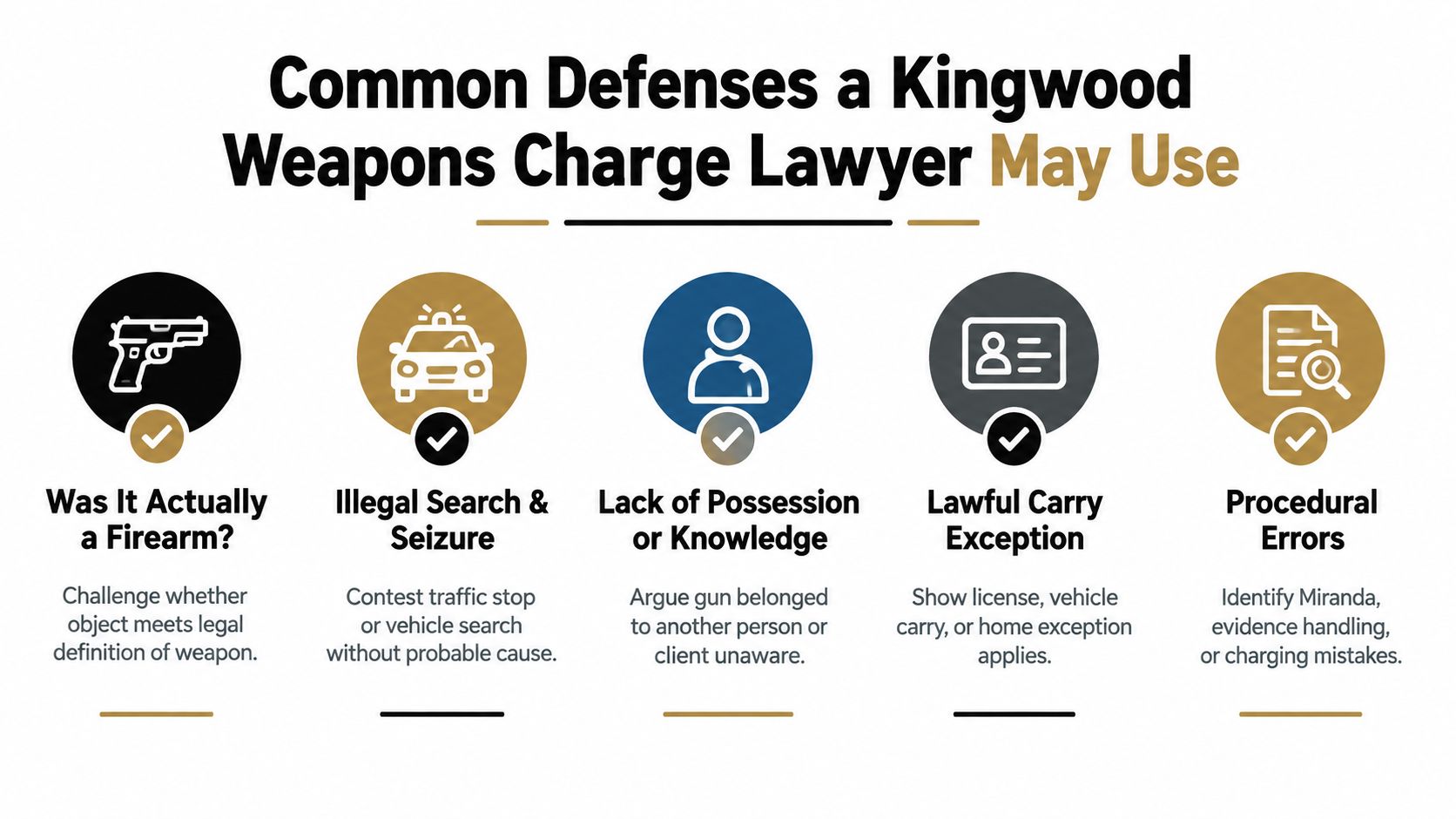
For a § 46.05 allegation, counsel may examine whether the item meets the statutory definition of a prohibited weapon. A device described casually as a “silencer,” “machine gun,” or “short-barrel firearm” may require technical examination and registration records. After SB 1596 took effect on September 1, 2025, state classification of short-barreled firearms changed, although federal NFA exposure may remain relevant.
That defense depends on the actual item, the date of the alleged conduct, and the statute used. Photographs, model information, measurements, purchase documents, and federal registration records can matter.
The search may have violated constitutional rules
A traffic stop near Kingwood doesn't give an officer unlimited authority to search every compartment of a vehicle. Counsel may review the reason for the stop, whether the encounter was unlawfully prolonged, whether consent was voluntary, and whether officers had probable cause or another valid exception.
If a court suppresses the firearm or statements obtained through an unlawful search, the prosecution may lose its central evidence. Suppression isn't automatic, and the result depends on the specific recordings, testimony, and legal justification.
The fact that an officer found an item doesn't answer whether the state found it lawfully.
Possession, knowledge, and lawful exceptions
A firearm in a shared vehicle doesn't necessarily prove exclusive possession. The defense may examine ownership, fingerprints or DNA where relevant, access to the compartment, admissions by another occupant, and whether the accused knew the firearm was present.
Other questions include whether a premises or vehicle exception applies, whether the person was lawfully carrying under the facts, and whether the alleged location was properly classified as restricted. A school, hospital, government building, or alcohol venue can involve different rules, signage, maps, and statutory definitions.
The strongest defense may not seek dismissal of every possible allegation. Depending on the evidence, counsel may pursue exclusion of unlawfully obtained evidence, reduction to a less serious charge, or a resolution that limits exposure. A federal referral or federal registration concern may also require risk management rather than treating the matter as a purely state case.
What to Do Immediately After a Weapons Charge in Kingwood
The first hours after an arrest can feel disorganized. A short, deliberate plan helps protect the case while your lawyer gathers the facts.
Start with communication
Give identifying information when required, but don't answer investigative questions about the firearm without counsel. You can calmly say that you want a lawyer and then stop discussing the facts. Don't argue with officers, resist a search, or try to persuade a witness at the scene.
Ask family members to preserve paperwork, including the booking sheet, bond information, court notices, receipts, firearm registration documents, photographs, and messages that may establish ownership or location. They shouldn't delete or edit records, contact the alleged victim or witnesses, or post explanations online.
Protect the defense record
Write down what you remember as soon as you can, including the location, time, officers involved, passengers, statements made, and the sequence of the search. Don't share that account publicly. Give it directly to counsel so it can be evaluated as part of privileged legal work.
- Do not consent casually: If officers ask to search, state clearly that you don't consent, but don't physically interfere.
- Do not discuss the facts on jail calls: Those calls may be recorded or reviewed.
- Do not miss court: Track every Harris County setting and comply with bond conditions.
- Do preserve evidence: Keep original documents and devices unchanged.
- Do contact counsel promptly: Early review can identify search, venue, status, and registration issues before positions harden.
If the person remains in custody, family should focus on accurate information and reliable communication with the lawyer. A local Kingwood defense attorney can help explain the immediate bond process, identify needed records, and coordinate the next court appearance.
How to Choose a Weapons Charge Lawyer in Kingwood TX and Next Steps
A useful consultation should produce more than a general statement that the case is serious. Ask how the lawyer will test three core issues quickly: whether the object qualifies as a covered weapon, whether the carry occurred in a prohibited manner or place, and whether a firearm-disqualification status was active at the time.
Questions worth asking
- Local court experience: Does counsel regularly handle Harris County criminal cases affecting Kingwood, Humble, Porter, and Northeast Houston residents?
- Evidence review: Will the team obtain and analyze bodycam footage, dispatch records, search documents, photographs, and registration materials?
- Personalized strategy: Will the lawyer explain whether the case may be dismissed, reduced, litigated through a suppression motion, or taken to trial?
- Communication: Who will answer questions, and how will the family receive updates about bond, settings, and offers?
- Broader resources: Can a local attorney coordinate with a larger legal team when the case involves related family, estate, or civil concerns?
The Law Office of Bryan Fagan – Kingwood TX Lawyers serves the Kingwood community and surrounding areas with legal services that include criminal defense, family law, estate planning, wills, trusts, probate, and civil litigation. A weapons arrest can affect custody discussions, employment planning, estate decisions, or business concerns, so coordinated advice may matter when several legal problems overlap. Any separate family case still requires its own analysis under Texas law.
For more guidance on evaluating counsel, review how to choose a criminal defense lawyer. Bring the charging paperwork, bond documents, court dates, and any records concerning the firearm or prior conviction to the consultation. Don't guess about a changing statute or assume an older internet page describes the law that applies today.
Schedule a free consultation with Law Office of Bryan Fagan – Kingwood TX Lawyers to discuss the stop, search, firearm, location, and any prior-conviction issues affecting your Kingwood case. The local team serves Kingwood, Humble, Porter, and Northeast Houston with practical criminal-defense guidance and clear next steps.