A paycheck that comes in lighter than expected can stop a family cold. In Kingwood, that moment often starts with a notice from the Texas Attorney General's child support office, or with a payroll stub that shows less money than last month. For a parent in Humble, Porter, or Northeast Houston, it can feel like the rules changed overnight.
The good news is that the process isn't random. Texas uses a formal income withholding order system to collect support directly from wages, and that system follows clear steps from court order to employer payroll to state distribution. If you're the parent paying support, the order explains why the money is coming out of your check. If you're the parent waiting on support, it explains how the money is supposed to move and what to do when it doesn't.
In Kingwood family law cases, income withholding comes up in divorce, paternity, SAPCR matters, and maintenance disputes. It also affects employers, because payroll teams have to act on the order quickly and correctly. The sections below break the process down in plain English, with local context and practical examples you can use right away.
Why a Kingwood Parent Is Suddenly Seeing Less on Payday
A Kingwood parent usually notices the problem in one of two ways. The first is the paycheck itself, which arrives short without much explanation. The second is a letter or form tied to child support that tells the employer to start withholding money from wages and sending it to the state for processing and distribution to the custodial parent.
That can feel abrupt, especially when no one has stood in a courtroom recently. Texas family law treats wage withholding as a regular enforcement tool, and courts can require income to be withheld from an obligor's disposable earnings in the kinds of support cases that come through Kingwood, Humble, Porter, and Northeast Houston.
The local confusion usually sounds like this
Practical rule: if the employer got a valid order, payroll usually has to act on it. The employee does not get to decide whether the deduction starts.
That same confusion shows up on the other side too. A parent receiving support may think the other parent is ignoring the order when, in fact, the employer is still processing the deduction or the payment is moving through the state system. Kingwood families often need a calm review of the paperwork before anyone assumes the worst.
Support withholding can also come up outside child support. In Kingwood divorces, spousal maintenance may be collected through the same general payroll process, which is one reason a paycheck can shrink in a case that is not only about children. If domestic violence or family safety issues are part of the bigger case, parents may also need a separate look at Protective Orders in Kingwood because support enforcement and safety planning can overlap in the same household. The notice on the paycheck is rarely the whole story, and the first step is usually identifying who issued the order and where it was sent.
What an Income Withholding Order Really Is in Texas
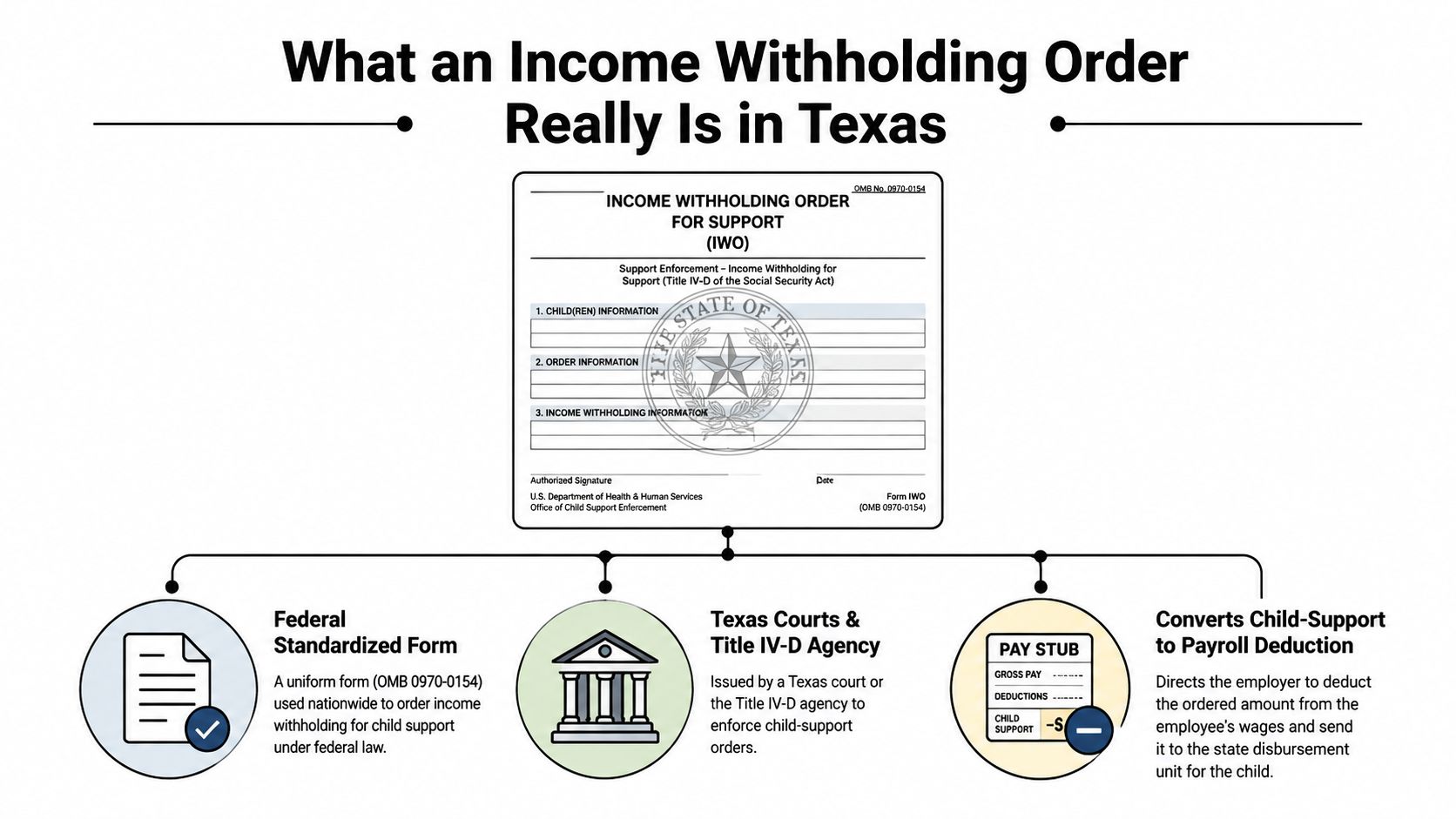
An Income Withholding Order, often called an IWO, is the standard Texas form used to turn a support duty into automatic payroll withholding. It applies to child support, cash medical support, and spousal maintenance, so it is not limited to one kind of family case. The federal form behind it is OMB-0970-0154. OMB income withholding for support form
The reason Texas uses one standard form is practical. Employers do not have to guess what kind of order they are handling, and courts do not have to draft separate wage-deduction language for every case. The order moves from the issuing authority to the employer, the employer withholds from each pay period, and the money goes into the support system for distribution. That structure makes the order ongoing, not a one-time payment.
What the form is doing behind the scenes
The IWO functions like a payroll instruction sheet with legal force. It tells the employer the worker's name, the amount to deduct, where to send the money, and how the deduction keeps going until the order changes. That is why the process feels automatic once the paperwork is in place.
A few moving parts matter most:
- The issuing authority signs or issues the order.
- The employer becomes responsible for withholding.
- The state support system receives the payment and routes it onward.
- The worker has to keep paying attention, because the order stays active until a court changes it.
That same form can also connect to other family-law issues. A parent who is sorting out support often has custody, safety, or household concerns on the side, and Stephen Weisberg's levy guide can help explain how forced collection tools fit into the bigger picture. The key point is simple, an IWO is a structured payroll directive, not a voluntary request.
Who Issues the Order and How It Reaches a Kingwood Employer
A parent in Kingwood may first hear about an income withholding order only after the paycheck shrinks. The reason is simple. Once the legal paperwork is complete, the order moves through the court or agency process and lands with the employer, who must treat it as a payroll instruction, not a suggestion.
In a child-support case, a judge can issue the order in a private family-law matter, and the Texas Attorney General can issue it in a Title IV-D case. Texas law also requires withholding in child-support proceedings, and in Title IV-D cases the court or agency generally may not suspend, stay, or delay issuance of the withholding order or writ. That is why the employer often sees the order with little warning once the court process is finished. Texas Family Code withholding mandate
The path from order to paycheck
The route is usually straightforward, even if it feels confusing the first time you see it. A judge signs the order in a private case, or the Attorney General handles it in a Title IV-D case. The clerk files or delivers the paperwork, the employer is served, and payroll starts taking the deduction from the next payroll cycle.
That timing matters because Texas guidance says withholding generally begins by the first pay period after the employer receives the order. Once that happens, the employer is supposed to keep the deduction going until the order changes or ends. Stephen Weisberg's levy guide helps show how this kind of forced collection differs from other collection tools, but the basic structure is the same, a third party receives legal paperwork and must act on it.
Kingwood families also need to remember that income withholding is not limited to child support. It can reach spousal maintenance too, which is one reason divorcing spouses sometimes feel blindsided when a paycheck changes. The order follows the support obligation tied to the case, then payroll carries it out in the background.
A narrow exception can affect service timing in some non-Title IV-D child-support cases. Texas clerk guidance reflects that a court can delay delivery of the withholding order unless the obligor is more than 30 days in arrears or owes at least one month of support. That detail matters because it separates immediate delivery from delayed delivery in specific situations.
For families trying to connect the paperwork to the larger enforcement process, child support enforcement help in Harris County can provide a local point of reference. The important part is that the order does not stay on paper. It moves through the court system, reaches the employer, and then payroll has to follow it.
Employer Obligations in Texas Once the Order Arrives
HR and payroll teams in Kingwood, Humble, and Northeast Houston don't get to treat an IWO like ordinary mail. Texas guidance says withholding generally starts by the first pay period after the employer receives the order, so timing matters immediately. Texas Family Code income withholding procedure The employer also uses the approved federal OMB form, not a homegrown template. OMB income withholding for support form
The clerk of the court may charge a fee of up to $15 for each withholding order or writ issued and delivered to an employer. Texas Family Code income withholding procedure That's not a payment the employer keeps, it's part of the administrative path that helps move the order through the system.
What payroll departments usually need to do first
The first task is simple, identify the employee, confirm the order is valid, and route it to payroll. Then the deduction has to be coded so it comes out every pay period until the order ends or changes. If the deduction is wrong, the employer should not guess, it should verify the order against the paperwork and the issuing authority's instructions.
| Employer Action | Texas Rule | Practical Detail |
|---|---|---|
| Review the order when served | Use the approved form | The employer should match the employee name, case details, and withholding instructions. |
| Start payroll deduction | Generally by the first pay period after receipt | Delays can create compliance problems. |
| Remit the funds | Send through the child support system | The employer doesn't hand the money to the other parent. |
| Keep the order active | Continue until changed by a court or agency | Stopping on the employer's own decision can create liability. |
Federal rules also give employers an important ceiling to understand. In some cases, support withholding can take up to 50 percent of disposable income for a worker supporting a second family with no arrears or less than 12 weeks in arrears. Federal OMB withholding guidance That limit helps payroll teams avoid over-withholding when they're balancing family-support obligations against a new deduction.
For local employers and parents who need a broader enforcement overview, child support enforcement in Harris County can help frame how these orders are handled in a real local setting. The key point is that an IWO is not optional paperwork, it is a legal payroll duty.
Child Support Versus Spousal Maintenance in Kingwood
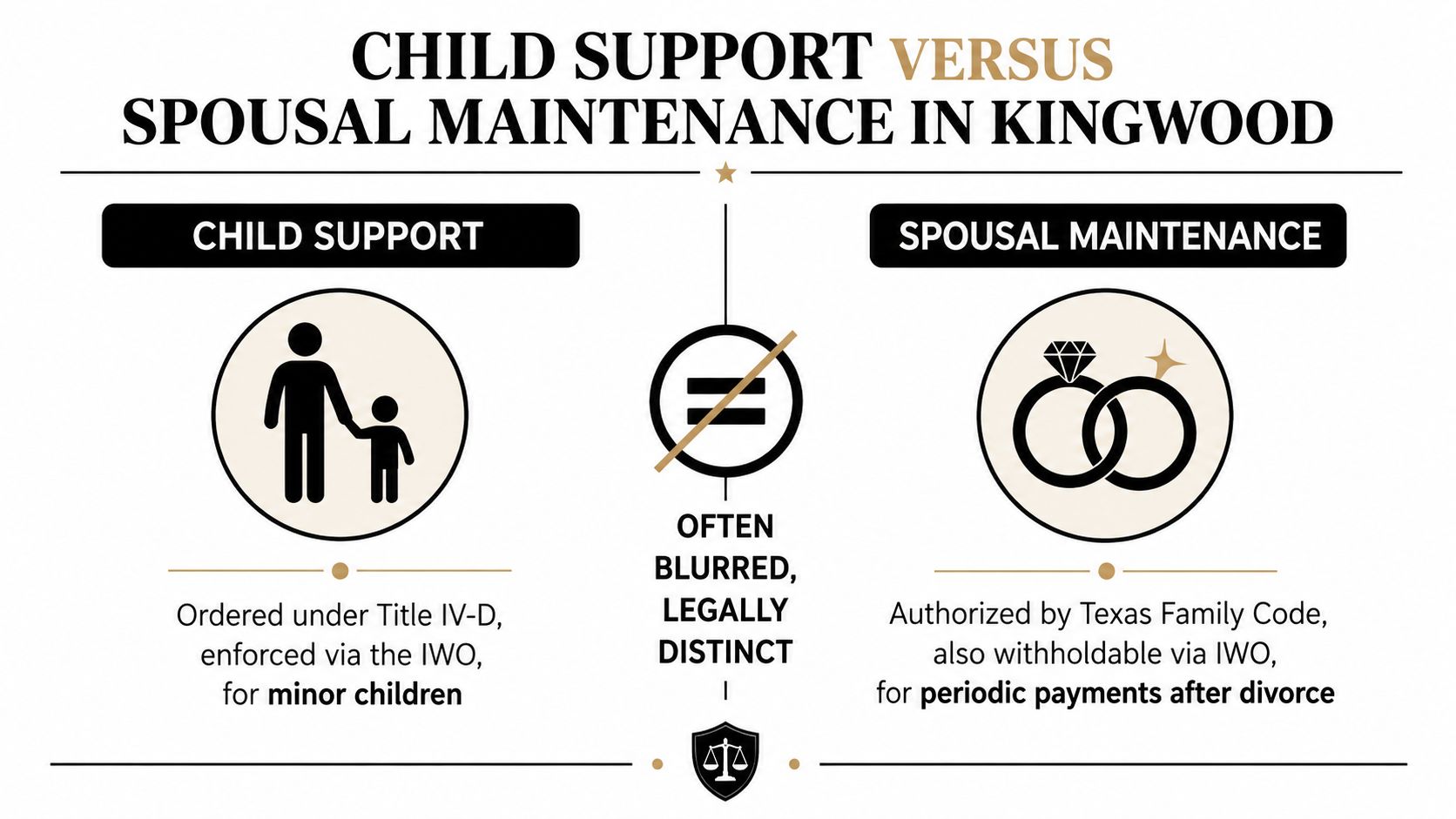
A Kingwood parent can open a pay stub and see less money than expected, then assume the order must be about child support. Texas law is broader than that. Income withholding can also apply to periodic spousal maintenance, so a divorcing spouse in Kingwood may see wage withholding even when the case does not involve child support at all. Texas spousal maintenance withholding law
The legal difference that changes the cash flow
Child support and spousal maintenance can both run through the same payroll channel, but they do different jobs. Child support is tied to support for a child. Spousal maintenance is tied to periodic payments after divorce, and Texas law allows withholding for those payments too. Texas spousal maintenance withholding law
The timing issue matters just as much as the legal category. In most child-support cases, withholding starts right away. In some non-Title IV-D matters, a court can find good cause to delay delivery of the order until the arrears reach the threshold described in clerk guidance. So the person expecting support may not see the deduction begin immediately, even though the obligation already exists.
Many Texas family-law guides focus exclusively on child support when discussing income withholding, which can leave out the spousal maintenance side of the picture. That gap matters in Kingwood divorce cases, because the paycheck deduction process can look the same while the legal reason for the deduction is different.
If you are sorting out a maintenance order after divorce, a Spousal Support Lawyer in Kingwood can help explain whether withholding should begin now or later. The same issue also comes up through spousal support attorney services in Kingwood when the order is being negotiated or enforced.
Families often keep a parental consent form template nearby when they are dealing with paperwork that looks similar but serves a different purpose. Family-law forms can share the same general appearance and still carry very different legal effects. Here, the label matters because the court's rules for a child-support deduction are not the same as the rules for spousal maintenance, and that difference controls what gets withheld and when service happens.
Rights and Defenses for Payors and Payees in Kingwood
A person whose wages are being withheld still has rights. If income drops, the first move is to ask for a modification, not to stop paying on your own. Withholding continues until a Kingwood court changes the order, so waiting usually makes the problem worse, not better.
Don't ignore a bad order just because it's already in payroll. A wrong amount can usually be corrected, but only if someone acts quickly.
What to do if the amount looks wrong
Start with the paperwork. Check whether the employer is the right employer, whether the case number is correct, and whether the deduction matches the current order. If the order was served on the wrong employer or the amount is outdated, the issue needs to be raised through the court process or the support agency, not handled informally with a supervisor.
If the worker's finances have changed, the legal path is to seek modification. That's where a local family-law lawyer can review income changes, the current order, and whether a Texas court has grounds to alter the withholding. The process can also connect with broader custody and support relief, which is why Custody & Support Modifications in Kingwood often matter when families are trying to reset more than one order at the same time.
What the receiving parent can verify
On the other side, a parent waiting for support should confirm that the right amount is being withheld and transmitted. If payments stop, the first calls often go to the Texas Attorney General's child support office and the family court, because both can help identify whether the failure is in payroll, service, or enforcement.
The fastest cases are the ones where someone brings the order, the pay stubs, and the payment history to a lawyer early.
A helpful comparison point is how other collection problems are handled. If you're also wondering about debt collection pressure, how bankruptcy stops garnishment is a useful read for understanding how a different legal system treats wage deductions. Child support and maintenance are different, but the practical lesson is the same, don't wait until the file gets bigger and the payroll problem gets harder to unwind.
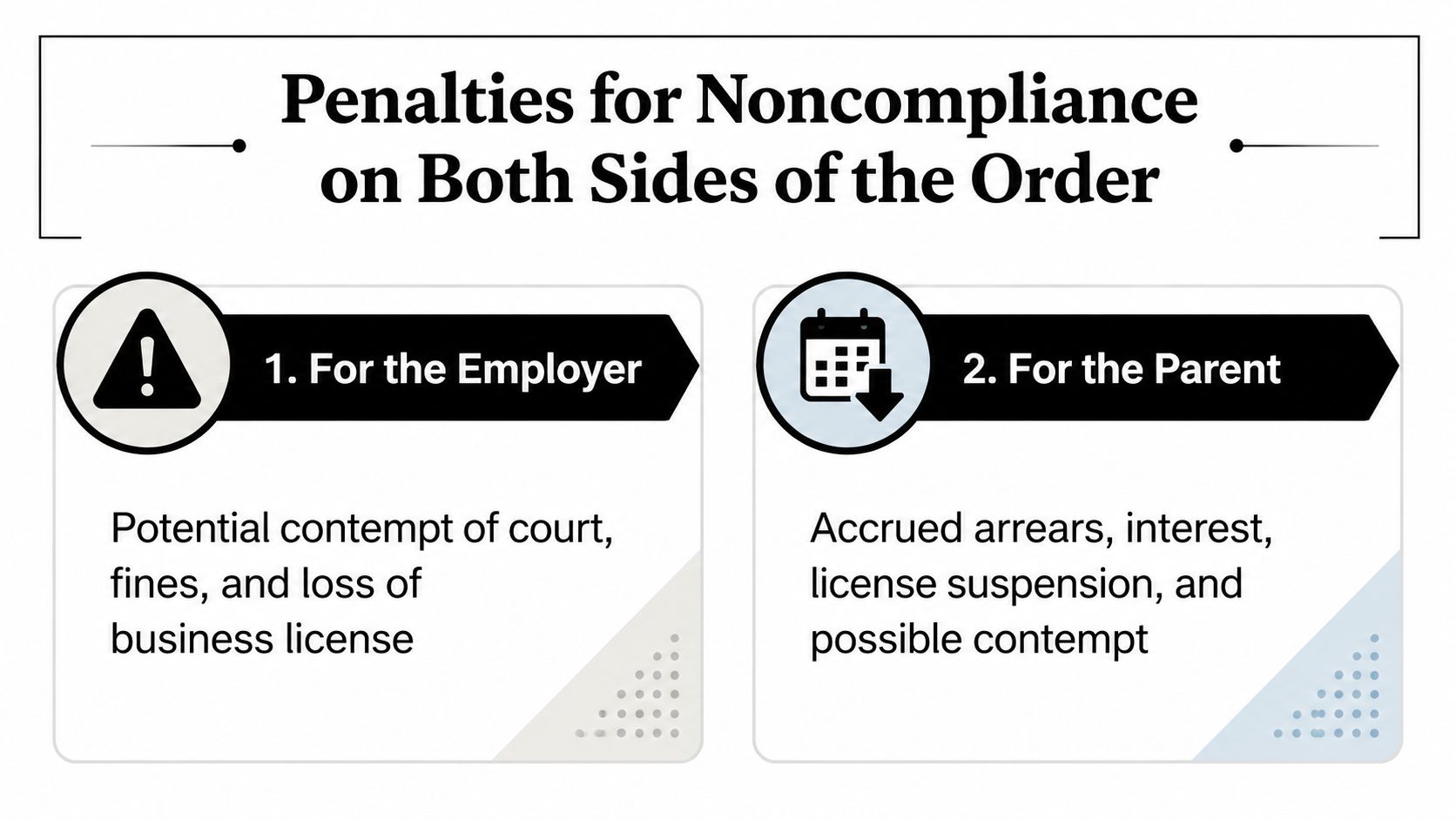
Penalties for Noncompliance on Both Sides of the Order
A wage withholding order is not paperwork to file away and forget. In Texas, ignoring an IWO can lead to contempt problems and financial exposure for an employer that does not follow the order. For HR staff in Kingwood, Humble, and Northeast Houston, the safer move is to act on it right away and make sure the payroll process matches the court order.
When the parent falls behind
A paying parent who falls behind can face enforcement tools that move fast once arrears start building. Those tools can include license suspension, tax intercept, and contempt of court. A local review of what happens if you miss child support payments in Texas can help a Kingwood parent see how a missed payment can turn into a court problem before long.
The same warning applies to spousal maintenance withholding in Kingwood cases. If the order covers maintenance as well as child support, the missed deduction can still trigger court enforcement, and a court may also address whether delivery of the withholding order should have been delayed in the first place. That timing issue matters in local divorce cases, because a late or disputed order can create confusion for both the paying spouse and the spouse expecting payment.
The practical lesson is simple. Support problems tend to grow if nobody addresses them. One missed payment can become arrears, and arrears can become a stronger enforcement file when there is no response. The problem may begin with a job change, a payroll error, or a parent who assumed the order could wait, but the result is often the same.
The safest move is to act early. If the order is wrong, get help before the wage deduction keeps adding to the dispute. If payments have stopped, raise the issue before the record becomes harder to correct.
How the Law Office of Bryan Fagan Helps Kingwood Families
Families in Kingwood usually need two things at once, a clear explanation and a practical plan. The Law Office of Bryan Fagan – Kingwood TX Lawyers works with parents and spouses who are dealing with support orders, maintenance withholding, enforcement, and modification issues in Harris County courts.
That can mean reviewing the order line by line, checking whether payroll is withholding correctly, or helping a client decide whether to seek enforcement or a change in the order. It can also mean connecting an income withholding problem to related family-law issues, including safety concerns, custody changes, and court order enforcement through the firm's local Kingwood practice.
If you live in Kingwood, Humble, Porter, or Northeast Houston and you're trying to understand a support deduction, you don't have to sort it out alone.
If you're dealing with an income withholding order in Kingwood, the Law Office of Bryan Fagan – Kingwood TX Lawyers can help you understand what the order means, what your options are, and what to do next. Visit Law Office of Bryan Fagan – Kingwood TX Lawyers to schedule a free consultation and get local guidance before a paycheck issue turns into a bigger court problem.