Skip to content
A lot of families in Kingwood don't start by searching for legal terms. They start with a problem at the kitchen table. Mom is forgetting to pay bills. An adult child with disabilities is turning 18, and school staff keep asking who has authority to sign forms. A hospital in Humble wants consent for treatment, but nobody is sure who can legally give it.
That uncertainty feels personal and urgent at the same time. You want to protect someone you love, but you also don't want to take away more independence than necessary. If you're looking for a guardianship attorney in Kingwood, Texas, you're probably trying to solve both problems at once.
When a Loved One Needs Help in Kingwood
Sarah lives in Kingwood and checks on her father every few days. At first, she noticed small things. His mail piled up. Medications got mixed together. Then the bank called about unusual activity, and a doctor's office said they needed someone authorized to discuss his care. Sarah wasn't trying to control his life. She was trying to keep him safe.
That's how many guardianship cases begin in Kingwood, Humble, and Northeast Houston. Not with conflict. With worry.
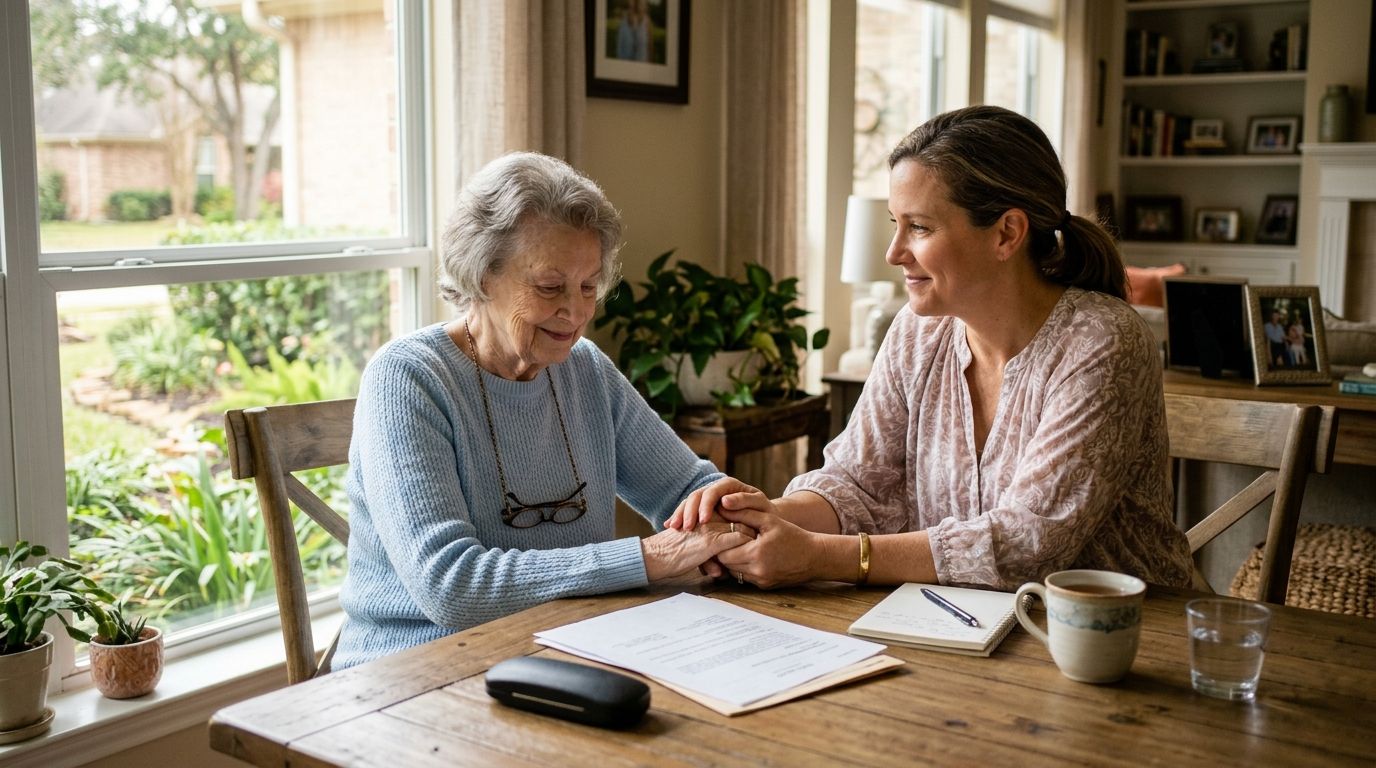
Families often tell me they aren't even sure whether what they're seeing is temporary stress, normal aging, or something more serious. If you're sorting through those early signs, Velma's article on memory decline is a useful starting point because it helps you separate ordinary forgetfulness from patterns that may require action.
What makes this so hard
Guardianship sits at the intersection of emotion and law. You may be grieving a parent's decline while trying to gather medical records. You may be caring for a child with special needs and also wondering what changes legally once that child becomes an adult. In other parts of Texas, guides often stay generic. For families in Kingwood and nearby communities, the local court process matters.
You don't need to know all the answers before talking to a lawyer. You just need to know what problem you're trying to solve today.
A neighborly way to think about it is this. Guardianship isn't about winning a case. It's about asking a court for authority to help someone who can't safely manage some part of life alone.
Why local families need local guidance
Kingwood residents usually care about practical questions first:
- Can I talk to doctors and make treatment decisions
- Can I stop financial mistakes or fraud
- What happens if there's an emergency this week
- Will the court require notice to other family members
- Is guardianship even the right option
Those are the right questions. A good local conversation should answer them plainly, without legal jargon and without pressure.
Understanding Guardianship in Texas Law
Texas law treats guardianship as a court-supervised legal relationship. One person, the guardian, is appointed to help another person, often called the ward, when that person can't manage certain personal or financial matters safely.
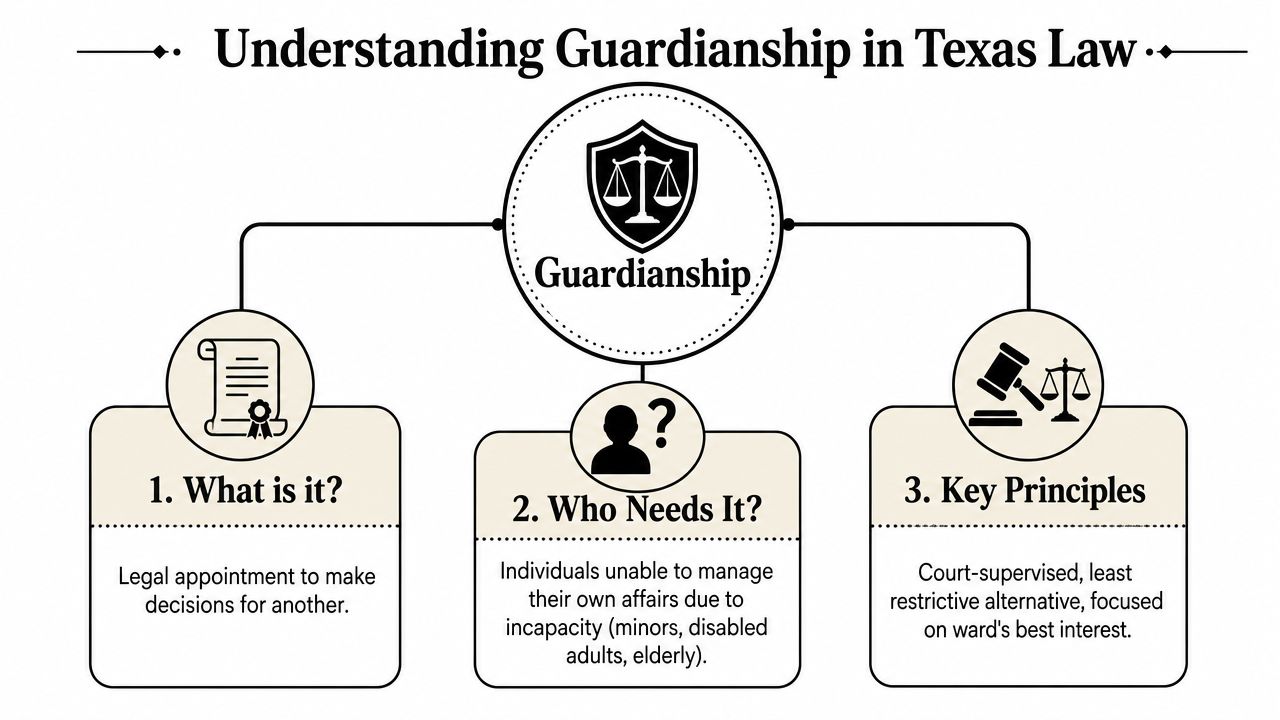
Under Texas Estates Code, a court must appoint a guardian for an incapacitated person if they cannot manage their own financial affairs or personal care, and that appointment is mandatory for the person to receive government funds or benefits due to their incapacity, as explained by Houston Probate Law on guardianships.
The easiest way to understand the two main roles
Think of guardianship like caring for a house and the person living in it.
A guardian of the person takes care of the resident. That role focuses on daily well-being, such as medical care, living arrangements, and personal decisions.
A guardian of the estate manages the property itself. That means handling money, income, bills, assets, and other financial matters.
Sometimes one person serves in both roles. Sometimes the court divides them. That depends on what the proposed ward needs.
| Type | Main focus | Common example |
|---|---|---|
| Guardian of the person | Health, safety, living decisions | Consenting to treatment or arranging care |
| Guardian of the estate | Money and property | Managing accounts and paying obligations |
Adult guardianship and minor guardianship aren't the same
Families around Kingwood often mix these up. The law doesn't.
For a minor, guardianship may come up if a parent has died, is absent, or can't manage the child's property or care. For an adult, guardianship usually involves incapacity caused by disability, illness, injury, or age-related decline.
That difference matters because the court is asking a different question in each situation. With an adult, the court looks closely at what the person can still do and whether a less restrictive option might work.
Practical rule: Guardianship should match the person's actual limits. It shouldn't remove more decision-making power than the situation requires.
If you're comparing this with related legal tools, the distinction in conservatorship vs guardianship in Texas can help clarify terms that people often use interchangeably.
Who can ask for guardianship
Texas requires the applicant to be at least 18 years old, to have no conflicting interests that would impair decision-making, and to pass a court-required background check, according to LawInfo's overview of Kingwood guardianship requirements.
That doesn't mean every caring family member will automatically qualify. The court is looking for someone who can act responsibly, follow reporting rules, and put the ward's interests first.
Navigating the Harris County Court Process
For Kingwood, Humble, and Porter families, one local fact shapes everything. The case is filed where the proposed incapacitated person lives, and that means local residents generally file in Harris County probate court.
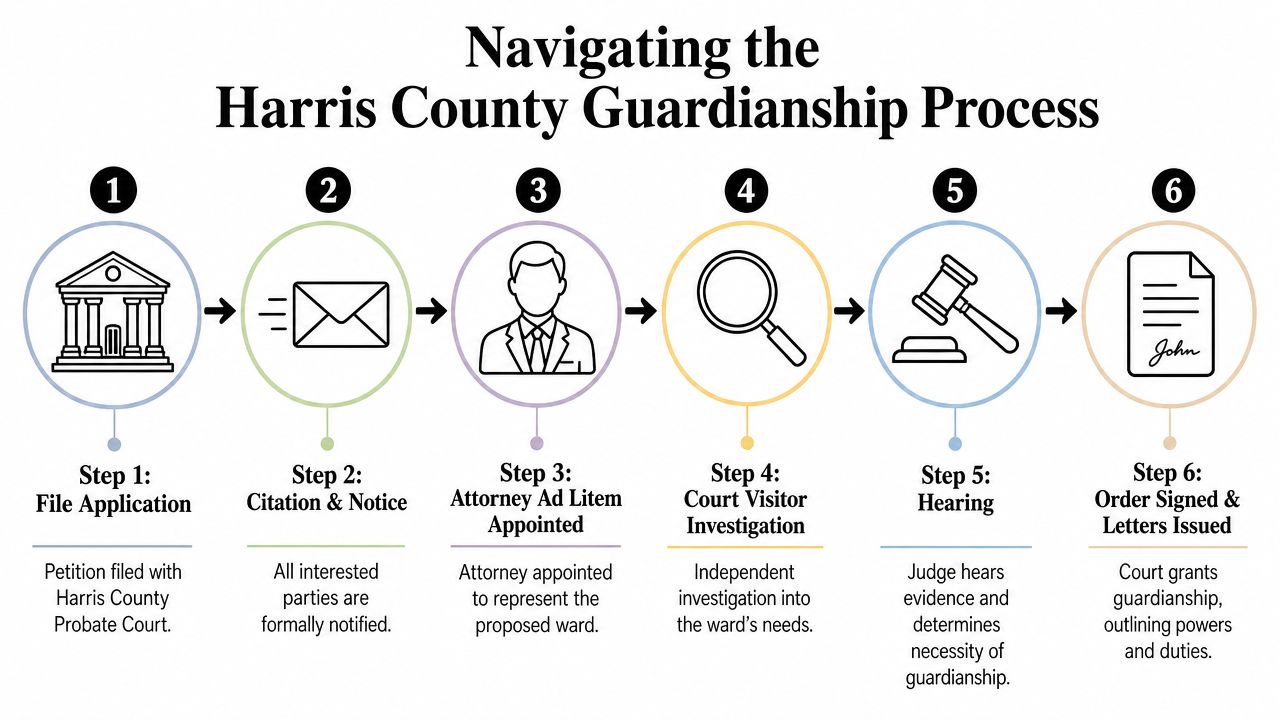
If you want a grounded overview of what local filing and probate practice look like, Harris County probate guidance for Kingwood families gives useful background on the court setting where these cases move.
Step one through filing
The process starts with a formal application. Texas guardianship lawyers handling Kingwood matters typically prepare the petition, identify the type of guardianship requested, and gather supporting information about the proposed ward's condition and needs.
The procedural side is detailed. Lawyers must file the right opening forms, notify a spouse, children, parents, and grandchildren age 14 and older, plus healthcare facilities and medical benefit providers, then appear for a hearing. If the court grants guardianship, follow-up forms, annual reports, accountings, and JBCC registration and training requirements continue afterward, as outlined by Texas Guardianship Lawyer's summary of the process.
What families usually don't expect
Many people assume the court just reviews paperwork and signs an order. Harris County cases are more careful than that.
The court may appoint an attorney ad litem to represent the proposed ward's interests. The judge wants evidence, not assumptions. Family members may need to explain why guardianship is necessary and why narrower alternatives won't solve the problem.
A local family law matter can work similarly in one limited sense. In Child Support Attorney in Kingwood, the court also deals with establishing, modifying, and enforcing child support in Harris County. Different area of law, same practical lesson. Harris County procedure matters.
Notice and hearing requirements
Notice is where many families get overwhelmed. People often ask, “Do I really have to notify relatives I haven't talked to in years?” In many cases, yes. The court expects legal notice to interested parties because guardianship affects important rights.
That doesn't always mean conflict. It means transparency.
A typical sequence looks like this:
- Application filed with the probate court.
- Required notices sent to family members and relevant institutions.
- Medical support gathered to show why guardianship is being requested.
- Court review and hearing where the judge decides whether to grant, limit, or deny the request.
- Post-appointment duties begin if the court signs the order.
Courts don't grant guardianship because a family is worried. Courts grant it because the evidence shows legal necessity.
Emergency situations in Harris County
Statewide guides frequently fall short for Kingwood families. They talk about ordinary timelines and ignore medical urgency.
Data from the Texas State Bar's 2025 Guardianship Survey shows that 42% of emergency guardianship petitions in Harris County, including Kingwood, were filed without proper documentation, leading to 30 to 50% longer court reviews due to evidentiary gaps, according to Hatchett Legal Team's discussion of emergency guardianship practice.
That same source notes that some temporary emergency guardianships can be granted in as little as 3 to 5 days when families provide physician affidavits and proof of imminent harm. The lesson isn't that every case moves that fast. It's that urgent relief may exist if the paperwork is done correctly from the start.
Common local mistakes
Families in Northeast Houston usually struggle with the same points:
- Waiting too long: A crisis at the hospital is the hardest time to begin gathering records.
- Incomplete medical proof: General concern isn't enough.
- Confusing authority: Being next of kin doesn't automatically give legal control.
- Ignoring follow-up duties: Court oversight continues after appointment.
Finding a “guardianship attorney Kingwood Texas” means you likely need more than someone who just knows the statute. You need someone who understands how Harris County expects the case to be prepared.
The Financial Side of Guardianship Costs and Documents
Money questions come up early, and that's reasonable. Families in Kingwood often have to make legal decisions while also paying for care, medication, transportation, or housing changes.
The starting cost framework is fairly clear. In Texas, court filing fees generally range from $200 to $400, attorney fees for uncontested guardianship matters typically fall between $2,000 and $3,500, and contested cases can exceed $5,000, according to Texas Probate Attorney's guardianship cost overview.
Where the money usually goes
Those figures make more sense when you separate the categories.
- Court costs: Filing fees are only one piece of the total.
- Attorney time: Drafting the application, preparing notices, organizing evidence, and appearing in court all take time.
- Contested issues: If relatives disagree or the evidence is challenged, fees rise quickly.
- Ongoing compliance: After appointment, reporting and accountings may still require legal help.
A guardianship case isn't expensive because of one giant charge. It becomes expensive when families underestimate how many separate steps the court requires.
The documents that save time later
The best way to control cost is preparation. If your lawyer has to spend weeks chasing down basic information, the process slows down and frustration builds.
Gather these first:
| Document or information | Why it matters |
|---|---|
| Full identifying information for the proposed ward | The court needs accurate records |
| Medical records and physician input | Supports the need for guardianship |
| List of close relatives | Required for notice |
| Financial account information | Important if estate powers are requested |
| Current living and care details | Helps the court understand daily needs |
Bring what you have, even if it's incomplete. A partial file is better than a perfect plan that never gets started.
Budget for the full process, not just filing day
Families in Humble and Northeast Houston sometimes focus on the opening filing fee and miss the broader picture. The primary question is not “What does the first form cost?” It's “What will this case require from start to finish?”
That includes legal fees, court costs, and the practical cost of time. You may need to coordinate with doctors, banks, care facilities, and relatives. A realistic budget lowers stress because it replaces surprise with planning.
Exploring Alternatives to Guardianship
Guardianship can be necessary. It isn't always the first or best answer.
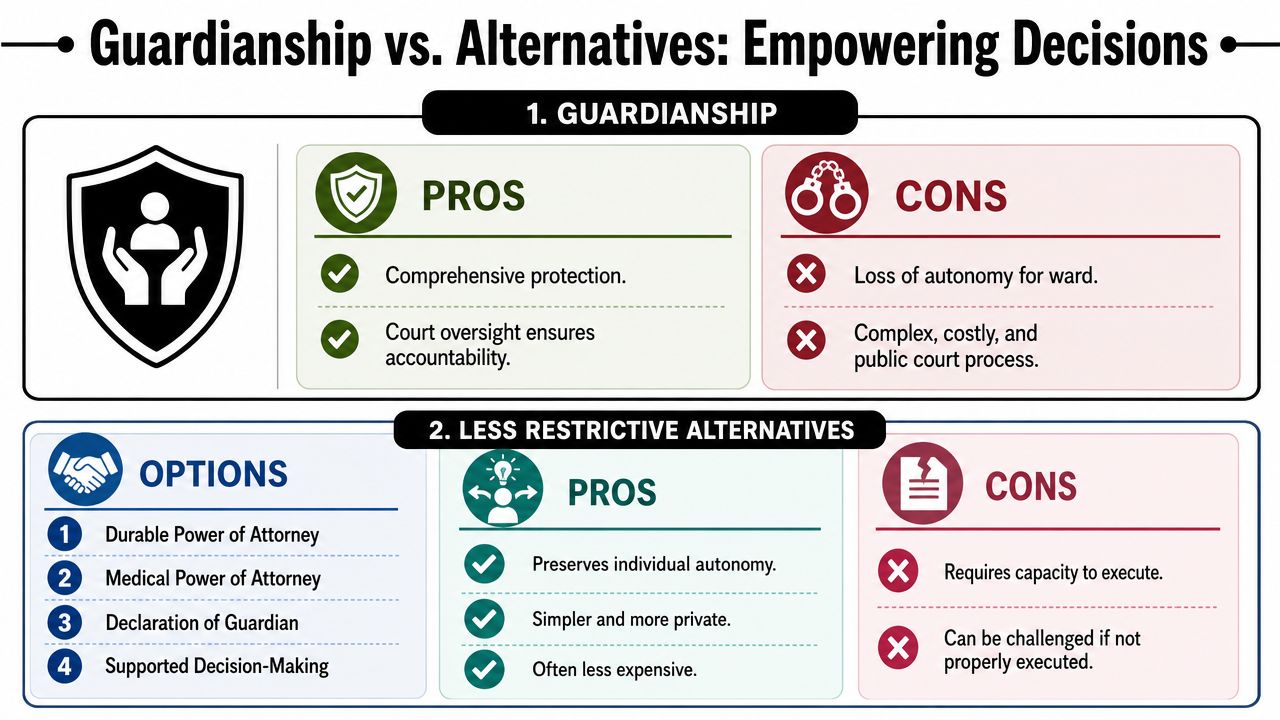
The court generally wants the least restrictive solution that still protects the person involved. For some Kingwood families, a narrower planning tool can solve the problem without a full court case.
When a less restrictive tool may work
If the person still has legal capacity to sign documents, these options may be worth discussing:
- Durable Power of Attorney: Lets someone handle financial matters.
- Medical Power of Attorney: Allows a trusted person to make healthcare decisions when needed.
- Declaration of Guardian: Lets a person name who they want the court to consider later.
- Supported Decision-Making agreement: Helps preserve independence while adding structure and support.
For readers comparing those planning tools in practical terms, this explanation of a power of attorney in Texas is a helpful companion.
Why special needs planning changes the analysis
Families with an adult child with disabilities often hear “get guardianship” without hearing the second question. How will that choice affect benefits and long-term planning?
That omission can be costly. Over 60% of families who establish guardianship for a disabled adult do so without also creating a Special Needs Trust, which can create a risk of losing public benefits like SSI and Medicaid, according to HS Byers Law Firm's discussion of guardianship and special needs planning.
That doesn't mean guardianship is wrong. It means guardianship and benefits planning often need to be considered together, not one after the other.
A legal solution that protects daily decisions but harms long-term benefits may not be the right solution.
A side-by-side way to think about it
Guardianship makes sense when the person can't safely make or communicate important decisions and no narrower tool will protect them.
Alternatives make sense when the person still has enough capacity to sign valid documents or participate meaningfully in supported choices.
A simple comparison helps:
| Option | Best fit | Main tradeoff |
|---|---|---|
| Guardianship | Serious incapacity and active need for court oversight | Reduces autonomy and adds court process |
| Power of attorney documents | Person still has capacity to sign | Won't work if capacity is already gone |
| Supported decision-making | Person can decide with help | Not enough for every crisis or financial issue |
The right question isn't “How do we get guardianship?” The better question is “What level of legal authority does this person need right now, and what choice protects both safety and dignity?”
How to Select Your Guardianship Attorney in Kingwood
A lot of families call a lawyer only after something has already gone wrong. A hospital needs consent. A bank account is being misused. An adult child with disabilities is turning 18, and school support is ending. In Harris County, waiting too long can turn a manageable legal problem into a rushed court filing.
That is why choosing the right attorney matters so much. Guardianship is not just paperwork. It is a court process that asks for medical proof, notice to relatives, a clear explanation of what help is needed, and follow-up duties after the judge signs an order. In other words, you are not just hiring someone to file forms. You are hiring someone to spot problems early and explain what the court will expect from your family.
For Kingwood families, local experience matters for a practical reason. These cases are usually handled in Harris County for residents here, and each court has its own habits, timing, and expectations. A lawyer who regularly works with Harris County probate courts is more likely to know where delays happen, which documents tend to stall a case, and how to prepare you for the questions that come up at the hearing, as explained by Audu Law Firm's overview of Kingwood guardianship venue.
Questions worth asking in the first meeting
Your first consultation should leave you calmer and clearer. If you walk out more confused than when you walked in, that tells you something.
Ask questions like these:
- How often do you handle guardianship cases in Harris County probate court? A useful answer should sound specific, not generic.
- What will this case require in the first few weeks? You want a step-by-step answer about medical evidence, family information, and filing timing.
- Do you look at alternatives before recommending guardianship? A careful attorney should be willing to explain when a less restrictive option may work.
- Who will keep me updated about deadlines and court settings? Communication problems create stress fast in these cases.
- What happens after the guardianship is approved? The job does not end at the hearing. Ongoing reports and responsibilities often surprise families.
One simple way to judge the fit is this: a good guardianship lawyer should explain the process the way a good doctor explains surgery. You may still feel worried, but you should understand what is happening, why it is being recommended, and what comes next.
Red flags families should notice
Some warning signs show up early.
Be careful if an attorney cannot explain, in plain English, the difference between authority over personal decisions and authority over money. Be careful if the fee structure stays vague after you ask directly. Be careful if the lawyer talks only about filing fast, without asking about medical records, family conflict, or whether the court may want a limited guardianship instead of a full one.
Another common problem is overpromising on timing. Harris County cases can move quickly in true emergencies, but many guardianship matters still depend on getting the right records, giving proper notice, and meeting court requirements in the right order. A lawyer should prepare you for that reality, not gloss over it.
The right attorney is usually the one who makes the process easier to understand and easier to prepare for.
Families in Kingwood do not need a sales pitch here. They need a lawyer who knows the local court process, answers questions directly, and treats the proposed ward with dignity from the first meeting forward.
Your Path Forward with The Law Office of Bryan Fagan
If you're facing this issue in Kingwood, Porter, Humble, or Northeast Houston, you don't need to solve everything tonight. You do need a plan. Guardianship cases involve real deadlines, real court requirements, and real consequences for the person you're trying to protect.
The practical path is usually simple. First, identify the immediate problem. Is it medical consent, unsafe spending, housing, or long-term planning for an adult child with disabilities? Next, gather the basics you already have. Then sit down with someone who can tell you whether guardianship is necessary or whether a narrower option will do the job.
Families often feel relief once the process is translated into plain English. The law can be technical, but the first step doesn't have to be. A local conversation can turn fear into a checklist, and a checklist is much easier to manage than uncertainty.
If you've been searching for a guardianship attorney in Kingwood, Texas, the most useful next move is a focused consultation with someone who understands how Harris County handles these cases and can explain your choices in clear terms.
If your family needs guidance on guardianship, estate planning, probate, family law, criminal defense, or civil matters in Kingwood, Humble, Porter, or Northeast Houston, schedule a free consultation with Law Office of Bryan Fagan – Kingwood TX Lawyers. A local conversation at the Kingwood office can help you understand your options and take the next step with confidence.