Skip to content
For many small business owners in Kingwood, the phrase "dissolution of partnerships" can sound like failure. But in reality, under Texas law, it's something very different. It's a formal, structured process—think of it less as a sudden end and more as a managed transition. Dissolution is simply the official trigger for the 'winding up' phase, where the partnership methodically ties up all its loose ends.
What Partnership Dissolution Means for Your Kingwood Business

If your Kingwood partnership is heading for dissolution, it's critical to know this isn't an abrupt shutdown. It’s not like flipping a switch and walking away. A better analogy is carefully decommissioning a ship after it's completed its final voyage. The partnership stops taking on new clients or projects, but it absolutely continues to exist legally until every last obligation is settled.
This next stage is called “winding up,” and it's a make-or-break period where partners have to finalize all the business's affairs. The entire point is to bring things to an orderly close that protects everyone involved, from vendors and lenders to the partners themselves.
The Winding Up Process in a Nutshell
Winding up is what happens after the decision to dissolve has been made. For a local business in Humble or Porter, this means methodically closing the books. It’s a step-by-step process that almost always includes these key actions:
- Paying Outstanding Debts: Before a single dollar goes back to the partners, all creditors, suppliers, and lenders must be paid what they're owed.
- Liquidating Business Assets: This is where you sell off company property, equipment, and inventory to turn everything into cash.
- Finalizing Partner Accounts: The books need to be squared up between the partners, settling any internal loans or capital contributions that were made.
- Distributing Remaining Assets: Only after every debt is paid can the remaining cash or assets be distributed to the partners, following the rules in your partnership agreement or Texas law.
Why This Process Matters for You
Handling the dissolution of partnerships by the book is absolutely vital for protecting your own financial future. One wrong move during the winding up phase could leave you personally on the hook for business debts. For example, if you forget to pay a supplier in Northeast Houston, that creditor could legally come after your personal bank account or other assets. This is precisely why sticking to the legal framework in the Texas Business Organizations Code is non-negotiable.
It's a huge misconception that dissolution instantly ends all your responsibilities. The partnership actually keeps going until the winding up is totally complete, and partners still owe duties to each other and to creditors throughout the entire process.
It’s also helpful to recognize how different business structures are handled. While partnerships have their own specific set of rules for ending things, other arrangements like joint ventures work differently. If you're curious, you can explore the differences between a joint venture vs. a partnership in our detailed guide.
We created this guide to give you a clear roadmap for what can be a confusing journey. Our goal is to demystify the legal jargon and show you that with the right approach, you can navigate this transition smoothly and achieve a clean break, allowing everyone to move forward with confidence.
If a partnership dissolution is on your horizon, you don’t have to go it alone. The Law Office of Bryan Fagan is right here in Kingwood, and we're ready to help. Schedule a free consultation with our team to talk through your specific situation and make sure your interests are protected.
Why Business Partnerships End
Just like any close relationship, business partnerships—even successful ones right here in Kingwood or Humble—don't always last forever. Some end on a handshake after a good run, while others come apart unexpectedly, leaving partners scrambling to figure out what's next. Knowing what usually triggers a breakup is the first step in handling a dissolution of partnerships professionally and fairly.
Most reasons fall into one of two buckets: voluntary or involuntary. You can think of it as choosing to end the trip versus having the car break down on the side of the road.
Voluntary Dissolution: A Planned Exit
A voluntary dissolution is exactly what it sounds like—a planned decision where the partners agree it's time to part ways. This is usually the cleanest and most amicable route because everyone is on the same page.
For instance, maybe two partners started a popular coffee shop in Porter a decade ago. They’ve hit all their goals, built a great community asset, and are now simply ready to explore new things. Their partnership has run its natural course.
Other common reasons for a planned split include:
- Partner Retirement: One partner is ready to hang up their hat and enjoy retirement, which naturally means the current business structure has to change or dissolve.
- Diverging Goals: The partners realize they no longer share the same vision for the future. It’s better for everyone to dissolve the business and chase their own professional dreams.
- Project Completion: Sometimes, a partnership is created for one specific purpose, like developing a single property in Northeast Houston. Once that project is finished and the profits are distributed, the partnership's job is done.
Involuntary Dissolution: The Unexpected End
Involuntary dissolutions are tougher. They’re triggered by events that are often outside of the partners' control, making them legally tricky and emotionally draining. This is where having a rock-solid partnership agreement really shows its value.
Picture a small Kingwood landscaping business run by two lifelong friends. If one of them has a serious health crisis and can no longer physically do the work, Texas law might force the partnership to dissolve. It’s a heartbreaking scenario, but one that businesses need to be prepared for.
Other situations that can force a dissolution include:
- Death of a Partner: The tragic death of a partner can automatically dissolve the business unless the partnership agreement has a plan for this exact event.
- Personal Bankruptcy: When a partner files for personal bankruptcy, their financial troubles can legally entangle the business and force it to end.
- A Judge's Order: If disagreements become so severe that the partners can't possibly work together anymore, one partner might have to go to court and ask a judge to formally order the dissolution.
It's interesting how trends in business breakups can sometimes echo what's happening in our personal lives. Societal changes have certainly shifted how we view long-term commitments. For example, the rate of divorce or separation among adults aged 35-39 has doubled in recent decades, showing a broader change in how partnerships are viewed. Learn more about these global trends and what they tell us about modern partnerships on ourworldindata.org.
Whether the end is planned or forced upon you, dissolving a partnership is a major undertaking. If you and your partners are facing this situation, you don’t have to navigate it by yourself. The Law Office of Bryan Fagan offers a free consultation at our Kingwood office to help you understand your options and protect your financial future.
Your Step-By-Step Guide to Winding Up a Partnership
Once you and your partners have decided to dissolve the business, the next critical phase begins: "winding up." This isn't just flipping a switch; it's a methodical process laid out by the Texas Business Organizations Code to formally close your doors. For any business owner in Kingwood, handling this stage by the book is absolutely essential for making a clean break and avoiding legal headaches down the road.
Think of winding up as the final, official checklist before you can turn off the lights for good. It’s all about liquidating company assets, settling every last business debt, and then fairly distributing whatever remains among the partners. If you rush through it or skip a step, you could find yourself personally on the hook for the business's old obligations.
The path to winding up can start in a couple of different ways, either as a planned decision or due to circumstances beyond your control.
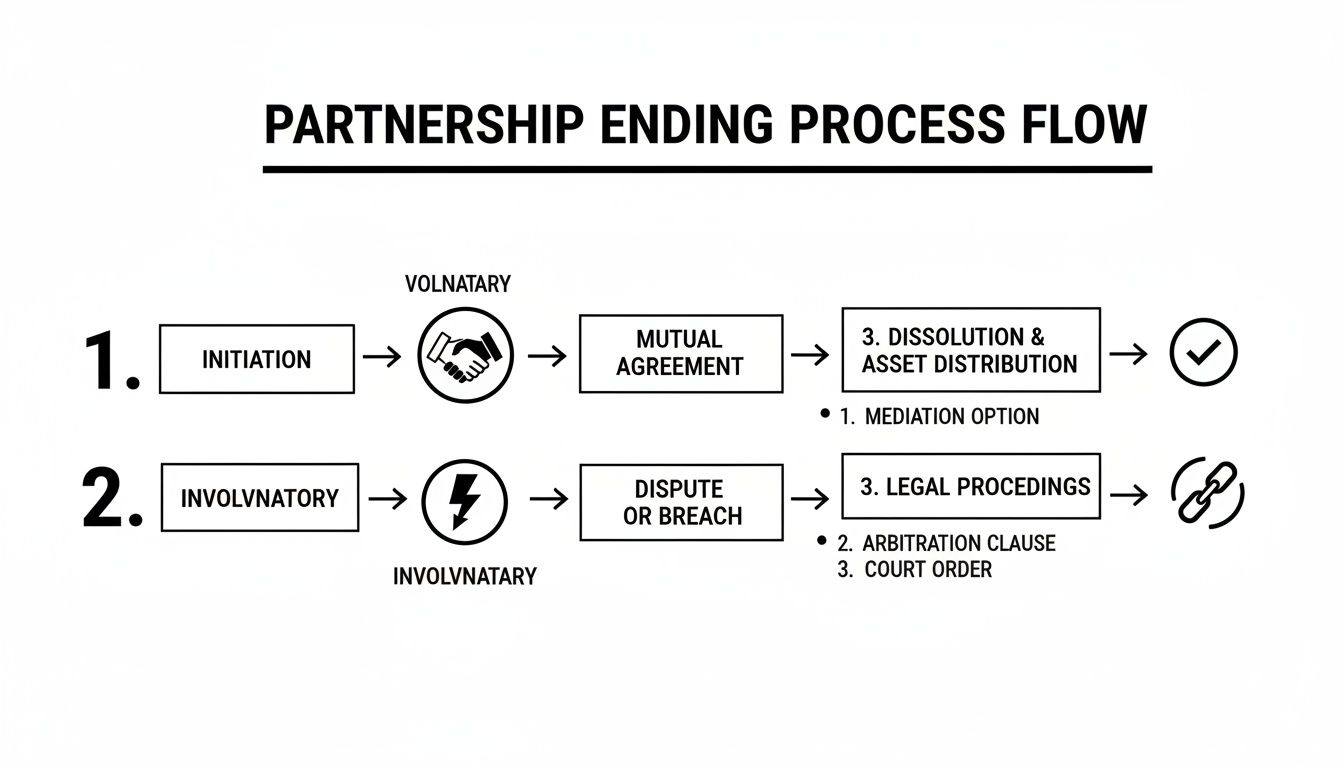
As you can see, whether the dissolution is voluntary or forced, the end game is the same—you have to meticulously wind up the company's affairs.
The Winding Up Checklist for Kingwood Partners
To help you navigate the process, here’s a breakdown of the core actions you'll need to take. While every partnership is a little different, these steps are fundamental.
1. Dust Off Your Partnership Agreement
The very first thing you need to do is find your partnership agreement. This document is your roadmap. A well-written agreement should already spell out the exact procedure for dissolution, including how to value assets and split the proceeds. If you never created one, Texas law provides a default set of rules, but they might not be what you and your partners originally intended.
2. Send a Formal Notice to All Partners
Even if everyone agreed to dissolve over a cup of coffee, it's crucial to provide formal, written notice to every partner. This creates an official paper trail and establishes the exact date the winding up process started, which is vital for both legal and financial record-keeping.
3. File a Statement of Dissolution
This is a big one. To let the public—and more importantly, your creditors—know that the partnership is closing, you should file a Statement of Dissolution with the Texas Secretary of State. This filing is a protective measure that helps limit your liability for any new debts someone might try to create in the business's name after the dissolution date. It's a key move to shield your personal assets.
Once a partnership is dissolved, a partner's power to act for the business is limited. You can still take actions necessary to complete old business and wind things up, but you can no longer bind the partnership to new deals.
In other words, you can still write checks to pay existing suppliers or sell off company vehicles. What you can’t do is sign a new lease or take on a new client on behalf of the shuttered business.
Settling Debts and Distributing Assets
The final—and arguably most important—part of winding up is squaring away the finances. Texas law is very specific about the order in which you must pay off debts and distribute assets. You have to follow this sequence exactly.
The payment priority is as follows:
- First, pay all outside creditors. This means suppliers, lenders, your landlord, and anyone else the business owes money. They get paid before anyone else.
- Second, repay loans from partners. If a partner personally loaned money to the business, they are treated like a creditor and are next in line to be repaid.
- Third, return each partner’s capital contribution. This is the money each partner originally invested to get the business started.
- Finally, distribute any remaining profits. If there’s anything left after all of the above has been paid, it gets divided among the partners based on the profit-sharing terms in your agreement.
For business owners here in Northeast Houston, getting this sequence right is non-negotiable. If you pay back a partner’s capital contribution before settling an outstanding invoice with a vendor, you could open yourself up to a personal lawsuit from that creditor.
Navigating the dissolution process can feel like a maze, but following a structured approach makes it much more manageable. Here’s a quick overview of the key stages.
Key Stages of Partnership Dissolution in Texas
| Stage | Key Action | Why It Matters for Your Kingwood Business |
|---|---|---|
| Decision & Notice | Formally agree to dissolve and provide written notice to all partners. | Creates a clear start date and ensures everyone is officially informed, preventing future disputes. |
| Public Filing | File a Statement of Dissolution with the Texas Secretary of State. | Limits your personal liability for future business debts and publicly signals the partnership is ending. |
| Liquidation | Sell off company assets (property, equipment, inventory) to convert them into cash. | You need cash on hand to settle all outstanding financial obligations in the correct legal order. |
| Debt Settlement | Pay all creditors, then repay partner loans, following the state-mandated priority. | Failing to pay outside creditors first can expose partners to personal lawsuits and legal action. |
| Asset Distribution | Return capital contributions to partners and distribute any remaining profits. | Ensures a fair and legal conclusion, preventing claims that one partner was unfairly compensated. |
| Final Filings | File final tax returns and any other required termination documents. | Officially closes the books with the IRS and the state, preventing lingering tax issues. |
Taking these steps in the right order ensures a clean and legally sound closure for your business.
If you're facing this process and need clear, practical guidance, The Law Office of Bryan Fagan is here to help. We invite you to schedule a free consultation at our Kingwood office to ensure your business is wound up correctly and your personal interests are protected every step of the way.
How to Handle Debts, Liabilities, and Final Taxes
For most Kingwood business owners, this is where the rubber meets the road. The financial side of a partnership split can be the most intimidating part of the whole process. Suddenly, years of intertwined finances have to be carefully unraveled, and every dollar must be accounted for. It’s a stressful time, no doubt, but understanding the legal roadmap for tackling debts, liabilities, and final taxes makes it far less chaotic.
The most important thing to grasp is that Texas law dictates a clear, non-negotiable order for paying off the business's obligations. You can’t just decide to pay back a partner first because it feels right; there's a strict hierarchy you have to follow to shield yourself from personal liability down the line.
Understanding Joint and Several Liability
Before we get into the payment order, let's talk about a critical legal concept every partner needs to know: joint and several liability. It sounds complicated, but the idea is simple and stark. It means every partner can be held 100% responsible for all business debts, regardless of who actually created them.
Imagine your Humble-based partnership owes a supplier $50,000. That creditor can legally come after you for the full amount, even if your partner was the one who placed the order and signed the invoice. It’s a sobering reality, and it’s precisely why the "winding up" phase has to be handled with military precision. One wrong move could put your personal assets—your home, your savings—on the line.
The Legal Priority for Paying Debts
To ensure a clean break and protect everyone involved, Texas law spells out a specific pecking order for paying off debts when a partnership dissolves. I like to think of it as a waterfall: the money flows to the top level until it's full, then spills over to the next, and so on. You must follow this order.
- Outside Creditors First: Before any partner gets a single cent, you have to pay all third-party creditors. This means suppliers, your landlord, the utility company, and any banks that issued business loans. They are at the very top of the list.
- Debts Owed to Partners: Once all outside debts are cleared, the business can then repay any loans that the partners personally made to the business.
- Return of Capital Contributions: Next up, each partner gets back their initial capital contribution. This is the money they originally put in to get the business off the ground.
- Distribution of Profits: If there is any money or property left after all those other obligations are met, it’s finally considered profit. This remaining amount is then distributed among the partners according to the rules laid out in your partnership agreement.
The dissolution of a business partnership shares an emotional weight with personal dissolutions, like divorce. Interestingly, while business splits follow a strict financial order, personal separations are also on a fascinating trajectory. For example, recent data shows the U.S. divorce rate has seen a notable decline. Explore the latest statistics on partnership dissolution in personal life to see the full picture. Learn more about recent U.S. divorce statistics on divorcecanbesimple.com.
Final Tax Obligations
Your financial duties aren't over until the government gets its share. A common and costly mistake is failing to file the final tax returns, which can create legal headaches that follow you long after your business has closed its doors for good.
Here are the essential tax steps for your Northeast Houston partnership:
- File a Final Form 1065: You are required to file a final U.S. Return of Partnership Income for the year the business officially ends. Make sure you check the box on the form that clearly marks it as a final return.
- Issue Final Schedule K-1s: Every partner needs to receive a final Schedule K-1. This document reports their individual share of the partnership’s income, losses, deductions, and credits for that last year of operation.
Trying to manage all these financial duties during an already tense time can feel like too much. If the business is facing serious money troubles and insolvency is on the table, it’s vital to understand how bankruptcy might impact your business.
If you’re staring down the complexities of a partnership dissolution and worried about protecting your personal assets, you don’t have to go it alone. The Law Office of Bryan Fagan is right here in Kingwood, ready to help. Schedule a free consultation with us today to make sure your financial future is protected.
Why Your Partnership Agreement Is Your Most Important Tool

When it comes to the dissolution of partnerships, that agreement you signed when you first started the business isn't just a piece of paper—it's your rulebook. Think of it as the playbook you and your partners created back when everyone was excited and on the same page.
A solid agreement acts as your business's own private set of laws. It lets you sidestep many of the generic, one-size-fits-all statutes in Texas law, keeping you in the driver's seat when things get complicated.
Picture two local Kingwood businesses. One has a detailed partnership agreement, and the other just relied on a handshake. When a partner decides to leave in both scenarios, the first business simply follows the pre-agreed steps for valuing the company and buying out the departing partner. The second is thrown into complete chaos, stuck with default state laws that often lead to costly legal battles or even a forced liquidation of the entire company.
Must-Have Clauses for Every Kingwood Business
The best defense against a messy breakup down the road is being proactive when you first form the business. Your partnership agreement should be tailored to your specific situation, not some generic template you found online. It needs to account for the unique dynamics of your business and the people involved.
Here are the critical clauses every partnership agreement in Kingwood and Humble absolutely needs:
- Clear Dissolution Triggers: The document should spell out exactly what events can trigger a dissolution. This could be anything from a partner's retirement or disability to a specific voting outcome. No ambiguity.
- Defined Valuation Method: How do you determine what the business is worth? Your agreement needs to lock in the exact method for appraising the company. This prevents massive disagreements over value when emotions are already running high.
- Specific Buy-Sell Provisions: This is the core of any smooth exit strategy. A buy-sell provision lays out the terms for one partner to purchase another's share, covering the price, payment plan, and timeline.
- Winding Up Framework: The agreement should provide a clear, step-by-step roadmap for shutting things down. It needs to clarify who handles paying off debts, liquidating assets, and submitting the final paperwork.
A well-crafted agreement should always include clear terms for ending the business relationship. Understanding a standard contract termination clause and adapting it to your partnership is key to defining how and when the partnership can be dissolved. This foresight means every partner knows their rights and responsibilities from the very beginning.
The best time to plan for a partnership’s end is at its beginning. A comprehensive agreement isn't a sign of mistrust; it's a mark of professionalism and a commitment to protecting everyone’s investment and hard work.
Your Agreement Is Your Shield
Without a partnership agreement, you're at the mercy of the Texas Business Organizations Code. While these default rules provide a basic structure, they rarely align with what’s best for your specific business.
By drafting a thorough agreement upfront, you control the story. You ensure the dissolution of partnerships happens on your terms, not the state's. Taking the time to build a strong legal foundation is one of the smartest things you can do, and you can learn more about the importance of proper business formation from our other resources.
If you're facing a potential dissolution and aren't sure what your agreement says—or if you never made one—it’s time to get professional advice. At The Law Office of Bryan Fagan, we specialize in helping Kingwood business owners navigate these challenges and protect what they've built. Schedule a free consultation with us today to review your situation and map out your next steps.
When You Need a Kingwood Business Attorney
While this guide gives you a solid roadmap for dissolving a partnership, some situations are just too messy or high-stakes to go it alone. Trying to untangle certain business endings without an expert can put your personal finances on the line and spark disputes that drag on for years.
Honestly, knowing when to bring in a professional is one of the smartest moves a business owner can make. Think of legal counsel less as an expense and more as a critical investment in protecting your future. The end of a business is always stressful, but you don't have to navigate it by yourself.
Red Flags That Signal It's Time to Call a Lawyer
If any of these scenarios sound familiar, it's a clear sign you need an experienced Kingwood business attorney in your corner.
- Unresolved Partner Disputes: Things can get heated. When you and your partners can't agree on how to value assets, who pays which debts, or the timeline for shutting down, you need a neutral expert to step in, mediate, and make sure the partnership agreement is followed.
- A Complex Web of Debts: If the business owes money to multiple creditors, a lawyer is essential. They'll make sure the payment priority follows Texas law to the letter, which is crucial for protecting you from being held personally liable for business debts.
- Valuable or Complex Assets: Does the partnership own real estate, expensive equipment, or intellectual property like trademarks or patents? An attorney is needed to oversee the proper valuation and legal transfer of these high-value assets.
- Partner Buyout Negotiations: It's common for one partner to want to buy out the others and keep the business running in Humble or Northeast Houston. A lawyer's job here is to structure a solid buy-sell agreement that safeguards everyone's financial interests.
Protecting Your Interests During a Business Breakup
Ending a business partnership can feel a lot like a divorce. When trust breaks down, the legal and financial fallout can be severe. If a partner isn't holding up their end of the bargain, you might even need to consider action for a breach of contract.
You can learn more about that process in our guide on how to sue for breach of contract in Texas.
Interestingly, the dynamics of partnership endings vary worldwide, shaped by different legal and cultural landscapes. For instance, global patterns show the Maldives has the highest divorce rate, while countries like the Philippines don't legally permit it at all. Discover more insights about these global partnership dissolution rates on soulmatcher.app.
At The Law Office of Bryan Fagan, we know exactly what’s on the line for local business owners. If you own a business in Kingwood, Humble, or the surrounding communities, we invite you to schedule a confidential, no-obligation consultation at our Kingwood office. Let us help you find a clean, final resolution and protect everything you’ve worked so hard to build.
Common Questions About Ending a Partnership in Texas
When it's time to close the doors on a Kingwood business partnership, it's natural to have a lot on your mind. Here are straightforward answers to the questions we hear most often from local business owners.
What’s the Real Difference Between Dissolution and Termination?
It’s easy to mix these two up, but under Texas law, they represent two very different stages of the process.
Think of dissolution as the official beginning of the end. It's the moment the partners decide to stop taking on new business and start the closing-down process. Termination is the final act—the finish line. This happens only after every debt has been settled, all assets have been sold or distributed, and the partnership officially ceases to exist.
Can Our Business Keep Going After One Partner Leaves?
Absolutely, and it happens all the time. The key is usually found in your partnership agreement.
If you have a buy-sell clause, the remaining partners often have the right to purchase the departing partner's interest. This is a common way for a business in Humble or Porter to carry on without a complete shutdown, just under a reorganized ownership structure.
What If We Never Had a Partnership Agreement?
Operating on a handshake is common, but it can complicate things when it's time to split. Without a written agreement, your breakup is automatically governed by the default rules laid out in the Texas Business Organizations Code.
The problem is, these state-mandated rules might not be what you and your partners ever intended. This is a situation where getting advice from a Kingwood attorney isn't just a good idea—it's essential for protecting your personal assets and financial future.
How long does the "winding up" period take? It really depends. A simple partnership with minimal debt might be wrapped up in a few months. But for a business with complex contracts, real estate holdings, or significant debts, it could easily take a year or more to finalize everything.
Closing a business chapter is never easy, but you don't have to face it by yourself. The experienced attorneys at The Law Office of Bryan Fagan – Kingwood TX Lawyers are here to offer the clear, practical guidance you need to move forward. Schedule a free, confidential consultation with our Kingwood team today to protect your assets and ensure a clean break.