
A parent walks into our Kingwood office with a grocery bag full of loose papers, a phone full of screenshots, and one urgent question: “What do I need to bring?” That situation is common. It is also fixable.
The first consultation works best when the facts are easy to follow. Family law disputes in Texas often turn on dates, account balances, prior orders, school records, and communication history. If those items are organized before the meeting, an attorney can spend more time identifying risks, explaining options, and outlining next steps instead of sorting through scattered information.
Good preparation also saves money. Many first meetings are limited in time, whether you are scheduling a paid consultation or using a referral service that offers a short introductory appointment. A clear folder, a simple timeline, and a written list of questions can make the difference between a general conversation and a useful legal analysis.
That is why this guide focuses on more than a checklist. The goal is to help you bring the documents that matter under Texas law, understand why they matter, and group them in a way that makes your consultation in our Kingwood office more productive. If you want a practical example from another area of law, this bankruptcy form guide from LifeBack Law Firm shows the same point. Lawyers can assess a case faster and more accurately when the paper trail is ready.
1. Marriage Certificate and Divorce Decree if Applicable
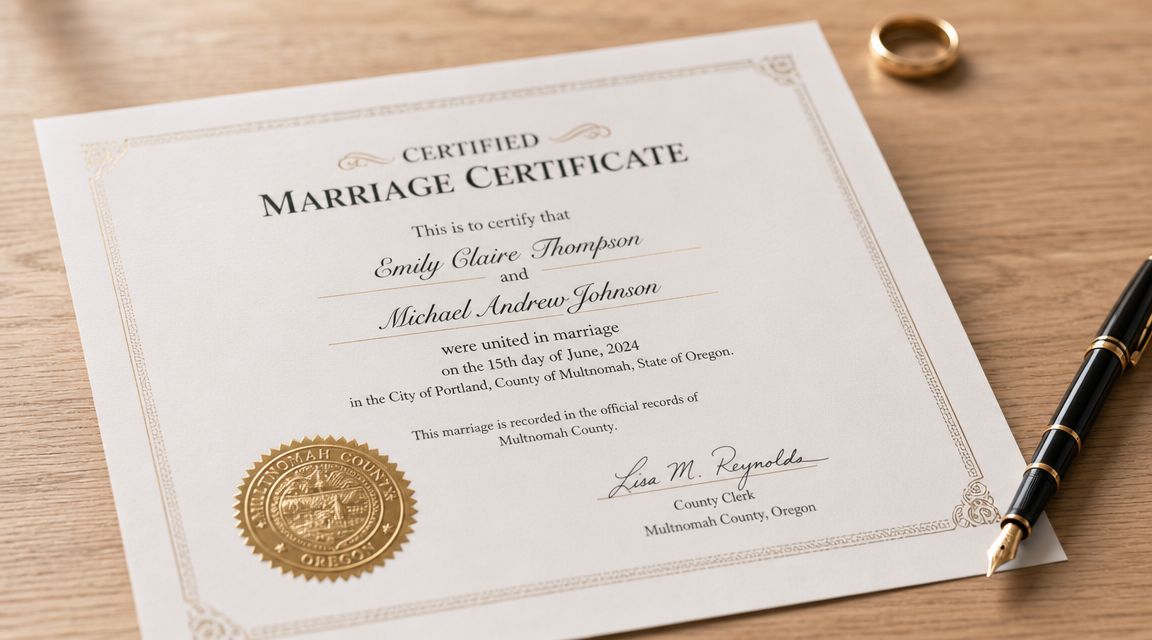
A marriage certificate answers a basic but important question. When did the legal marriage begin? In Texas family law, that date often matters when a lawyer starts sorting through property issues, support questions, and the overall timeline of the relationship.
If either spouse was previously married, a final divorce decree matters just as much. It helps confirm current marital status and may show ongoing obligations from an earlier case, such as support duties or property terms that still affect the present situation. In a Kingwood divorce consultation, those older orders can change the conversation quickly.
Why these papers matter under Texas law
Texas divorce cases often involve questions about what was owned before marriage, what was acquired during marriage, and whether a prior divorce still affects someone's finances or obligations. Without the marriage certificate and any earlier divorce decrees, a lawyer is often forced to work from memory and estimates. That's a weak starting point.
A practical example helps. If someone in Humble married in the mid-1990s, later divorced, and then remarried, the attorney needs the dates and terms from both relationships to spot separate-property arguments and avoid mixing old obligations into a new case. If there was an earlier decree awarding debt to a former spouse, that's something counsel wants to see in writing, not hear secondhand.
Practical rule: If a document establishes a relationship status, a court order, or an important date, bring it.
If you don't have certified copies yet, bring the best copy you have for the consultation and tell the lawyer where the original came from. A copy is often enough for the first meeting. A certified version may be needed later for filing or proving the record.
What works best
- Bring both sides of the timeline: Include the marriage certificate and any prior divorce decrees for either spouse.
- Add notes on unusual facts: If you married outside Texas or changed names, write that down so the lawyer can connect records correctly.
- Keep originals safe: Bring copies to the office when possible and store original vital records in a secure place.
2. Complete Financial Documentation and Bank Statements
Financial records drive family law decisions. They shape discussions about property division, temporary support, settlement options, and whether a case is simple or likely to require deeper financial review.
Texas family-law preparation guides commonly point lawyers to a decision-ready packet that includes government ID, a written timeline, existing court orders, recent pay stubs, 2 to 3 years of tax returns, 3 to 6 months of bank and investment statements, mortgage or deed records, retirement statements, and a debt summary. That kind of organized packet lets counsel test major issues early, including liquidity, support exposure, separate versus community property tracing, and whether business or executive compensation assets need more scrutiny.
For many clients in Kingwood and Northeast Houston, the consultation becomes productive rather than abstract.
Don't bring a pile. Bring a packet.
A banker's box full of loose papers feels thorough, but it slows everything down. A better approach is simple folders or labeled PDFs by category. One folder for checking and savings. One for retirement. One for investment accounts. One for real estate. One for debts.
If you have online accounts, download full statements instead of relying on app screenshots. Statements show dates, balances, deposits, and account ownership more clearly. That matters if the lawyer needs to identify whether an account existed before marriage, was funded during marriage, or contains mixed funds.
Before we go deeper, this visual is a good reminder of the kind of records that matter:

A common local example is a Kingwood professional with a checking account, a joint savings account, a 401(k), an IRA, and a brokerage account. If only one account gets discussed in the consultation, the strategy will be incomplete from the start. The same is true for self-employed clients in Porter who have business and personal funds moving through multiple accounts.
Organized bank records often tell the real story faster than a verbal summary does.
Use a short account list on top of the packet. Name the institution, last known balance, whether it's joint or individual, and whether you believe it started before or during the marriage. That one-page overview helps your attorney spot gaps immediately.
Later in the consultation, it can also help to watch through practical intake advice like this:
3. Income Documentation and Tax Returns
Income documents answer questions that clients often struggle to answer accurately on the spot. What do you earn? Is your compensation steady or variable? Are there bonuses, commissions, side work, or business income that don't show up in a basic paycheck?
Texas-focused family-law guidance recommends bringing recent pay stubs, tax returns for at least the past 3 years, along with bank records, retirement and investment summaries, mortgage or deed records, debt records, and any prenuptial agreement. In practice, tax returns and pay records help a lawyer evaluate support issues and compare reported income against the broader financial picture.
Why tax returns tell more than pay stubs
Pay stubs are current. Tax returns are broader. A pay stub may show salary, but a tax return can reveal contract income, business income, investment activity, or a pattern of changing earnings over time. For someone in Northeast Houston who recently changed jobs, both documents matter because they show past earnings and current direction.
For self-employed clients, this gets even more important. If you own a small business in Kingwood, run contract work, or get paid through several streams, the lawyer needs the returns, any relevant schedules, and enough supporting records to understand how money flows. That doesn't mean you need a perfect accounting package on day one. It does mean you shouldn't walk in with only a verbal estimate.
A better way to organize income records
- Group by source: Keep employment income separate from business income, rental income, or freelance work.
- Include complete returns: Bring returns with schedules, not just the first few pages.
- Show recent changes: If you got a new job, lost a job, or had a major drop in income, bring the offer letter, termination notice, or recent pay records.
A simple example. A W-2 employee in Humble can usually give the lawyer a strong starting picture with tax returns and recent pay stubs. An independent contractor who leaves out account deposits, client payments, or business statements may create a misleading picture that has to be corrected later.
That correction usually costs time, and sometimes credibility.
4. Documents Related to Children and Custody
A custody consultation goes faster, and usually costs less, when the paperwork shows the child's routine instead of forcing you to explain everything from memory. In Texas, decisions about conservatorship, possession, support, and related issues turn on the child's best interests. That means the lawyer needs records that show daily life, decision-making, health, schooling, and any concern that affects stability or safety.
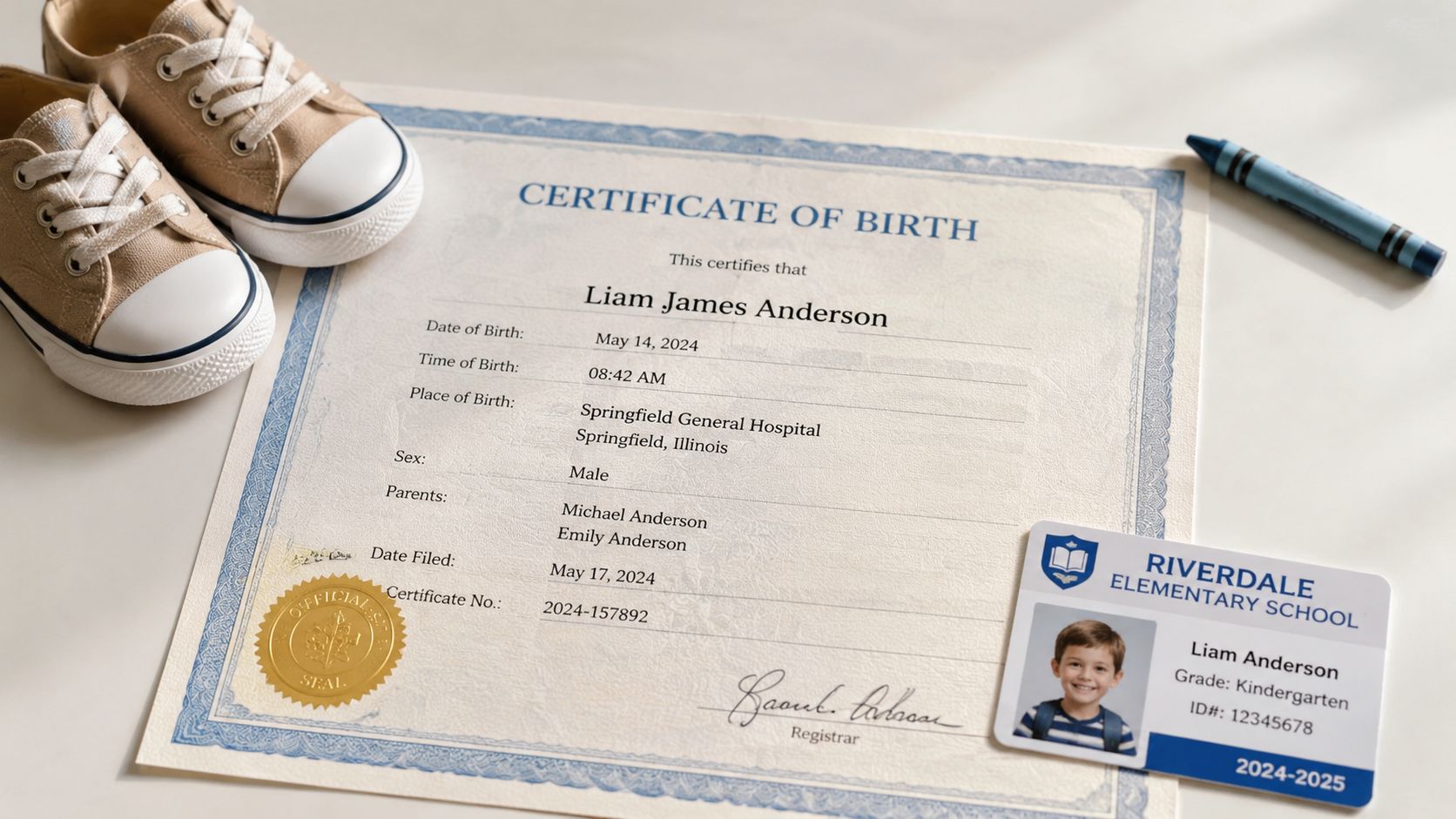
Bring the documents that identify the child and define the current legal relationship first. That usually includes birth certificates, paternity papers, adoption records, Social Security information if you have it, and any existing custody, visitation, or child support orders from Texas or another state. Those records answer threshold questions early. Who has legal rights now. Whether another court already entered orders. Whether a SAPCR, modification, enforcement, or interstate issue may be involved.
School and medical records often shape strategy more than parents expect.
Attendance reports, report cards, school contact information, teacher emails, disciplinary notices, therapy records, prescription information, insurance cards, and notes about diagnoses or special needs help show who is handling the child's day-to-day care and what schedule may serve the child well. If one parent has been coordinating tutoring, counseling, or recurring appointments, documents tied to dates carry more weight than a general claim made across a conference table.
You should also bring records that show the practical cost of raising the child. Childcare invoices, extracurricular fees, health insurance information, and out-of-pocket medical expenses matter because support discussions are not limited to base child support. They can affect reimbursement issues, allocations for uninsured expenses, and the overall picture of what the child needs each month.
You do not need a box of loose papers. You need an organized set of records.
What courts and lawyers need to see
Texas judges and family lawyers look for specifics. Who enrolled the child in school. Who attends medical appointments. What the current exchange pattern looks like. Whether the child has special educational or medical needs. Whether there have been missed visits, chronic conflict, safety incidents, or communication problems that affect parenting.
A parent in Porter may tell me, truthfully, that they have handled nearly everything for the children. The consultation becomes far more productive if that parent also brings school emails, appointment summaries, activity registrations, and a simple calendar showing overnights, exchanges, and missed periods of possession. That kind of preparation helps separate frustration from proof.
For clients who are already gathering exhibits or trying to sort texts and calendars into something usable, this Kingwood custody evidence guide gives a practical framework. If your concern also overlaps with the child's housing, ownership of the home, or who will remain in the marital residence, it also helps to review how those issues connect in a Kingwood property division case overview.
What to organize before the meeting
- Identity and status records: Birth certificates, paternity or adoption papers, and current court orders.
- School records: Contact lists, report cards, attendance records, special education documents, and teacher communications.
- Medical and counseling records: Provider names, insurance cards, prescription information, therapy records, and notes about ongoing treatment.
- Expense records: Childcare bills, extracurricular costs, insurance premiums for the child, and major unreimbursed medical expenses.
- Parenting history: A dated timeline, calendar, or log showing possession periods, missed visits, major incidents, and who was present.
Keep the timeline neutral. Dates, locations, and documents are more useful than loaded descriptions. In my experience, families from Kingwood, Humble, Atascocita, and the rest of Northeast Houston get more value from the first meeting when they organize children's records by category and by date before they walk into the office.
5. Property and Asset Documentation
Property division is where missing paperwork causes real trouble. Texas law requires a serious look at what exists, who holds it, when it was acquired, and whether there's any argument that an asset is separate rather than community property.
That means your lawyer will want documents tied to homes, land, vehicles, retirement accounts, investment accounts, business interests, and valuable personal property. If an asset has a paper trail, bring it. If it doesn't, bring whatever gets closest, such as account summaries, deeds, titles, appraisals, or prior valuations. For a local overview of how these issues are handled, see this Kingwood property division resource.

The documents that change the analysis
Some records do more than confirm ownership. They change case strategy. Business ownership documents, LLC or shareholder agreements, stock option or RSU vesting schedules, and prior appraisals can materially affect how a lawyer evaluates division issues. If you own part of a business in Northeast Houston or receive executive compensation, say that early and bring the documents you have.
A homeowner in Kingwood should usually bring the deed, current mortgage statement, and any recent appraisal or tax value document. A client claiming an inherited asset should bring the records that show where it came from and when. A spouse with a vehicle title in only one name should still bring it, because title alone doesn't always answer the property question.
What helps most in the first meeting
- A property list: One page listing each asset, estimated value, and whose name it's in.
- Ownership records: Deeds, titles, account statements, and partnership or company documents.
- Classification clues: Prenuptial agreements, inheritance paperwork, gift records, or evidence showing an asset existed before marriage.
One practical mistake shows up often. People assume household items don't matter until later. They may not drive the whole case, but if there's valuable jewelry, collections, firearms, tools, or business equipment, note them early. That helps the lawyer judge whether a quick settlement approach is realistic or whether deeper inventory work may be necessary.
6. Debt Documentation and Liability Records
Debt deserves the same attention as assets. People often spend a lot of time gathering records for bank accounts and houses, then show up with only a rough guess about credit cards, loans, or tax liabilities. That creates risk because a divorce order can divide responsibility between spouses, but it doesn't automatically erase a creditor's contract rights.
Bring statements for credit cards, personal loans, vehicle loans, mortgages, medical bills, tax debts, and business liabilities. If possible, note when each debt began and what it was used for. In a family-law consultation, that context matters almost as much as the balance.
Why timing matters with debt
A debt incurred during the marriage may be treated differently from one tied to life before marriage or one taken on after separation for a clearly personal purpose. The lawyer can't sort that out cleanly without dates and statements. This is especially important when one spouse suspects the other ran up debt late in the relationship.
A common example in Humble is a spouse who discovers several credit card balances but doesn't know whether the charges were household expenses, business expenses, or personal spending. Statements can help identify patterns. Another example is a small business owner in Porter who signed both personal and business loan documents. That distinction may become important very quickly.
Reality check: If a debt surprises you, bring the paper anyway. Hidden debt is easier to address when it's identified early.
What a useful debt packet looks like
- Current statements: The most recent balance statements for every known debt.
- Loan documents: Notes, contracts, and account-opening records if you have them.
- Purpose notes: Brief comments such as “family car,” “medical expense,” or “business equipment.”
- Co-borrower details: Indicate whether the debt is joint, individual, or guaranteed by both spouses.
Don't ignore debts because you think they're small or because the account is only in one name. In Texas family cases, the facts around the debt often matter more than the label on the statement.
7. Questions, Goals, Communication Records and Evidence of Parenting or Support
A strong consultation isn't just document-heavy. It's focused. Bring your questions, your top goals, and the communications that support your version of events.
Texas family-law preparation materials emphasize preserving text messages, emails, letters, and screenshots because contemporaneous communications can show patterns in custody, visitation, and financial disputes. For many clients in Kingwood, these records are the difference between “I think this happened a lot” and “Here is what happened, on these dates, in these words.”
Start with your three priorities
Write down the three things that matter most to you. Maybe you want stability for the kids. Maybe you want to stay in the home temporarily. Maybe your biggest concern is protecting a business or avoiding unfair debt. If you don't name your goals, the consultation can drift into a general legal lecture instead of advice suited for your situation.
If you need help shaping those questions, this list of questions to ask a family lawyer in Kingwood is a useful starting point.
Communication evidence that actually helps
Not every text message belongs in a consultation packet. Bring the exchanges that relate to parenting time, school issues, medical care, support payments, threats, admissions, or disputed events. Organize them by date. Label who sent what. Avoid presenting hundreds of random screenshots without context.
If you need a practical way to preserve conversations, this guide on how to forward text messages to email can help you create a cleaner record. Email archives are often easier to sort and print than phone screenshots alone.
- Questions list: Ask about temporary orders, mediation, court deadlines, filing strategy, and likely next steps.
- Goal sheet: Write your preferred outcome and your backup outcome.
- Payment proof: Bring receipts, bank transfers, Venmo records, or account entries showing support or child-related payments.
- Timeline: Include key dates such as separation, move-outs, major incidents, and prior hearings.
A parent in Northeast Houston who brings school emails, a visitation calendar, and proof of child-related payments usually gets much more targeted advice than someone relying only on memory.
8. Insurance Documentation and Identification
A consultation can stall fast when no one knows who carries the children's health insurance, what the premium costs, or whether a life insurance policy names the right beneficiary. Insurance papers answer those questions early. Identification does something just as practical. It lets your lawyer confirm names, dates of birth, and other details before those details end up in pleadings or temporary orders.
In Texas family cases, insurance documents often matter in ways clients do not expect. Health coverage can affect child support discussions, reimbursement claims, and temporary orders involving the children's medical care. Life and disability policies can matter in support planning and in settlement terms, especially if one spouse wants coverage in place to protect future obligations. Homeowners, renters, and auto policies can also help confirm assets, household addresses, vehicles, and who has been maintaining certain property since separation.
Bring a government-issued photo ID. Bring insurance records that show the policy number, carrier, monthly cost if known, and who is covered.
A parent in Kingwood might tell me, “The kids are on my spouse's plan,” but that alone does not tell us what the coverage costs, whether dental and vision are included, or how easy it will be to keep the children insured during the case. An insurance card, a benefits summary, and a recent payroll stub showing the deduction usually answer those questions much faster than memory can.
Insurance papers worth gathering
- Photo identification: Driver's license, passport, or other government-issued ID used to verify legal names and basic identifying details.
- Health insurance records: Insurance cards, summary of benefits, premium information, and documents showing which children or family members are enrolled.
- Life and disability coverage: Declarations pages, beneficiary designations, and employer benefit summaries.
- Household insurance: Homeowners, renters, flood, or auto declarations pages if property possession, vehicle use, or household transitions are part of the dispute.
Organization matters here. Put ID first, then group insurance papers by type. If you have online screenshots instead of full policy packets, save the pages that show the carrier, insured persons, premium, and policy number. That is usually enough for a first meeting.
If money is tight and you are still deciding whether to hire counsel, state court resources and legal aid information noted earlier can help you understand your options. Even then, arriving with identification and organized insurance records makes any consultation more useful and more cost-effective.
8-Item Comparison: Documents for Texas Family Law Consultation
| Item | 🔄 Implementation Complexity | ⚡ Resource Requirements | ⭐ Expected Effectiveness | 💡 Ideal Use Cases | 📊 Key Advantages |
|---|---|---|---|---|---|
| Marriage Certificate and Divorce Decree | Low, obtain certified copies; may take time for older/international records | Moderate, fees, county clerk requests, 2–3 week lead time | High, primary proof of marital status and timeline | Establish marriage date, clarify prior divorces, community property analysis | Prevents delays; enables accurate property/support timelines |
| Complete Financial Documentation and Bank Statements | High, gather multiple accounts, investments, crypto; organize chronologically | High, time, online access, possible forensic accounting | Very High, critical for asset discovery and accurate support calculations | Property division, hidden-asset investigation, spousal/child support determinations | Comprehensive view of estate; supports forensic review and negotiations |
| Income Documentation and Tax Returns | Moderate, assemble 2–3 years returns, pay stubs, business schedules | Moderate, IRS/CPA copies, payroll records, business statements | High, authoritative proof of income and earning capacity | Calculating child/spousal support, income disputes, attorney fee claims | Official IRS-based evidence; shows multi-year income trends |
| Documents Related to Children and Custody | Moderate, collect birth certificates, school/medical records, existing orders | Moderate, requests to schools/health providers; certified copies | High, strongly supports best-interest and custody claims | Custody hearings, parenting plans, special-needs or safety concerns | Demonstrates parental involvement, stability, and special needs evidence |
| Property and Asset Documentation | High, compile deeds, titles, appraisals, business docs; valuations may be complex | High, appraisals, tax records, professional valuations, legal documents | Very High, necessary for fair division under community property rules | Real estate division, business valuation, distinguishing separate vs community property | Protects separate property; prevents hidden or mischaracterized assets |
| Debt Documentation and Liability Records | Moderate, gather credit card, loan, mortgage, medical and business debt records | Moderate, creditor statements, loan docs, dates and purposes | High, clarifies liability allocation and net-asset calculations | Allocating marital debt, creditor disputes, protecting against wrongful obligations | Prevents surprise obligations; supports fair debt allocation |
| Questions, Goals, Communication Records & Evidence | Low, prepare questions and organize emails/texts/calendars; preserve digital records | Low, time to prepare; tools to export messages and print records | High, focuses consultation and provides contemporaneous evidence | Initial consultation, custody/support evidence, building case strategy | Maximizes consultation value; contemporaneous records increase credibility |
| Insurance Documentation and Identification | Low, gather policies (health, life, disability) and IDs; verify beneficiary info | Low, copies of policies, ID documents, employer benefit details | Moderate‑High, important for support, coverage and filing accuracy | Child support health coverage, securing obligations with life insurance, identity verification | Protects health coverage, secures obligations, prevents filing/identification errors |
You're Prepared. Now, Let's Talk.
Gathering documents for a family-law consultation can feel tedious when you're already under stress. But this work pays off. You aren't just collecting paperwork. You're giving your attorney the tools to answer your questions with more precision and to spot problems before they become expensive distractions.
That's especially true when you're trying to figure out what to bring to a consultation with a family lawyer in Texas. The right answer isn't just “everything.” It's the records that explain your legal status, your finances, your children's needs, your assets, your debts, and your goals. When those records are organized, even a short meeting can become far more useful.
For families in Kingwood, Humble, Porter, and Northeast Houston, I'd keep the standard simple. Bring the documents that prove dates, money, parenting, and prior court action. Put them in labeled folders or organized digital files. Add a short written timeline and a list of your top concerns. If you're missing something, don't let that stop you from scheduling the meeting. Just be honest about what you have and what still needs to be gathered.
Texas family law can feel complicated because every case has moving parts. Property issues overlap with support issues. Custody concerns overlap with school records, medical information, and communication history. A good consultation helps sort those issues into a plan. The more clearly you present the facts, the easier it is for your lawyer to explain your options under Texas law and help you make sound decisions for your family.
If you're in the Kingwood area and need guidance on divorce, child custody, child support, or property division, the Law Office of Bryan Fagan – Kingwood TX Lawyers is one local option for that conversation. A first meeting should leave you with clarity about where you stand, what documents matter most, and what steps come next.
You don't need to walk into the office with a perfect case file. You do need to walk in ready to be honest, organized, and open to advice. That's enough to make the consultation productive and cost-effective.
If you're ready to talk through your situation with a local team, schedule a free consultation with Law Office of Bryan Fagan – Kingwood TX Lawyers. The Kingwood office works with clients across Kingwood, Humble, Porter, and Northeast Houston on divorce, custody, child support, and property division matters, and can help you understand how Texas law applies to your next step.