
When you're facing a criminal charge in Kingwood, your world can feel like it's been turned upside down. The biggest fear for most people in our community is the thought of a permanent criminal conviction following them around forever, making it tough to get a job, rent an apartment, or simply move on with their life.
But an arrest in Texas doesn't automatically mean a conviction. There's a legal path called deferred adjudication, and it's something we help our clients in the Kingwood, Humble, and Northeast Houston area navigate all the time. As your local law firm, we want to help you understand your options.
A Second Chance Without a Permanent Conviction
So, what exactly is deferred adjudication? Think of it as an agreement with the court. You enter a plea of "guilty" or "no contest," but—and this is the critical part—the judge doesn't actually find you guilty.
Instead, the judge defers (or postpones) a finding of guilt and places you on community supervision, which is basically a form of probation. If you do everything the court asks of you for a set period, the judge will dismiss your case. Poof. Gone. It’s a chance to prove yourself and keep your record clean of a conviction.
How Deferred Adjudication Works in Practice for Kingwood Residents
For our clients here in Kingwood, this process usually involves a few key responsibilities. You're not just waiting for time to pass; you have to actively meet the terms set by the court.
These conditions typically include things like:
- Checking in regularly with a probation officer in Harris or Montgomery County.
- Paying court costs and any required fines.
- Completing specific classes, like a DWI education course or an anger management program.
- Most importantly, staying out of trouble and avoiding any new arrests.
Successfully complete your term, and the case is dismissed. This is a world away from "straight probation," where a conviction is entered on your record from day one.
The single most powerful benefit of deferred adjudication is this: if you complete it successfully, you are never convicted of the crime. This can be a game-changer for your future.
At The Law Office of Bryan Fagan, we've guided countless Kingwood residents through this process. Our job is to negotiate for this opportunity on your behalf and then provide the practical support you need to see it through to a dismissal. If you’re facing a charge in Northeast Houston, don't just hope for the best. Schedule a free consultation with our Kingwood office to see if this is the right path for you.
Navigating the Deferred Adjudication Process Step by Step
When you’re facing a criminal charge, understanding how deferred adjudication actually works can make the whole situation feel less overwhelming. For our clients here in the Kingwood and Humble area, we find it helps to break the process down into simple, manageable steps. That way, you know what’s coming and feel supported from day one.
It all kicks off with a critical court appearance.
The whole process starts when you enter a plea of 'guilty' or 'no contest' in front of a judge. We know that sounds terrifying, but it's a required first step. Instead of finding you guilty right then and there, the judge "defers"—or postpones—that finding. This is the moment the deferred adjudication officially begins. You can get a better sense of this initial hearing by reading our guide on what happens at an arraignment hearing.
The Negotiation and Supervision Phase
Once the court accepts your plea, your attorney's job really begins. We step in to hammer out the specific terms of your community supervision (what most people call probation) with the prosecutor. This isn’t a cookie-cutter deal; the details are what make or break the agreement.
As your local Kingwood lawyer, our goal is to fight for the most reasonable terms for you. This often includes:
- Length of Supervision: Arguing for the shortest probation period possible.
- Required Programs: Making sure any required classes, like counseling or DWI education, are fair and accessible right here in the Northeast Houston area.
- Fines and Fees: Negotiating payment plans you can actually manage for court costs.
- Community Service: Working to set a realistic number of hours that won't disrupt your job and family life.
This flowchart shows the simple, three-step journey from being charged to getting that all-important dismissal. It’s a powerful second chance.
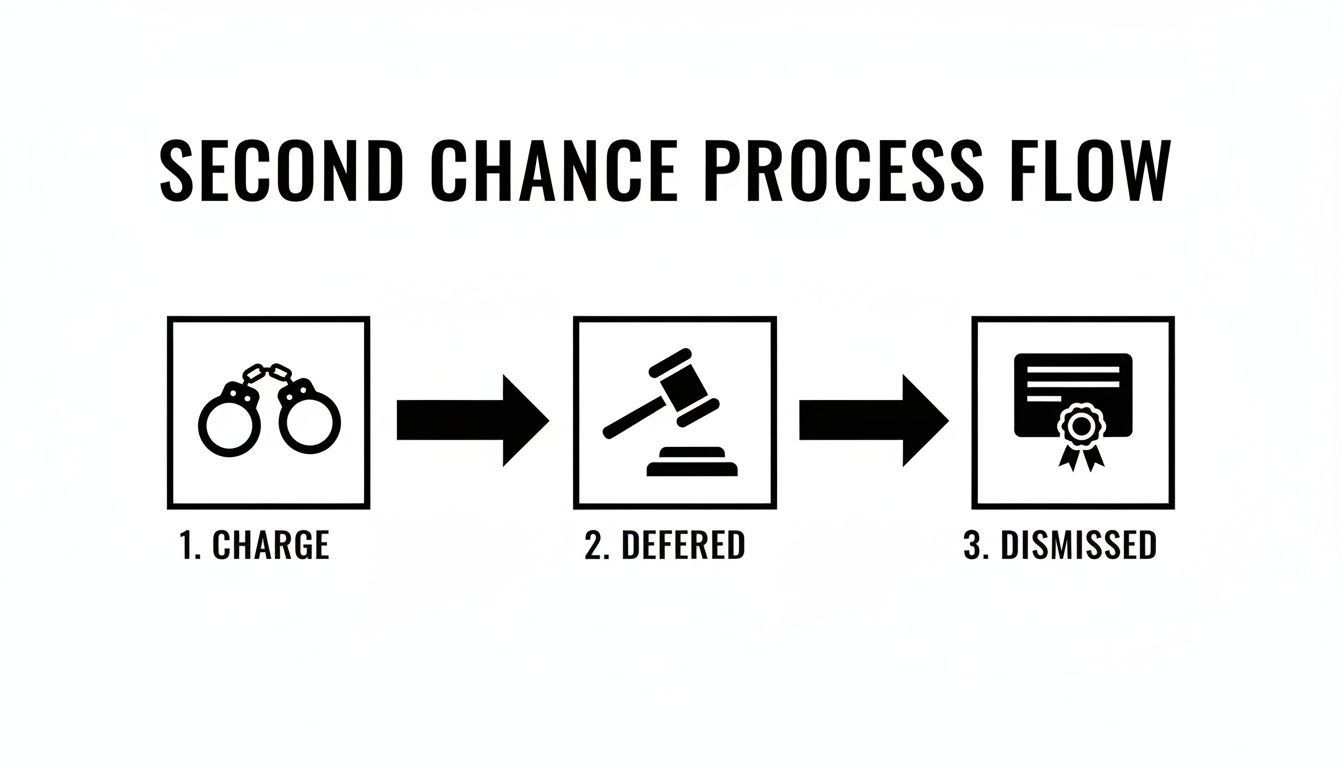
As you can see, even though it starts with a charge, the deferred adjudication path leads directly to a case dismissal, not a conviction.
What to Expect During Supervision
While you're on community supervision, you have to follow all the judge's orders. This usually means checking in with a probation officer in Harris or Montgomery County, staying current on your payments, and finishing any assigned courses. But the number one rule is simple: stay out of trouble and avoid any new arrests.
Texas law sets clear limits on how long this can last. For misdemeanors, the maximum supervision period is two years. For felonies, it can go up to 10 years. The good news is that a skilled Kingwood attorney can often negotiate a much shorter term.
For folks here in our community, knowing these timeframes is key to building the right defense strategy. Successfully completing your terms is the final hurdle to getting your case dismissed and putting this behind you for good.
Figuring Out if You’re Eligible for Deferred Adjudication

Not every criminal charge in Texas qualifies for deferred adjudication, so our first step is always to figure out if it’s even on the table for your case. Eligibility really hinges on a few key things: the specific offense you’re charged with, your prior criminal history (if any), and ultimately, the discretion of the prosecutor and the judge.
For many of our clients here in the Kingwood and Northeast Houston area, we see this option come up most often for first-time, non-violent offenses. The whole point is to give someone who made a mistake a real second chance without saddling them with a permanent conviction.
This isn't some obscure legal trick; deferred adjudication is a major part of the Texas justice system. In fact, it's used in about 10% of all criminal dispositions statewide. It offers a path to accept responsibility and work toward a dismissal, which is why it’s such a powerful tool. Successfully complete the program, and the charge gets marked "dismissed" on your public record. Even better, you might be able to seal the arrest completely down the road. You can read the full research on how this path helps reduce recidivism in Texas.
Common Charges That Are Often Eligible in the Kingwood Area
While every situation is different, prosecutors in Harris and Montgomery Counties tend to be open to deferred adjudication for certain charges, especially when dealing with a first-time offender. Having a local attorney who knows these tendencies can be a huge advantage.
Here are some of the charges where we frequently see deferred adjudication as a possibility:
- First-Time DWI: This is a big one. As long as your Blood Alcohol Concentration (BAC) was under 0.15 and you don't have a commercial driver's license, you may be eligible.
- Simple Drug Possession: Cases involving small, personal-use amounts of a controlled substance are common candidates.
- Theft or Shoplifting: Misdemeanor theft charges, where the value of the items is on the lower end, often qualify.
- Assault without Serious Injury: Depending on the specific circumstances, some simple assault cases can be considered.
Of course, just because you’re eligible doesn’t mean it’s automatic. The next hurdle is negotiating the offer with the prosecutor, and that's where a skilled Kingwood defense lawyer makes all the difference.
Offenses That Are Usually Barred from Deferred Adjudication
Unfortunately, Texas law draws a hard line on certain serious offenses, explicitly taking deferred adjudication off the table. This is to ensure that people charged with more severe crimes face a formal conviction if they're found guilty.
It's so important to have a realistic understanding of your options from the very beginning. If your charge falls into one of these categories, our defense strategy will have to focus on other routes, like fighting for a full dismissal or taking the case to trial for a not-guilty verdict.
Deferred adjudication is generally not an option for charges like:
- Driving While Intoxicated (DWI) with a BAC of 0.15 or higher.
- DWI for anyone holding a Commercial Driver's License (CDL).
- Murder, Capital Murder, and certain other violent felonies.
- Aggravated Kidnapping.
- Trafficking of Persons.
- Any offense that requires sex offender registration.
Trying to sort through these rules can feel overwhelming, but you don't have to do it alone. If you're not sure where your case stands, you can learn more about how misdemeanor charges can be dropped or resolved and schedule a free consultation at our Kingwood office to go over your specific situation.
Weighing the Pros and Cons of Deferred Adjudication
Deciding whether to take a deferred adjudication offer is a major crossroad in any Texas criminal case. For people here in Kingwood and Humble, it’s a choice that can fundamentally alter the course of your life. It’s not a decision to be made lightly; you have to take a hard, honest look at the incredible benefits and the very real dangers.
The single biggest draw is the chance to avoid a final conviction. That's the whole ballgame right there. A conviction is a permanent stain, creating hurdles for jobs, housing, and even getting into school. But when you finish a deferred adjudication probation, the case gets dismissed. You can then legally and truthfully say you were never convicted of that crime.
The Upside: Keeping a Conviction Off Your Record
When we work with clients across Northeast Houston, their number one concern is almost always protecting their future and their good name. Deferred adjudication is a powerful tool to do just that, as it stops a "guilty" finding from ever being officially entered by the court.
So, what does that actually look like in your life?
- Better Job Prospects: Think about that box on job applications asking if you’ve ever been convicted of a crime. After a dismissal, your honest answer is "no."
- Housing and Loan Applications: Many apartment complexes or lenders will automatically deny you with a conviction on your record. Deferred adjudication keeps those doors from slamming shut.
- Moving On: Successfully finishing the program means you can truly put the mistake behind you, without the shadow of a criminal conviction hanging over your head.
The Downside: What You're Risking
But let's be clear: this isn't a get-out-of-jail-free card. It comes with significant risks. By accepting a deferred offer, you’re giving up your constitutional right to a trial. You're betting on yourself—betting that you can follow every single rule the court lays out for the entire length of your probation, which can be months or even years.
The most serious risk is what happens if you slip up. If you fail a drug test, miss a meeting with your probation officer, or pick up a new charge, the prosecutor can file a motion to adjudicate guilt.
If a judge finds you violated your probation, they can sentence you to any punishment within the full range allowed by law for the original charge. You could face the maximum possible jail or prison time for that offense, and you don't get a trial on the original facts.
And there’s another catch. Even though you avoid a conviction, the arrest itself doesn't just disappear. It’s still there on your background check, which can create problems for:
- Professional Licenses: State licensing boards for nurses, teachers, real estate agents, and others can see the arrest and the deferred disposition, which may trigger an investigation.
- Immigration Status: This is a huge one. For non-citizens, federal immigration law often treats deferred adjudication the same as a conviction, leading to potential deportation or other severe consequences.
- Gun Rights: If the charge involves family violence, completing a deferred adjudication can still result in a lifetime federal ban on owning a firearm.
This is a complicated choice with high stakes. At The Law Office of Bryan Fagan, we take the time to walk our Kingwood-area clients through every potential outcome, making sure you have the full picture before you decide. Call us for a free consultation, and we can talk about how this applies to your specific case.
How to Seal Your Record After Deferred Adjudication

Finishing your deferred adjudication probation is a huge accomplishment and a massive relief. But don't celebrate just yet—there's one more critical step if you truly want to move on. Even though you avoided a conviction, the record of your arrest doesn't just vanish. It’s still out there, visible to the public.
This is where a legal tool called a Petition for Nondisclosure comes into play. Think of it as the final step in protecting your future. An order of nondisclosure effectively seals your criminal record from public view. This means most private employers, landlords, and nosey neighbors won't be able to find it. For our clients here in the Kingwood area, getting that nondisclosure is what brings real peace of mind.
Understanding the Waiting Periods
You can't file for a nondisclosure the day after your case is dismissed. Texas law makes you wait a bit, basically to see if you can stay out of trouble. How long you have to wait depends entirely on the original charge.
Getting this timing right is crucial. If you file too early, the court will deny your petition, and you'll have wasted both time and money.
Here’s a general breakdown of the waiting periods, which start after your case is officially dismissed:
- Most Misdemeanors: For many common misdemeanors, you're in luck. You can file for nondisclosure right away.
- Certain Misdemeanors: More serious misdemeanors, like assault or unlawful carrying of a weapon, come with a two-year waiting period from the date of dismissal.
- Felonies: If you completed deferred adjudication for a felony, the waiting period is significantly longer. You’ll have to wait five years after dismissal before you can file.
It's vital to remember that not all offenses are eligible for nondisclosure, even after completing deferred adjudication. Certain charges, like those involving family violence, are legally barred from ever being sealed.
How a Petition for Nondisclosure Works
Filing a Petition for Nondisclosure isn't just filling out a form; it's a formal legal proceeding. An attorney drafts a detailed petition and files it with the same court that handled your case, whether that's in Harris County or Montgomery County. The petition needs to prove two things: that you meet all the legal requirements and that sealing your record is in the "best interest of justice."
The whole point of deferred adjudication is to give you a second chance, and that extends far beyond the courtroom. While the arrest itself stays on your record initially, the key is that it shows up as "dismissed," not "convicted." Many employers understand this distinction. But once you get that nondisclosure, the record becomes hidden from most private background checks altogether. You can learn more about how probation and deferred adjudication impact your record on versustexas.com.
Figuring out the waiting periods and legal hurdles can be confusing. At The Law Office of Bryan Fagan, we guide our Kingwood and Northeast Houston clients through this final step all the time. Give us a call for a free consultation to find out if you're ready to secure your clean slate.
Why You Need a Kingwood Defense Attorney on Your Side
Trying to navigate the deferred adjudication process on your own is a huge gamble, and a mistake can follow you for years. Having an experienced Kingwood criminal defense attorney in your corner is the single most important step you can take to protect your future.
Our first move is always to scrutinize the evidence. We look for weaknesses in the state’s case to see if fighting for a complete dismissal is a viable option. For some of our Kingwood clients, that's the best path forward.
If deferred adjudication seems like the right strategic move, we step in to negotiate directly with the prosecutors in Harris and Montgomery County. Our deep familiarity with the local courts gives us an edge. We fight to get you the best possible terms—maybe a shorter probation, reduced fines, or fewer mandatory classes. If you're looking for a lawyer, it can be helpful to see how they present themselves through things like effective marketing for criminal defense lawyers.
Navigating the legal system is complex, but you don't have to face it by yourself. Having a local attorney who knows the prosecutors and judges can make a decisive difference in the outcome of your case.
Once you’re on probation, we're still with you. We'll guide you through the supervision period to make sure you're hitting every requirement and staying on track. As soon as you're eligible, we get to work filing the petition to seal your record, clearing the way for a true fresh start.
Our firm is right here in Kingwood, and we’re dedicated to providing the Kingwood criminal defense our neighbors deserve.
Don't leave your future to chance. Call us to schedule a free, confidential consultation at our Kingwood office and let's talk about your options.
Your Top Questions About Deferred Adjudication Answered
When I sit down with clients in my Kingwood office, they often have the same pressing questions about what deferred adjudication really means for their future. Let's walk through some of the most common ones.
Can Deferred Adjudication Be Expunged from My Record?
This is probably the number one question I get, and the short answer is no, deferred adjudication cannot be expunged in Texas. An expunction is a legal process that completely erases the arrest record, but it's typically only available for cases that were dismissed without any strings attached or resulted in an acquittal at trial.
However, there's a very powerful alternative. After you successfully complete your deferred probation, you often become eligible for an order of nondisclosure. This order effectively seals your record from public view, making it a crucial next step. It's not a complete erasure, but it’s the next best thing.
What Happens if I Violate My Deferred Adjudication?
Violating the terms of your deferred probation is a serious matter. If the prosecutor believes you've made a mistake, they will file a "motion to adjudicate guilt." This brings you back in front of the judge.
At that point, the judge has the power to find you guilty of the original charge and sentence you to any punishment within the full range for that offense. That means you could face up to the maximum possible jail or prison time, and you don't get another trial on the facts of the original case.
Will Deferred Adjudication Show Up on a Background Check?
Yes, it absolutely will. As long as your case is active—and even after you've completed it—the arrest and the deferred disposition will appear on background checks run by potential employers, landlords, or anyone else looking into your history.
This is why petitioning for an order of nondisclosure is so critical. Once a judge grants that order, your record is sealed from most private employers and the general public, giving you a fresh start.
Beyond legal expertise, a dedicated defense attorney ensures consistent and professional client communication, which is vital for peace of mind during a legal process. Consider how modern law practices optimize their client interactions by ensuring effective client communication within a law firm.
Facing these questions alone is daunting, but having a local Kingwood attorney to provide clear answers can make all the difference.
Understanding your legal options is the first step toward protecting your future. The Law Office of Bryan Fagan – Kingwood TX Lawyers is here to provide the local, experienced guidance you need. For a free, confidential consultation to discuss your case, contact our Kingwood office today at https://kingwoodattorneys.com.