Skip to content
Being named the executor of a will is a profound sign of trust. It means someone believed in you to carry out their final wishes, but for many in our Kingwood community, the legal responsibilities of an executor of a will can feel like a heavy weight, especially while grieving.
Your role involves much more than simply reading a document; you'll be securing property, paying debts, and ensuring everything is handled exactly as your loved one planned. This guide offers practical, step-by-step advice to help you navigate this important duty with confidence.
Understanding Your Role as an Executor in Kingwood
Think of yourself as the captain of a ship, entrusted to navigate your loved one's estate safely to its final port. It’s a significant job, no doubt, but it's absolutely manageable with clear guidance and the right local support, especially for those of us in Kingwood, Humble, and the surrounding Northeast Houston area.
It's completely normal to feel a bit overwhelmed at first. Most people step into this role with no prior experience, which naturally brings some anxiety. The good news is that Texas law provides a clear framework, and you don’t have to go it alone. The Law Office of Bryan Fagan – Kingwood TX Lawyers is right here in your community to help.
So, What Does an Executor Actually Do?
At its heart, your job is to wrap up the deceased's financial and legal life in an orderly, transparent way. This is a fiduciary duty, a legal term that simply means you must always act in the best interest of the estate and its beneficiaries.
We can break down the major responsibilities into four main areas:
- Gathering and Protecting Assets: Your first task is to find and take control of everything the person owned—from their house in Kingwood to bank accounts, cars, and personal heirlooms.
- Managing the Estate's Finances: This means opening a dedicated bank account for the estate, paying final bills, handling legitimate creditor claims, and filing all required tax returns.
- Navigating the Probate Process: You'll file the will with the Harris County probate court to be officially recognized and granted the authority to act for the estate.
- Distributing the Inheritance: Once all bills, taxes, and estate expenses are paid, your final job is to distribute the remaining assets to the people named in the will, just as your loved one wished.
One of the most critical first steps—and one that's surprisingly easy to overlook—is immediately securing the deceased's property. Imagine the shock of discovering weeks later that you were supposed to change the locks and protect the home right away. A recent survey revealed that 44% of people had no idea this was their responsibility. You can see the full breakdown of these common knowledge gaps on Canada Life's website.
That statistic highlights just how crucial it is to understand the responsibilities of an executor of a will from day one. At The Law Office of Bryan Fagan, our Kingwood attorneys provide that clarity. We help local families build a step-by-step checklist, meet every legal deadline, and handle each task with confidence. Schedule a free consultation with us today to get the supportive, practical advice you deserve.
Your First 30 Days: Tackling Initial Executor Duties
The first month after losing a loved one is incredibly difficult. You're coping with grief, but if you've been named an executor, you've also been handed a major responsibility. For anyone in the Kingwood or Northeast Houston area stepping into this role, those initial weeks are critical. Getting started on the right foot can prevent a world of trouble later on.
Think of it like being given the keys to a project. Your first job is to understand the blueprints and secure the site before you start building. That's exactly what these first 30 days are about—gathering what you need and protecting what's there.
Step 1: Locate the Will and Secure the Property
First things first: you need the will. Not just any copy—you must find the original, signed document, as the court won't accept a photocopy. Start by checking places people typically store important papers, like a safe deposit box, a home safe, or with the Kingwood family attorney who originally drafted it.
With the will in hand, your next immediate priority is to secure the deceased's major assets. This most often means their home. If they owned a house in Kingwood or Humble, change the locks right away. Make sure vehicles are parked securely and any valuable personal items are protected from being lost, damaged, or even taken. This isn't just a good suggestion; it's a core part of your legal duty.
As an executor, your legal duty to protect the estate's assets begins immediately. Failing to secure a property, for example, could potentially make you personally liable if theft or damage occurs due to your negligence.
This is the start of a multi-step journey, from securing assets all the way to distributing the inheritance to the beneficiaries.
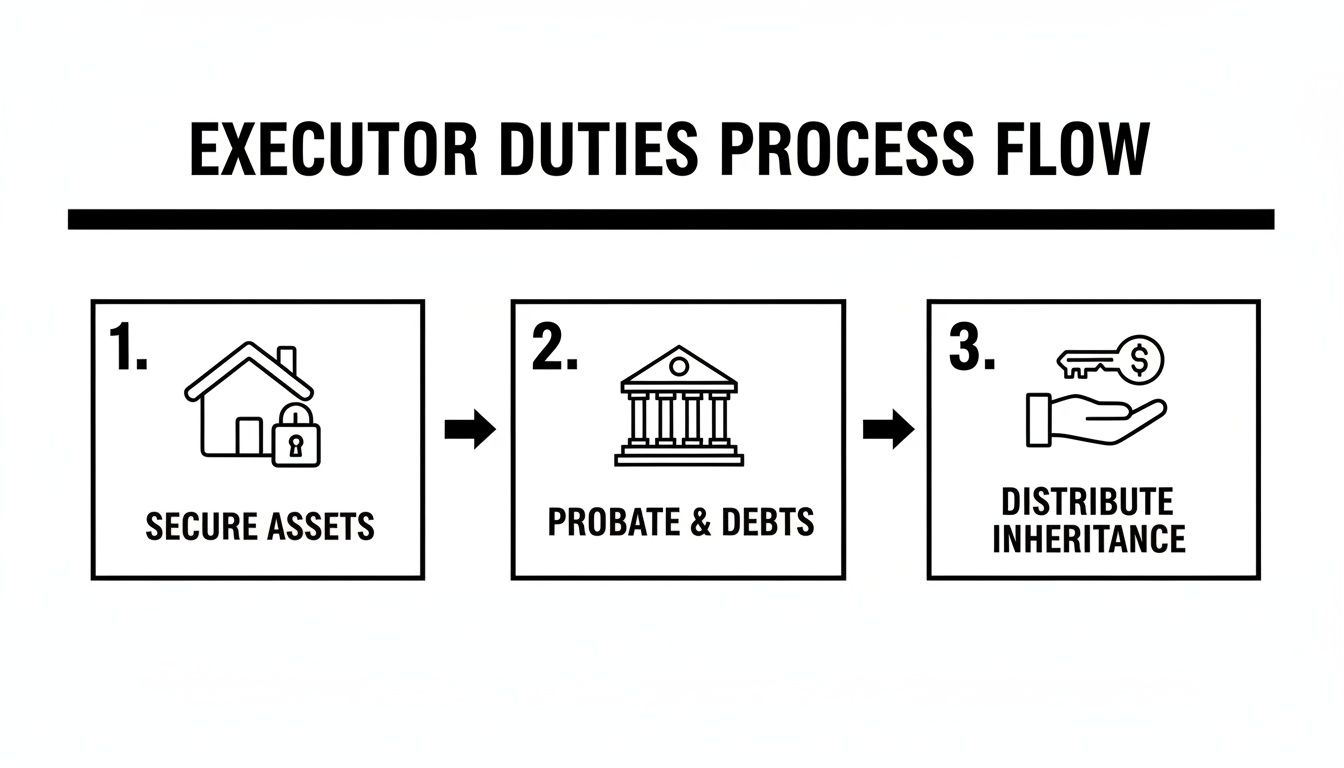
While the process has many details, it really boils down to these three main phases.
Step 2: Gather Vital Documents and Notify Key Parties
Once the property is secure, the paperwork begins. This part can feel like a real chore, but it's absolutely essential for moving forward.
You'll need to get multiple certified copies of the death certificate. The funeral home can usually help you order them. Our advice to Kingwood clients? Get at least 10 copies. It might sound like a lot, but you'll be surprised how many banks, government agencies, and other institutions will require an official copy.
With the death certificate and will, you can start making the necessary notifications. It's easy to lose track, so a simple checklist can be a lifesaver:
- Banks & Financial Institutions: Let every bank, credit union, and brokerage firm know what has happened.
- Government Agencies: Contact the Social Security Administration to stop payments. If relevant, you’ll also need to notify Medicare and the Department of Veterans Affairs.
- Employers & Pension Plans: Reach out to the deceased's employer regarding any final pay, life insurance, or retirement benefits.
- Insurance Companies: If there are life insurance policies, now is the time to begin the claims process.
- Creditors: Go through recent mail and statements to find all known creditors—think credit cards, mortgages, and car loans.
This initial flurry of calls and paperwork is often the most intense part of the process. For many families in our area, a big question is how long it all takes. We break that down in our guide on how long probate takes in Texas.
Trying to manage all this while you're also grieving is a huge burden. The Law Office of Bryan Fagan is here in Kingwood to offer the compassionate, local guidance you need. We can help you create a clear plan. Give us a call to schedule your free, no-obligation consultation.
Kicking Off the Probate Process in Harris County, Texas
The word “probate” can sound formal and even a bit intimidating. For families here in Kingwood, though, it’s best to think of it simply as the official green light from the court. It’s the legal process that validates the will and gives you the authority you need to officially step into your role.
This is the moment you transform from the person named in the will to the person legally empowered to manage the estate. It's one of the very first and most important responsibilities of an executor of a will.
Your first move is to file an Application to Probate Will with the Harris County Clerk. This is the document that gets the legal ball rolling, and it's almost always done with the help of a local attorney. After the application is filed, the court posts a notice, waits a short period, and then schedules a hearing. This hearing is usually straightforward, and it's where the judge officially appoints you as the executor.
Independent vs. Dependent Administration: The Texas Advantage
One of the biggest benefits of handling probate here in Texas is the ability to use independent administration. This is a far more streamlined and less costly approach, and most well-drafted modern wills are specifically written to allow for it.
- Independent Administration: You get to handle most of the estate’s business—paying bills, selling property, and distributing assets—without having to run back to the judge for permission for every action. It’s faster, more efficient, and what we aim for with nearly all our Northeast Houston clients.
- Dependent Administration: This is the opposite—a heavily supervised process. You’d need court approval for many routine tasks, which almost always means higher legal fees and long delays. It's typically only used when the will requires it or when beneficiaries are in serious disagreement.
For our Kingwood families, securing an independent administration is always the goal. It makes the entire process smoother and keeps costs down for everyone involved.
Getting Your "Letters Testamentary"
After the judge officially appoints you at the hearing, you'll take an oath of office. The court then issues a critical document called Letters Testamentary. This piece of paper is your golden ticket for the entire process.
Think of Letters Testamentary as your official master key to the estate. It's the legal proof you'll show to banks, mortgage companies, and financial advisors to demonstrate you have the authority to access accounts, manage funds, and handle transactions for the estate.
Without these letters, you have no legal standing to act. With them, you can finally start the real work of gathering the assets and settling the estate’s affairs. We walk through this entire journey in our complete guide on how to probate a will in Texas.
Executors often find themselves needing to manage and sell real estate, which is a significant part of the job. Having a solid guide to navigating a probate sale can be incredibly helpful for understanding the specific steps needed to handle property transactions correctly and efficiently.
Dealing with the Harris County probate courts doesn't have to be overwhelming. At The Law Office of Bryan Fagan – Kingwood TX Lawyers, we've guided countless local families through these exact steps. We’re right here in the community, ready to handle the court filings and legal details for you. Schedule a free consultation at our Kingwood office and let us provide the peace of mind you need.
Managing Estate Assets and Settling Debts

Once the court hands you those Letters Testamentary, your role shifts into high gear. This is where the core financial duties begin, and it’s arguably the most significant part of the responsibilities of an executor of a will. Your job is to get a crystal-clear picture of the estate’s financial health—everything it owns and every dollar it owes.
Think of yourself as the temporary CEO of a business that's being carefully wound down. You must balance the books, ensuring every asset is located and every legitimate bill is paid before any beneficiary receives a dime. This isn't just a task; it's the very heart of your legal duty.
Creating a Detailed Inventory of Estate Assets
Your first major project is building a complete and thorough inventory of everything the deceased owned. This isn't just a casual list; it's a formal catalog that will eventually be filed with the Harris County probate court, so precision is key.
This step takes patience and often a bit of detective work. You’ll be tracking down everything from the family home in Kingwood to a forgotten savings bond. A proper inventory needs to include:
- Real Estate: Any homes, land, or commercial properties in Kingwood, Humble, or beyond. You'll need the deeds and recent appraisals to determine their current market value.
- Bank and Financial Accounts: This means locating all checking and savings accounts, CDs, money markets, and investment brokerage accounts.
- Vehicles: Cars, trucks, boats, or RVs. Be sure to find the titles and get a fair market value estimate for each.
- Personal Property: This is the big catch-all category for everything else—furniture, jewelry, art, and collectibles. For high-value items, getting a professional appraisal is a wise decision.
- Life Insurance and Retirement Accounts: Specifically, you’re looking for policies or accounts that list the estate itself as the beneficiary, not a specific person.
It’s crucial to know what's officially part of the estate and what isn't. Certain assets, like a 401(k) with a named beneficiary, pass directly to that person and bypass the probate process entirely. A local Kingwood attorney can help you sort it all out.
Handling Debts and Notifying Creditors
After you have a handle on the assets, it’s time to look at the debts. Texas law lays out a very specific, structured process for this to ensure everyone—creditors and heirs alike—is treated fairly.
Your first official act here is to notify potential creditors. Texas law is clear: within one month of receiving your Letters Testamentary, you must publish a "Notice to Creditors" in a local newspaper. This would typically be a publication that serves the Kingwood or Northeast Houston area where the person lived.
This published notice is a formal announcement that starts a countdown. It gives anyone owed money by the deceased a specific window of time to step forward and file a formal claim against the estate.
As claims come in, you’ll need to review each one carefully. You have the authority to accept a claim as valid or reject it if you believe it’s incorrect or unenforceable. If you reject a claim, the creditor can then sue the estate to try and prove their case. Understanding general estate management principles is a huge help here, providing a framework for these decisions.
Paying Legitimate Debts and Final Expenses
Once the notice period is over and you've sifted through all the claims, you can start paying the estate’s legitimate bills from the estate's bank account. But you can't just pay them in any order. Texas law sets a strict payment priority. Funeral costs and expenses from a last illness usually come first, followed by the costs of administering the estate, then secured debts (like a mortgage), and finally unsecured debts (like credit cards).
A common question we get from executors in Kingwood is what to do if the estate is insolvent—that is, if the debts add up to more than the assets. In that difficult situation, your job is to pay the bills according to that legal priority list until the money runs out. The beneficiaries won't receive an inheritance, but as long as you followed the legal process correctly, you are not personally responsible for the remaining debt.
Managing the financial side of an estate is one of the most demanding responsibilities of an executor of a will. From inventorying assets to negotiating with creditors, it demands attention to detail. The Law Office of Bryan Fagan – Kingwood TX Lawyers is here to help you navigate it. Schedule a free consultation with our Kingwood team to ensure every financial step is handled with confidence.
Distributing Assets and Closing the Estate

After what can feel like a marathon of tracking down assets, paying off debts, and handling taxes, you’ve finally reached the last lap. This is where you bring the entire process to a close, ensuring your loved one’s final wishes are carried out and giving everyone involved a sense of finality.
Bringing the estate across the finish line requires a few final, careful steps. This part of the journey is one of the most important responsibilities of an executor of a will, because it’s where the beneficiaries finally receive their inheritance.
The Importance of a Final Accounting
Before a single dollar is distributed to a beneficiary, you need to prepare what's called a final accounting. Think of it as a complete financial summary of your time as executor. It’s a transparent ledger showing everything that came into the estate and every single thing that went out.
This isn't just about good bookkeeping; it’s about building trust and protecting yourself. By providing a clear, detailed accounting to all beneficiaries, you can prevent potential disputes and questions down the road. For our clients here in Kingwood and Humble, we always emphasize that a meticulous final accounting is the best defense against family misunderstandings.
A proper accounting should clearly itemize:
- The starting value of all the estate’s assets.
- Any income the estate generated during the process (like bank interest or rent).
- All the debts and expenses you paid (funeral bills, attorney fees, creditor claims).
- A final tally of the assets left for distribution.
Distributing the Remaining Assets
Once the beneficiaries have reviewed and signed off on your final accounting, you can finally start distributing the assets according to the will’s instructions. This step demands precision. You must follow the will to the letter.
If the will specifies splitting the remaining cash equally among three children, that’s exactly what you do. If a specific antique watch is left to a nephew in Porter, you make sure he gets it. For tangible items, it’s always a good practice to have beneficiaries sign a simple receipt. This piece of paper confirms they received their inheritance and creates a paper trail that protects you from any future claims.
A common pitfall for executors is distributing assets too early—before all debts and taxes are settled. If an unexpected bill appears after the money is gone, you could be held personally liable to pay it. Always wait until every last financial obligation is met.
Formally Closing the Estate in Harris County
With all assets distributed and receipts in hand, your last official act is to formally close the estate with the Harris County probate court. This action officially concludes your duties and releases you from the role of executor.
In Texas, most estates are handled through "independent administration," which makes closing things out relatively simple. You might file a document called a Notice of Closing Estate or a similar affidavit. This is your formal notification to the court that you've done everything required—paid the debts, settled the taxes, and distributed the property.
This final filing puts a legal bookend on the probate process and your responsibilities. It’s a moment of closure, not just in a legal sense, but for you and the family, marking the successful completion of the important trust placed in you.
The final stages require a sharp eye for detail and a solid grasp of Texas law. If you're an executor in the Kingwood area and want to ensure you close the estate correctly while protecting yourself from liability, The Law Office of Bryan Fagan is here to help. Schedule a free consultation with our local Kingwood team to get the guidance you need for a smooth and successful closing.
When to Partner With a Kingwood Probate Lawyer
Stepping into the role of executor is a major commitment. Even with the best intentions and a solid organizational system, you can quickly find yourself in situations that are legally complicated or just emotionally draining.
Remember, you don't have to carry the full weight of these responsibilities alone. Knowing when to call in a professional isn't a sign of weakness; it's the mark of a smart, responsible executor who wants to do the job right.
For families here in Kingwood and Northeast Houston, certain red flags almost always signal it's time to bring a probate lawyer on board. Trying to navigate these issues without legal guidance can stall the entire process, create lasting family disputes, or even leave you personally liable for mistakes.
Common Scenarios That Call for an Expert
Every estate has its own unique challenges, but some are best handled with an attorney in your corner from the start. If you run into any of these situations, it's time to make the call:
- A Contested Will: Is a family member threatening to challenge the will? If you hear even a whisper of a will contest, you need immediate legal advice to protect the estate and yourself.
- Complex Assets: Not all assets are as simple as a checking account. If the estate includes a family business in Humble, commercial real estate holdings, or complex investment portfolios, you'll need an expert to help manage and distribute them correctly.
- Significant Debt or Tax Issues: If the deceased had significant unpaid taxes or if the estate has more debts than assets (an "insolvent" estate), the situation becomes very complex. An attorney can guide you through the legally required order for paying creditors and help shield you from liability.
- Unclear Instructions: Sometimes, a will is just plain confusing. Vague language or poorly drafted clauses can make it difficult to determine what the person actually wanted. A lawyer can help interpret the document according to Texas law.
- Feeling Overwhelmed: Let's be honest—this is a lot to handle. The legal paperwork, court deadlines, and financial management can feel like a second full-time job. Feeling in over your head is a perfectly valid reason to ask for help.
Partnering with a probate lawyer isn't about giving up control. It’s about gaining a trusted advisor who can provide clarity, ensure you're following Texas law to the letter, and help you honor your loved one's wishes without unnecessary stress.
At The Law Office of Bryan Fagan – Kingwood TX Lawyers, we are your local support system. We know the specific challenges executors in our community face and are here to provide clear, step-by-step guidance. You don’t have to guess what to do next.
Schedule a free consultation at our Kingwood office to find clarity and peace of mind today.
Your Top Questions About Being an Executor, Answered
When you're named an executor, many questions come up once you start digging into the details. Here are straightforward answers to the questions we hear most often from families right here in the Kingwood area.
Can I Get Paid for My Services as an Executor in Texas?
Yes, absolutely. Texas law recognizes that being an executor is real work, and you're entitled to be compensated. If the will itself doesn't specify a fee, the law generally allows a commission of five percent (5%) on the money that comes into and goes out of the estate.
It sounds simple, but the calculation can be tricky, as not every transaction qualifies. To ensure you’re paid fairly and within the bounds of Texas law, it’s a smart move for any executor in Northeast Houston to have a probate attorney review the numbers.
What Happens If I Make a Mistake as an Executor?
This is a very important question. As an executor, you have a fiduciary duty. This is the highest legal standard of care—you are legally obligated to act in the absolute best interest of the estate and its beneficiaries, not yourself.
If you make a mistake, such as mismanaging funds or not following the will's instructions, you can be held personally liable. Beneficiaries can sue you to recover any financial damage your actions caused. This is precisely why keeping meticulous records and seeking professional guidance isn't just a good idea; it's essential protection for anyone serving as an executor in Kingwood or Humble.
How Long Does Probate Usually Take in Harris County?
There's no single answer, as it truly depends on the complexity of the estate. For a straightforward estate with no disputes or complex assets, you might wrap things up in Harris County in about six months to a year.
However, if you're dealing with business ownership, disputes with creditors, or a will contest from a family member, the timeline can stretch out considerably longer. An experienced local Kingwood attorney can often spot potential roadblocks early and help you navigate them efficiently, preventing unnecessary delays.
Taking on the responsibilities of an executor of a will is a significant undertaking, but you don’t have to do it by yourself. The experienced, client-focused team at The Law Office of Bryan Fagan – Kingwood TX Lawyers is here to offer the clear-headed, compassionate guidance you need to get through it. We are your local Kingwood law firm, dedicated to serving our neighbors with integrity and support.
Schedule a free, no-obligation consultation at our Kingwood office today.