Skip to content
Executing a will is the final, crucial step in making sure your wishes are legally binding. For our neighbors in Kingwood, this isn't just paperwork; it's about peace of mind. Think of it as the formal ceremony where you, the testator (the person making the will), sign the document in front of two credible witnesses. They then sign it as well, transforming a piece of paper into a powerful legal instrument ready for probate court.
Securing Your Legacy: A Guide to Executing Your Will in Kingwood
For families in Kingwood, making sure a will is legally sound is a top priority. A will isn't just a document; it's your final instruction manual for how your property should be divided, who should raise your young children, and how your affairs should be settled. But it only has power if it’s executed correctly according to Texas law.
Getting this part right brings a profound sense of peace. Imagine a family in Humble, confident that their estate plan is airtight, compared to the chaos and conflict that can erupt from a will that was signed incorrectly. This guide will give you the clarity you need to handle this process confidently, right here in Northeast Houston.
Why Following the Formalities is Non-Negotiable
The legal rules for a valid Texas will aren't mere suggestions—they are strict, unbending requirements. If you miss a step, your will could be challenged or even thrown out entirely by a probate court. Unfortunately, this happens far more than you might think.
Every year, a surprising number of wills are contested or rejected simply because of flaws in how they were signed and witnessed. Texas law, which applies to every Kingwood resident, is very clear: a will must be in writing, signed by you (or someone acting on your behalf in your presence), and attested by at least two credible witnesses who are over the age of 14 and who sign it in your presence.
To avoid these common but costly mistakes, you need to understand each piece of the puzzle.
A properly executed will is your final voice, speaking for you when you no longer can. For our clients in Porter and the surrounding communities, our goal at The Law Office of Bryan Fagan is to ensure that voice is heard clearly and without any legal static.
To make things simple, I've broken down the absolute must-haves for a valid Texas will. This table gives Kingwood residents a quick, at-a-glance summary of the core requirements.
Core Requirements for a Valid Texas Will
| Requirement | Description (Texas Estates Code) | Why It Matters for Your Kingwood Family |
|---|---|---|
| In Writing | The will cannot be oral; it must be a physical or digital document. | This creates a clear, undisputed record of your intentions for your family and the court. |
| Signed by You | You (the testator) must sign the will, or another person must sign it on your behalf, in your presence, and under your direction. | Your signature is the ultimate confirmation that the document reflects your final wishes. |
| Attested by Two Witnesses | At least two credible witnesses, aged 14 or older, must sign the will in your presence. Find more insights about estate law requirements on Death Penalty Information Center. | This prevents fraud and confirms you signed the will voluntarily and with a sound mind. |
These three pillars are the foundation of a valid will. Getting them right is the first and most important step toward ensuring your legacy is protected exactly as you planned.
The Essential Steps for Signing Your Will in Texas
The formal signing of a will, often called an "execution ceremony," can sound a bit stuffy, but it’s actually a simple, structured process. For folks here in Kingwood and the surrounding areas, getting this part right is what makes your will legally binding. It really all comes down to getting the right people in the same room at the same time.
To start, you need to gather your signing team. This isn't a huge crowd; it just needs to be the right people:
- You (the testator) – the person whose will it is.
- Two credible witnesses – at a minimum.
- A notary public – this is crucial if you want to include a self-proving affidavit, which we highly recommend for our Kingwood clients.
The Signing Ceremony Sequence
Once everyone is together, the process has a specific rhythm. You'll kick things off by stating, out loud, that the document in front of you is your Last Will and Testament and that you're signing it of your own free will. The key here is that your witnesses must physically be there to watch you sign it.
After your signature is on the page, it’s their turn. Each of your witnesses must then sign their names, and they have to do it in your presence. It's a bit of a Texas quirk, but witnesses only need to be 14 years old to be considered "credible," though they absolutely must be mentally competent and understand what they are witnessing. Choosing your witnesses is one of the most critical parts of this whole procedure.
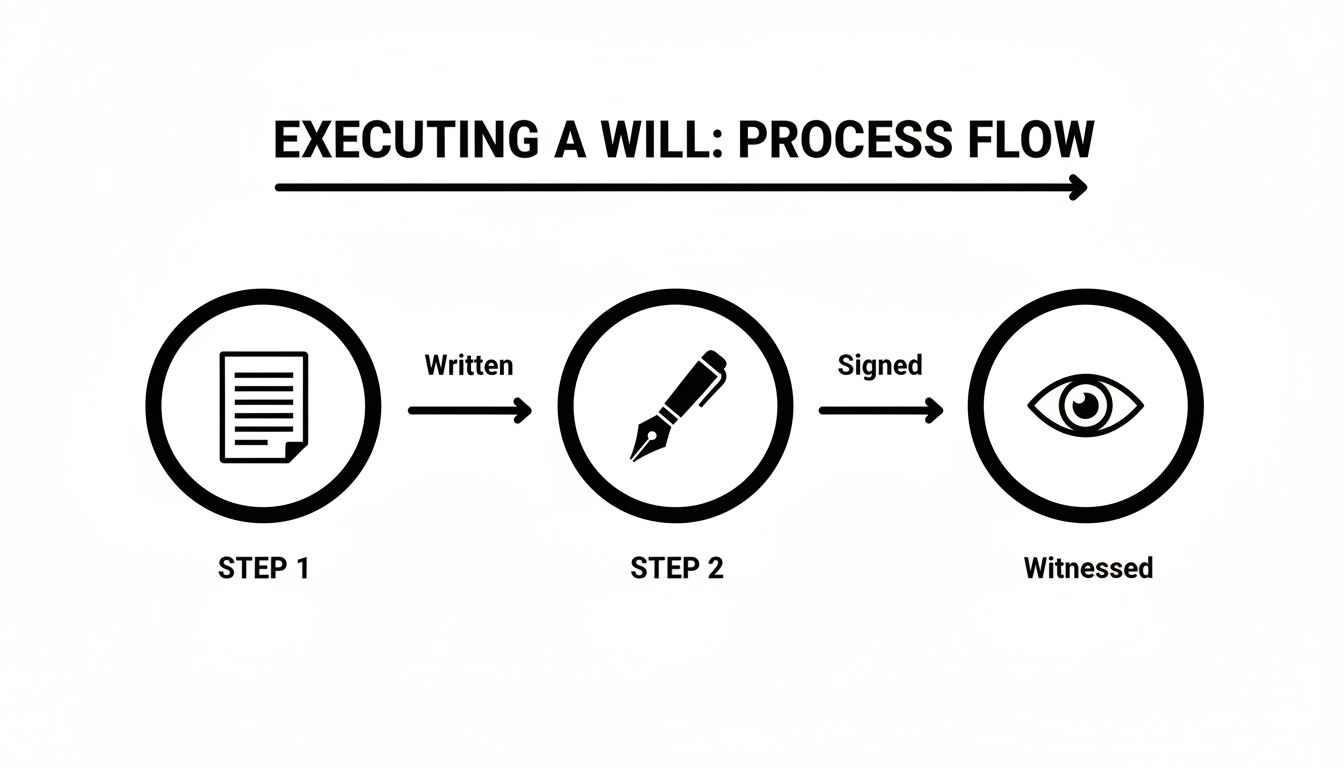
This visual really boils it down: a will has to be in writing, signed by you, and then signed by your witnesses in the proper order. It’s a sequence that the courts take very seriously.
Choosing the Right Witnesses in Northeast Houston
From my experience helping local families, the single best piece of advice I can give is to use disinterested witnesses. In plain English, that means picking people who don't stand to inherit anything in your will. When a beneficiary also acts as a witness, it can create a clear conflict of interest and practically invites a legal challenge later on.
Using neutral parties—think trusted neighbors from Porter or friends who aren't beneficiaries—adds a strong layer of protection. It makes it significantly harder for someone to argue that you were pressured or that the will isn't legitimate.
Just the other day, a family from Porter came into our Kingwood office to sign their wills. They brought along two neighbors they've known for years. They followed the steps perfectly: they announced the document was their will, signed it as the neighbors watched, and then had the neighbors sign while they watched. That simple, organized ceremony secured their entire estate plan, and you could see the relief on their faces.
It’s tempting to try and handle this on your own, but understanding the nuances is where professional guidance really shines. You can read more of our thoughts on the pros and cons of DIY options and how to create a will without a lawyer.
Why a Self-Proving Affidavit Is a Must-Have in Texas
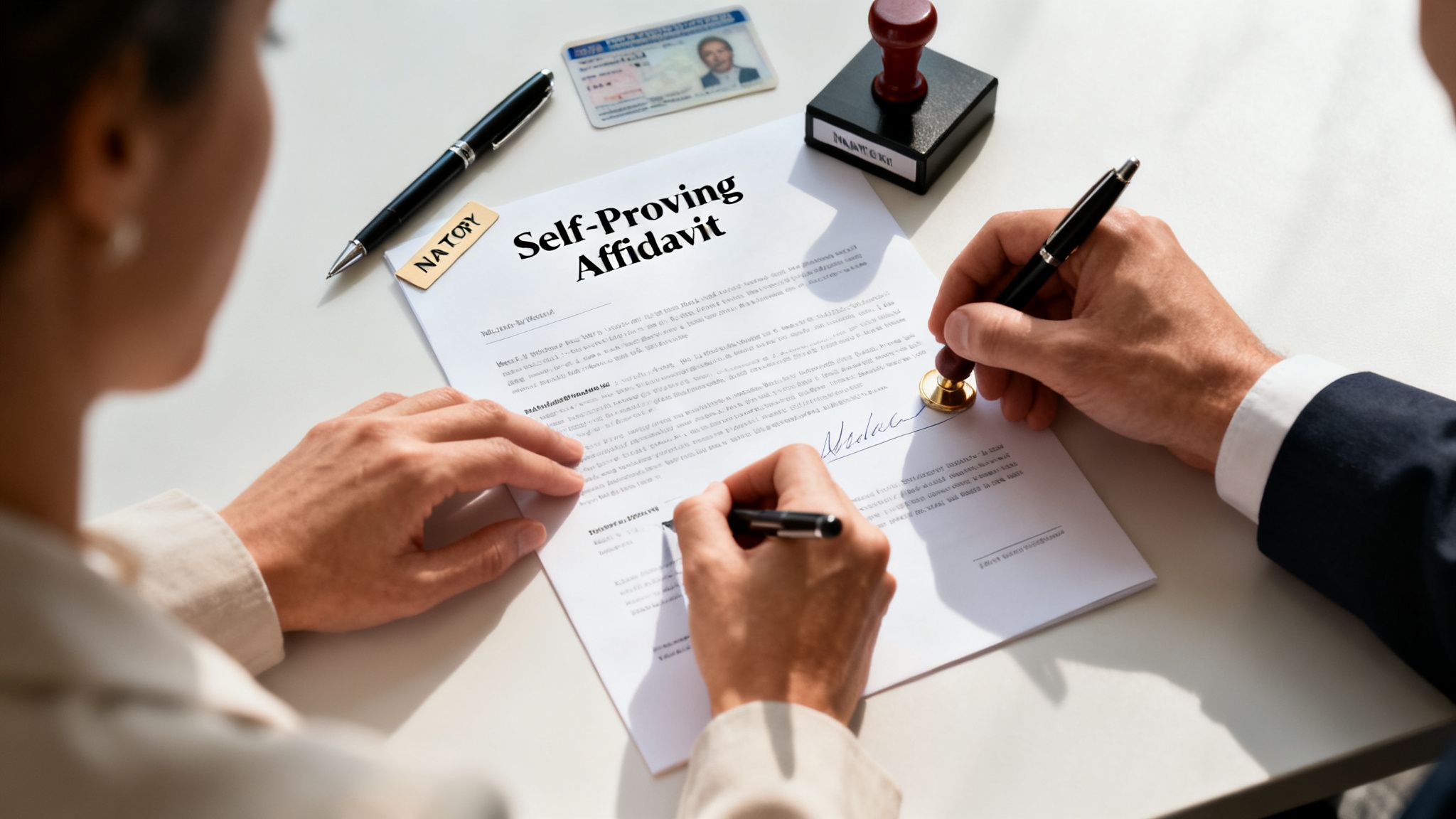
Let's talk about one of the most practical tools in Texas estate planning: the self-proving affidavit. Think of it as a separate, sworn statement that you and your witnesses sign in front of a notary. Its real power comes from how much easier it makes life for your family down the road during the probate process.
When you attach this affidavit to your will, the court considers the will "self-proven." What does that mean in plain English? Your witnesses won't have to be hunted down—sometimes decades later—to show up in court and swear they watched you sign. For families here in Kingwood, it’s a simple step that saves a ton of time, money, and heartache.
Making Probate Easier for Your Family
Probate is simply the court-supervised process of validating your will and giving your executor the green light to act. Without a self-proving affidavit, the court needs live testimony from one of the witnesses. This can turn into a real headache if a witness has moved out of state, passed away, or is just impossible to locate. It’s an avoidable complication.
And this isn't just a hypothetical problem. In Harris County, where over 4,500 wills are filed annually, a surprising 22% run into problems with how they were signed. A common culprit is the missing self-proving affidavit. This simple, notarized document creates a legal presumption that your will is valid, drastically cutting the risk of delays or a will contest. Learn more about these estate law findings from the Death Penalty Information Center.
What Does the Affidavit Language Look Like?
Adding a self-proving affidavit is incredibly straightforward. It's a standardized legal statement that gets attached right to your will. While the exact wording can differ slightly, it always confirms the same key facts under oath.
The self-proving affidavit essentially has you and your witnesses swear before a notary that all legal formalities were followed during the signing. It’s a proactive step that provides a powerful legal shortcut for your executor.
Under oath, the affidavit confirms that:
- You stated the document was your will.
- You signed the will voluntarily.
- The witnesses were present and signed in front of you.
- You appeared to be of sound mind.
Taking this one extra step is one of the most considerate things you can do for your loved ones. It smooths out the legal bumps, much like understanding other probate alternatives can. For example, you might want to read our guide on the Muniment of Title process in Texas, another excellent way to simplify estate settlement.
Common Mistakes Kingwood Residents Make When Executing a Will
Getting your will signed feels like crossing the finish line, but this is exactly where a simple misstep can unravel all your careful planning. For families here in Kingwood and across Northeast Houston, a small mistake during the signing ceremony can create huge legal headaches, delays, and unexpected costs for the very people you’re trying to protect.
The trick is to give the signing process the same serious attention you gave to drafting the will itself. Even with the best intentions, it’s surprisingly easy to make a critical error that puts your legacy on the line. Knowing what these common pitfalls are is the first step to making sure you sidestep them completely.
Using a Beneficiary as a Witness
One of the most common—and most damaging—mistakes is asking someone who stands to inherit from your will to also be a witness. It might feel convenient to grab a trusted family member who’s already there, but Texas law sees this as a major red flag for a conflict of interest.
If a beneficiary signs as a witness, it doesn't automatically void the entire will. However, it throws the door wide open for someone to challenge it, claiming that person had an unfair influence over you. The court might even cancel the inheritance you planned for that witness.
Imagine this scenario: A resident in Humble drafts her own will, leaving a large part of her estate to her beloved nephew who has helped care for her. When it's time to sign, she asks him and a neighbor to be the witnesses. After she passes, another family member contests the will, arguing the nephew pressured her. That one simple error forces the estate into a costly, emotionally draining legal fight that could have been completely avoided by picking two neutral witnesses.
Failing the ‘In the Presence Of’ Requirement
Texas law is crystal clear on this point: the witnesses must sign the will in the testator’s presence. This isn’t a vague concept. It means you all need to be in the same room, able to physically see each other sign the document. It’s a crucial safeguard to protect the integrity of the will.
People often get this wrong in a few common ways:
- Signing in separate rooms: You sign in the living room while your witnesses are at the kitchen table.
- Signing at different times: One witness stops by in the morning to sign, and the other comes that afternoon.
- Mailing the will for signatures: Sending your will to an out-of-town witness to sign and mail back simply isn’t a valid way to execute a will in Texas.
These procedural hiccups might seem minor, but they can give a disgruntled heir the legal ammunition they need to challenge your will’s validity. Getting these formalities right is a huge deal. Improper execution can blow up probate costs; on a global scale, these kinds of errors can increase estate administration expenses by 30-50%. While Texas probate is often straightforward, a flawed signing can drag out the process for months—or even years—piling stress and financial strain onto your loved ones. You can find more details on global estate administration costs on Human Rights Research.
To help you visualize what can go wrong, I've put together a quick table outlining the most common mistakes we see and, more importantly, how to steer clear of them.
Will Execution Pitfalls and How to Avoid Them
| Common Mistake | Potential Consequence in Texas | How to Prevent It |
|---|---|---|
| Using a beneficiary as a witness | The gift to that beneficiary-witness could be voided; the will is vulnerable to "undue influence" claims. | Choose two disinterested witnesses—people who are not inheriting anything from your will. Neighbors or colleagues are often good choices. |
| Witnesses not signing in your presence | The will could be declared invalid because it wasn't executed according to strict Texas legal formalities. | Gather everyone (you, two witnesses, and a notary) in the same room at the same time for the signing ceremony. No exceptions. |
| Forgetting to include a self-proving affidavit | Your witnesses may have to be located and brought to court after your death to testify, causing delays and extra costs. | Always include a self-proving affidavit. It's a separate statement everyone signs in front of a notary that "proves" the will in advance. |
| Not having a notary present | The self-proving affidavit is invalid without a notary's signature and seal, defeating its purpose. | Arrange for a notary public to be present at the signing. They must witness the signatures and properly notarize the affidavit. |
Navigating these rules is what we're here for. A well-executed will provides peace of mind, while a poorly executed one can create the very family conflict you hoped to prevent.
At The Law Office of Bryan Fagan, we've seen firsthand how these preventable mistakes can fracture families in the Kingwood area. Our job isn’t just about drafting documents; it’s about guiding you through a flawless execution ceremony so that every detail is handled correctly. If you're unsure about how to properly sign your will, let's talk. Schedule a free consultation at our Kingwood office, and we'll make sure you have the clarity and confidence you deserve.
Your Will Execution Checklist and After-Signing Steps
You've done the hard work of planning your estate. Now comes the final, crucial part: signing your will and making it legally binding. For our clients here in the Kingwood area, we've put together a simple checklist to make sure signing day is smooth and your will is secure for the future.
Getting Ready for Signing Day
A little prep work ahead of time goes a long way in preventing any last-minute hiccups. Here’s what to do before the big day.
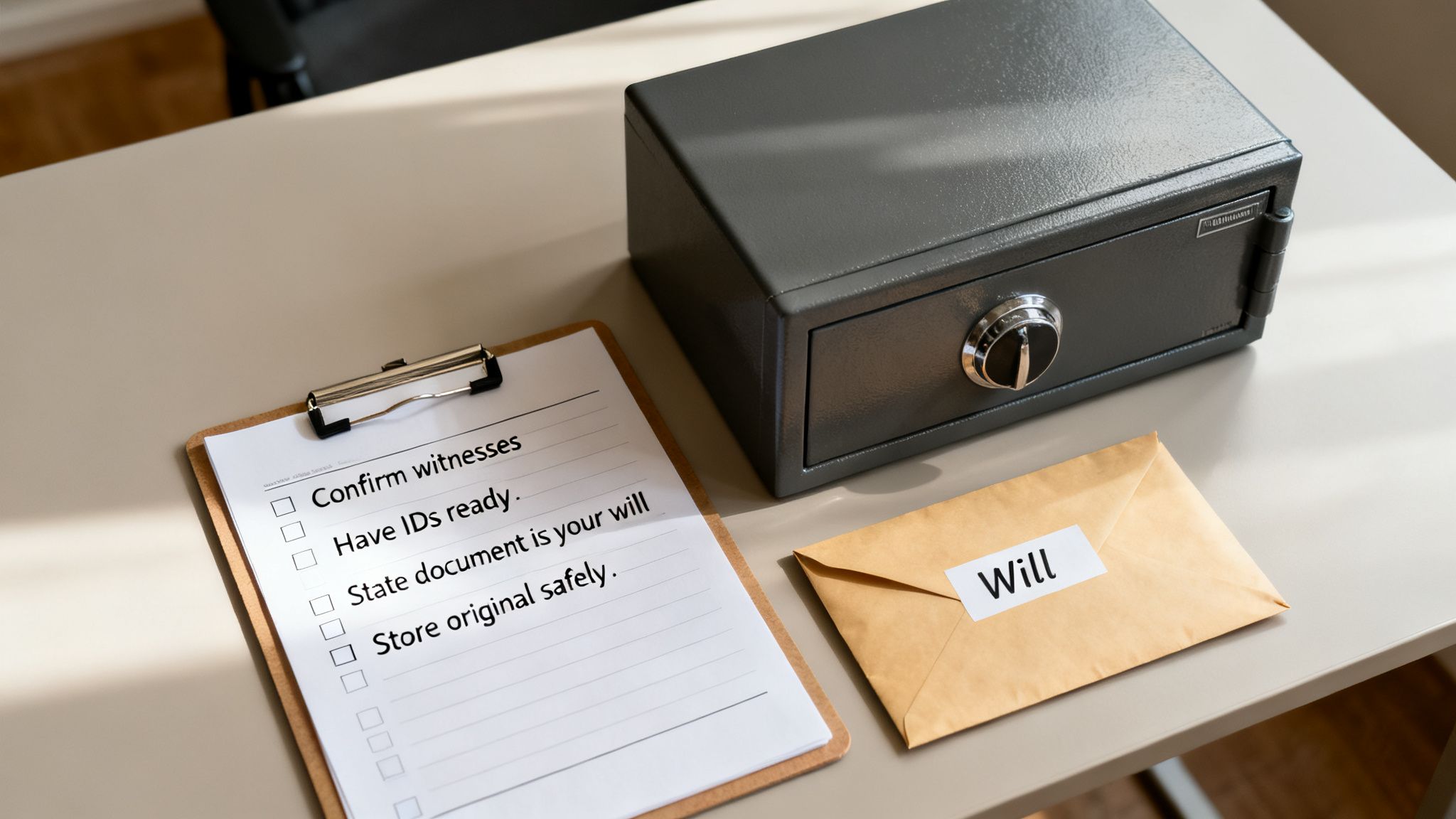
- Confirm Your Crew: Give your two witnesses and the notary public a quick call or text a few days beforehand. Double-check that the date, time, and location—whether it's our Kingwood office or somewhere else in Northeast Houston—still work for everyone.
- Don't Forget IDs: The notary has to verify who everyone is before they can do their part. Remind your witnesses (and yourself!) to bring a valid, government-issued photo ID, like a driver's license or passport.
- One Final Read-Through: Sit down with your will one last time. This is your chance to catch any small errors and confirm, with total peace of mind, that every detail perfectly matches your intentions.
The Day of the Signing Ceremony
The signing itself is a formal procedure, but it doesn't take long. Staying calm and following the proper order is key to making sure everything holds up under Texas law.
Here’s the play-by-play for the actual signing:
- Assemble in One Room: You, your two witnesses, and the notary must all be physically present together.
- Declare Your Intent: State clearly for everyone to hear, "This is my Last Will and Testament."
- Sign While They Watch: You’ll sign the will in full view of your witnesses. They need to see you do it.
- Witnesses Sign While You Watch: Right after you sign, each witness will sign the will as you watch them.
- Notarize the Affidavit: To wrap it up, you and your witnesses will all sign the self-proving affidavit while the notary watches. The notary then adds their official seal and signature.
Storing your will properly is just as important as signing it correctly. The original document is essential for probate, and a lost will can create significant legal hurdles for your loved ones.
After the Ink Is Dry
Your job isn't quite done once the signing is complete. Now, you have to protect the document itself. In Texas, the probate court will want the original signed will—copies can cause major complications.
The most important person to inform is your executor. They need to know exactly where to find the original will when the time comes. This is a non-negotiable step, as they’ll be the one to file it with the court. You can get a better handle on their duties by reading our guide on the responsibilities of an executor of a will.
So, where should you keep it? Most people choose one of these spots:
- A fireproof safe at home.
- A safe deposit box at a local bank.
- In a secure file with your attorney at their law office.
Whichever you pick, make absolutely sure your executor has the keys, codes, or instructions to get to it. This simple act of communication is the final step in protecting your legacy and making things easier on your family down the road.
An Experienced Kingwood Attorney Can Make All the Difference
Knowing the steps to properly sign your will is one thing, but it's the tiny, specific details hidden within Texas law where things can go wrong—and those mistakes can be incredibly costly for your family down the road. This is where having an experienced local attorney by your side really counts. It's not just about drafting a document; it's about making sure every signature, every witness, and every legal formality is handled perfectly, protecting your will from being challenged later on.
At The Law Office of Bryan Fagan, we don't just hand you a stack of papers and send you on your way. We handle the entire signing ceremony for you, right here in our Kingwood office. Our team takes care of everything, from arranging for the right kind of witnesses to having a notary on hand, ensuring the whole process is buttoned up and fully compliant with Texas law. This takes all the guesswork and stress out of it for you.
For our neighbors in Humble, Porter, and across Northeast Houston, our goal is to make sure your estate plan is solid and secure. We provide the professional oversight needed to protect your legacy exactly as you envision it.
Don't let a simple oversight in the final step of your estate plan create a complicated mess for your loved ones. We invite you to come in for a free consultation at our Kingwood office. Let us help you get this done right, so you can have complete confidence that your legacy is protected.
Common Questions About Signing a Will in Texas
When it comes to the actual signing of your will, Kingwood families often have very specific, practical questions. Getting the details right is crucial, so let's walk through a few of the most common concerns we hear in our office.
Who Can I Ask to Be a Witness?
In Texas, your witnesses need to be at least 14 years old, of sound mind, and able to sign their name. Crucially, they should not be people who will inherit anything from your will.
Choosing a beneficiary as a witness can create a major headache down the road, potentially even voiding their inheritance. It’s always smarter to ask a trusted neighbor or a friend from nearby Humble who has no financial stake in your estate. This simple step prevents any claims of coercion or improper influence.
What if I'm Physically Unable to Sign My Will?
Texas law has a provision for this exact scenario. If you can't physically sign your name, you can direct someone else to sign it for you.
However, this has to be done in your presence and under your explicit direction. This isn't a casual process; the legal requirements are incredibly strict to prevent fraud. Having an attorney supervise this type of signing is absolutely essential to make sure it's done by the book and will be upheld by a judge.
Does My Will Have to Be Notarized?
This is a common point of confusion. The will itself doesn't technically need a notary's stamp to be valid in Texas.
But—and this is a big but—the self-proving affidavitdoes need to be notarized. This separate, attached statement is what makes admitting your will to probate so much smoother for your family. Think of it as a pre-validation of the signatures. Skipping this step can add unnecessary time, cost, and stress to the probate process later.
Properly signing your will is the final, critical step in making your wishes legally binding. If you're wrestling with these questions or just want the confidence that comes from having an expert guide you, our team at The Law Office of Bryan Fagan – Kingwood TX Lawyers is ready to help. Reach out to us for a free, no-pressure consultation today.