A lot of families in Kingwood do not start estate planning because they are avoiding the topic. They put it off because life is full. School pickups, work, aging parents, mortgage payments, and weekend errands already take enough energy.
Then a quiet question shows up. If something happened to me, would my family know what to do?
That question comes up for parents in Kingwood, retirees in Humble, blended families in Porter, and business owners across Northeast Houston. A kingwood estate planning attorney helps turn that worry into a clear plan. Good planning is not about expecting the worst. It is about making life easier for the people you love.
Your Family's Future A Kingwood Perspective on Planning
A family in Kingwood might be walking near the water on a Saturday morning, talking about school, summer plans, and whether it is finally time to update the house. Then the conversation shifts. Who would help the kids if both parents were gone? Who could pay bills if one spouse became ill? What happens to the home?
Those are estate planning questions, even if nobody calls them that at first.

In Kingwood, Humble, and nearby Northeast Houston communities, families often own a home, savings accounts, retirement accounts, life insurance, and personal property that matters to them. They may also be caring for children, helping older parents, or thinking about how to leave something meaningful behind.
Estate planning gives those families a written set of instructions.
Planning is an act of care
Many people hear the phrase "estate plan" and picture a stack of technical documents meant only for wealthy households. In real life, it is often much more straightforward than that. It is a way to answer practical questions before your family has to answer them under stress.
A plan can help you:
- Name decision-makers if you cannot speak for yourself
- Direct who receives property instead of leaving that decision to Texas default rules
- Protect children by naming guardians
- Reduce confusion for loved ones handling bills, accounts, and final arrangements
- Create peace during a time when your family will need it most
That matters in every neighborhood, not just in high-net-worth situations.
Why local context matters
Texas law controls how wills are signed, how probate works, and what happens when someone dies without a plan. A family in Kingwood may have property in Harris County, a rental in another county, or relatives in Porter or Humble who are involved in care decisions. Local guidance helps tie those moving pieces together in a way that fits Texas rules.
Takeaway: Estate planning is not about paperwork for paperwork's sake. It is about giving your family a map.
People often feel relief once they begin. They realize they do not need to solve everything in one afternoon. They just need a starting point and someone who can explain the options in plain English.
That is why many families look for a kingwood estate planning attorney who can sit down with them, listen to what matters, and build a plan around real life instead of legal jargon.
What an Estate Plan Really Is and Why You Need One
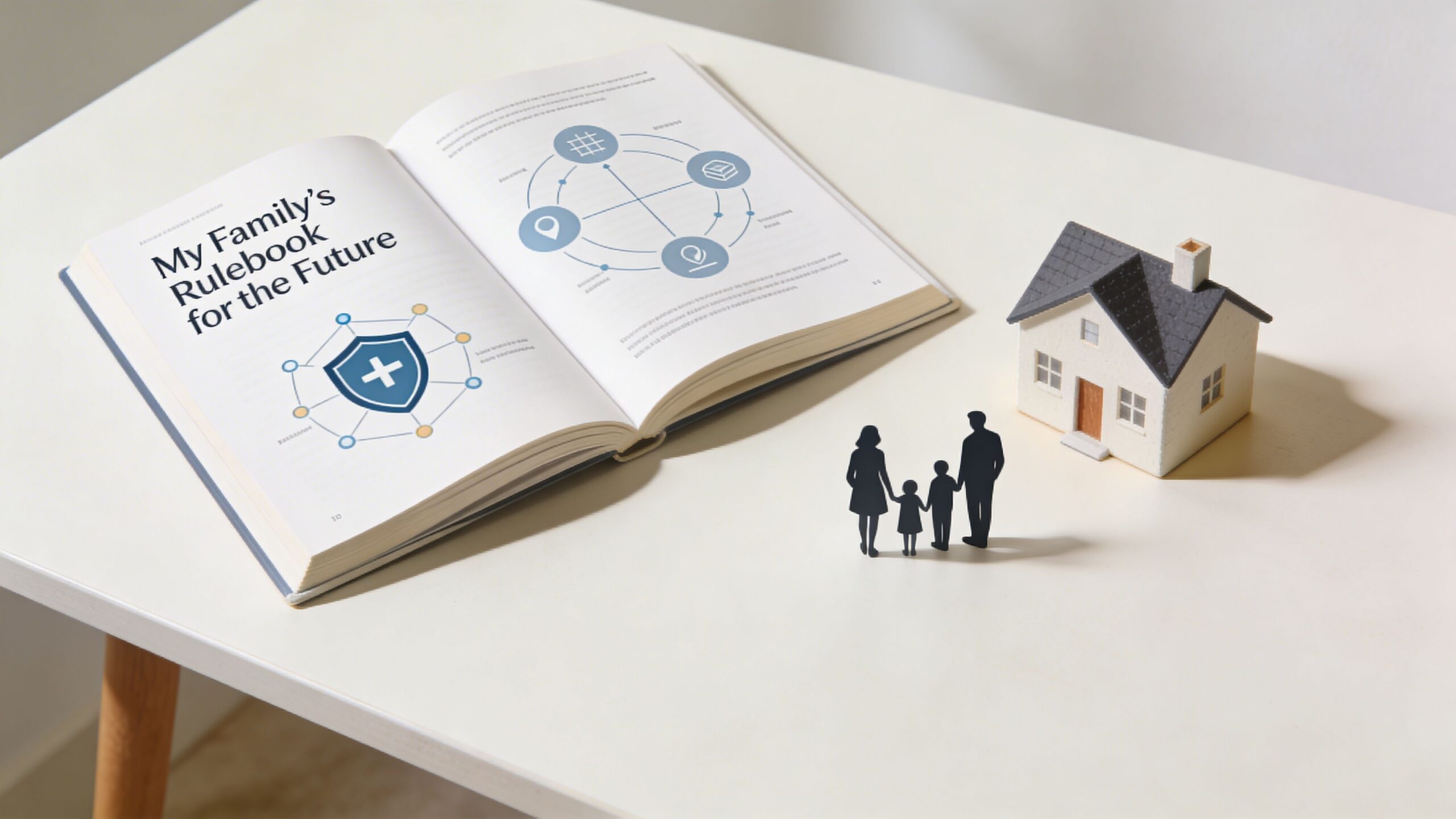
An estate plan is your rulebook for the future. It says who steps in, who receives what, and how decisions should be handled if you die or become unable to manage things yourself.
One simple way to think about it is this. If you asked a trusted friend to house-sit while you were away, you would leave instructions. You would explain how to lock up, who to call in an emergency, how to care for the dog, and what to do if something goes wrong. Estate planning works the same way, except the stakes are much higher.
It is not only for the wealthy
This is one of the biggest points of confusion in Kingwood and Humble.
If you own a home, have children, keep money in bank accounts, carry life insurance, or want a say in medical and financial decisions, estate planning applies to you. That includes teachers, engineers, first responders, retirees, small business owners, and young parents buying their first house in Northeast Houston.
Kingwood is a place where planning matters. In this local market, Super Lawyers identifies 278 top-rated estate planning and probate attorneys accessible to Kingwood residents, and the area is described as one with median home prices exceeding $400,000 and a growing retiree population, which helps explain why estate planning is such a common need in the community (Justia directory summary for Kingwood estate planning).
A home alone can create important planning questions. Who inherits it? Will it need to go through probate? Who pays the mortgage while the estate is being handled? If minor children are involved, who manages money on their behalf?
What estate planning does
An estate plan does more than say who gets your property.
It can also:
- Prevent avoidable conflict by replacing guesswork with written instructions
- Protect minor children by naming the people you want caring for them
- Prepare for incapacity so a spouse or trusted person can act if you cannot
- Coordinate assets like homes, insurance, and accounts
- Help families avoid unnecessary court involvement when proper tools are used
For many readers, the word probate is another source of confusion. Probate is the legal process for handling a person's estate after death. Some estates move through that process smoothly. Others become slower, more public, and more stressful than families expected.
If you want a plain-language overview of one of the most common planning goals, this guide on how to avoid probate in Texas is a helpful next read.
Why waiting creates problems
The problem with no plan is not just legal. It is emotional.
When there are no written instructions, loved ones often have to make hard decisions while grieving. Adult children may disagree. A surviving spouse may not know where documents are. Financial institutions may require authority before anyone can access accounts or handle transactions.
That is why so many people feel a sense of relief once they complete even a basic plan.
A short video can also help make these ideas easier to understand before you meet with counsel.
Practical tip: If you are unsure whether you "need" an estate plan, ask a simpler question. Would your family benefit from clear written instructions if something happened to you? For many in Kingwood, the answer is yes.
The Building Blocks of Your Kingwood Estate Plan
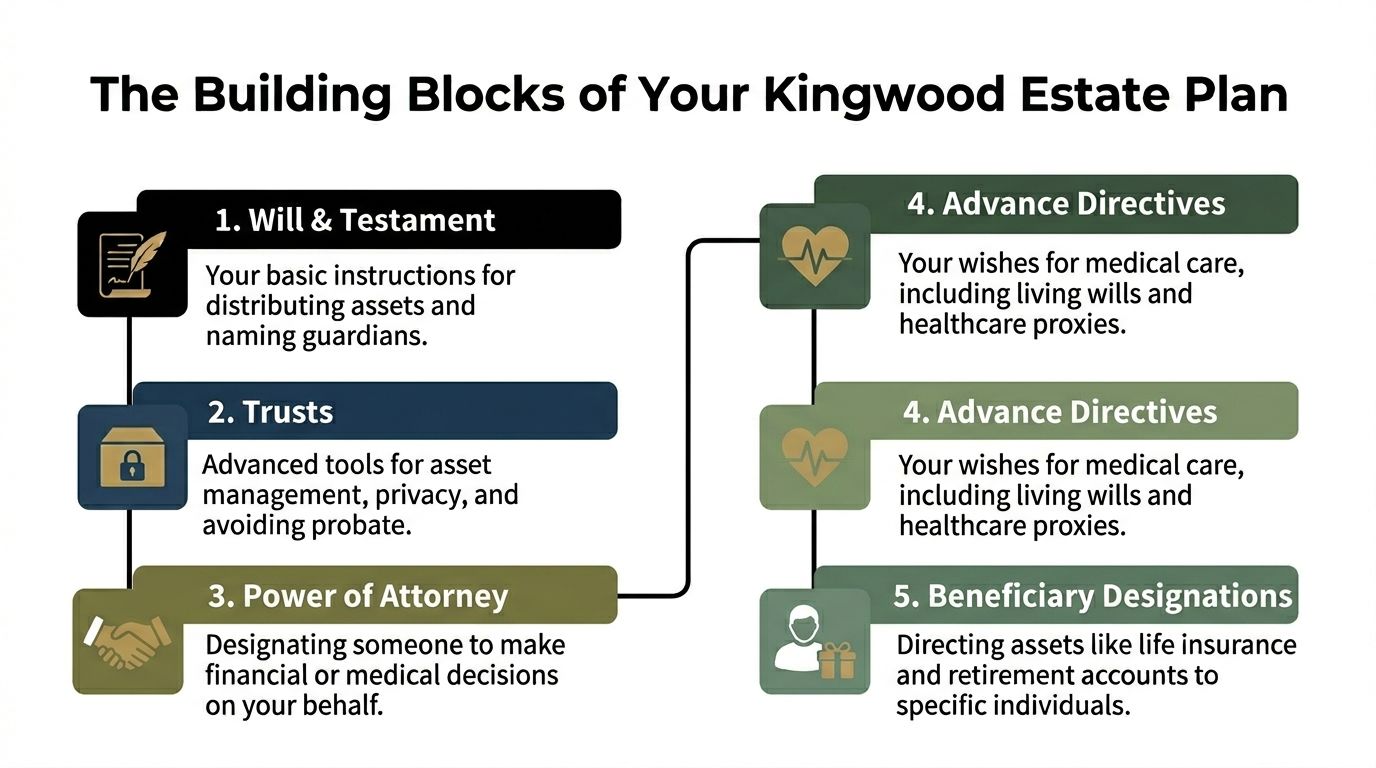
Estate planning is usually not one document. It is a set of tools that work together.
Some families need a straightforward will and powers of attorney. Others need a trust-centered plan because they own real estate, have children from a prior marriage, want more privacy, or hope to make things easier for loved ones after death.
The core documents at a glance
| Document | What it does | Common local example |
|---|---|---|
| Last Will and Testament | Names beneficiaries, an executor, and guardians for minor children | A Kingwood couple names guardians for their children and says who receives the family home |
| Revocable Living Trust | Holds assets during life and helps manage transfer after death | A Porter family places their home into trust to simplify future transfer |
| Durable Power of Attorney | Lets someone handle financial matters if you cannot | A spouse pays bills and handles banking during a medical crisis |
| Medical Power of Attorney | Authorizes someone to make healthcare choices if needed | An adult child speaks with doctors for an aging parent in Humble |
| Advance Directives | States your wishes about medical treatment | A retiree documents care preferences before a health emergency |
| Beneficiary Designations | Directs who receives certain accounts directly | A life insurance policy passes to the named beneficiary |
Wills give basic direction
A Last Will and Testament is the foundation for many families.
It lets you say who should receive your property and who should serve as executor. If you have minor children, it also lets you nominate guardians. That one point alone is why many parents in Kingwood decide not to keep waiting.
A will is powerful, but it does not do everything. Many people are surprised to learn that a will often still works through probate. That does not make a will a bad choice. It just means a will and a trust solve different problems.
Trusts can simplify transfer
A revocable living trust is often useful for families who want more control and a smoother transfer process. In Texas estate planning, revocable living trusts can help bypass probate, and probate can extend 6 to 18 months on average. The same source notes that this structure can reduce executor fees, often described as 2.5% to 5% of estate value, and that trust-based plans in Harris County have settled 40% to 60% faster than probate-only estates (Bolton Law on Kingwood estate planning and probate).
That does not mean every family needs a trust. It means a trust is worth discussing when you own a home, want privacy, have a blended family, or want assets managed over time instead of handed out all at once.
A simple example helps. A married couple in Porter may want their home and savings managed for a surviving spouse first, then passed to children later. A trust can spell that out clearly.
If you are weighing the two options, this explanation of the difference between will and trust can help you compare them in plain language.
Powers of attorney protect you during life
Many people think estate planning only matters after death. That is only half the picture.
A Durable Power of Attorney handles finances during incapacity. A Medical Power of Attorney lets someone make healthcare decisions if you cannot. An Advance Directive gives written instructions about treatment preferences.
These tools matter because incapacity creates real-world problems fast. Mortgage payments still need to be made. Insurance issues still need attention. Doctors still need to know who can speak for you.
Key point: A good estate plan protects your family during your lifetime and after your death.
Beneficiary designations matter more than people realize
Retirement accounts, life insurance, and some financial accounts pass according to beneficiary forms. That means your will may not control those assets. Many DIY plans break down at this point.
Someone updates a will after a remarriage but forgets to update beneficiary forms. The paperwork then points in two different directions.
That is one reason careful inventory matters. Families often benefit from listing accounts, titles, policies, and logins in one organized place. A tool like the Estate Inventory App can help people gather that information before they meet with counsel.
One plan does not fit every family
A young couple in Humble with one child may need a lean, practical set of documents. A retiree in Kingwood may care most about healthcare instructions and avoiding unnecessary court involvement. A business owner in Northeast Houston may need succession planning built into the estate plan.
The right structure depends on your family, your assets, and your goals.
Among local options, the Law Office of Bryan Fagan – Kingwood TX Lawyers provides estate planning services that include wills, trusts, and probate-related guidance for Kingwood-area families. That kind of local availability can be helpful when you want documents created to fit Texas rules and to the practical realities of life in Harris County and nearby communities.
Your Estate Planning Journey with a Local Attorney
Many individuals feel better about estate planning once they understand the process. It is usually not dramatic. It is a series of calm decisions made with guidance.

The first meeting
A consultation is usually a conversation, not a test.
You talk about your family, what you own, and what worries you most. For one person, the concern is minor children. For another, it is making sure a second spouse can stay in the home. For an older parent in Humble, it may be naming the right person to help if health changes quickly.
You do not need every answer before that meeting. Bringing a basic list of assets, family members, and questions is enough to start.
Designing the plan
After the initial conversation, the planning work becomes more specific.
An attorney helps you decide:
- Who should act for you in financial and medical roles
- Who should receive assets and under what terms
- Whether a trust makes sense for your situation
- How to name guardians if you have minor children
- Whether beneficiary forms and titles need review
This stage often clears up hidden risks. A parent may realize the person they trust emotionally is not the right fit for financial management. A couple may discover they want backup decision-makers, not just one primary choice.
Drafting and review
Once your choices are made, the legal drafting begins.
Here, a local attorney turns your goals into documents that fit Texas law. The wording matters. A vague idea such as "I want everything handled fairly" sounds good in conversation, but families need documents that say exactly who has authority and what happens next.
One part of this is especially important. A Texas Durable Power of Attorney, mandated under Estates Code § 751.131, is a critical document. Without one, incapacity can freeze accounts and trigger conservatorships that can cost $5,000 to $10,000 upfront. With a DPOA, an agent can manage finances without that extra disruption (CiCi Cunningham on Texas durable powers of attorney).
That is why integrated planning matters. You are not just signing forms. You are closing gaps that can create stress later.
Helpful reminder: Bring real-life questions to the review meeting. Ask how your plan works if one spouse dies first, if both parents die together, or if a beneficiary is still young when assets pass.
Signing the documents properly
Texas estate planning documents must be signed correctly to do their job.
Some need witnesses. Some require notarization. The signing appointment is usually straightforward, but the formalities matter. A document that looks complete can still create problems if it was not executed the right way.
That is one reason online templates make people uneasy. The forms may look official, but they often do not answer the Texas-specific questions that matter for Kingwood and Northeast Houston families.
If you want to prepare for that first appointment, these questions to ask an estate planning attorney can help you walk in with confidence.
Updates are part of the process
Your plan should change when life changes.
Common update triggers include:
- Marriage or divorce
- Birth or adoption of a child
- A move to or from the Kingwood area
- A major change in assets
- A death in the family
- A change in who you trust to serve
A good plan is not meant to sit untouched in a drawer forever. It should grow with your life.
How to Choose the Right Attorney in the Kingwood Area
Choosing a kingwood estate planning attorney is partly about credentials and partly about fit.
You want someone who understands Texas law, but you also want someone who can explain it without making you feel lost. Estate planning is personal. Families talk about children, second marriages, aging parents, and money. Clear communication matters.
Look for local familiarity
Kingwood families often have ties across Harris County, Montgomery County, Humble, Porter, and the broader Northeast Houston area. That local reality affects probate, property questions, and practical planning decisions.
The Kingwood area has meaningful depth in this practice area. Local listings identify attorneys such as Beth Ann Serafini-Smith with 31 years in estate law and Colin C. Norman with Texas Super Lawyers recognition, and the same Kingwood directory notes that Harris County processes over 10,000 probate cases annually (Cornell LII Kingwood estate planning directory). That kind of volume is one reason local experience matters.
Ask how much of the practice is dedicated to estate planning
Some lawyers handle estate planning occasionally. Others build a substantial part of their work around wills, trusts, probate, and incapacity planning.
That difference matters because estate planning is not just document drafting. It requires spotting issues before they become problems.
Ask direct questions such as:
- How often do you handle wills, trusts, and probate matters?
- How do you approach planning for blended families?
- What do you recommend for minor children?
- How do you help clients review and update plans later?
The answers should sound practical, not evasive.
Notice how they explain things
A good consultation should leave you more informed than when you walked in.
If an attorney uses jargon without explanation, rushes through your questions, or assumes every family needs the same package, keep looking. Estate planning should feel customized.
Good sign: The attorney gives examples, explains tradeoffs, and tells you when a simpler option may be enough.
Understand the fee structure
Ask whether services are billed as a flat fee, hourly, or a mix of both. You do not need a bargain. You need clarity.
A clear fee discussion often tells you a lot about the firm's communication style. If the explanation is organized and transparent at the start, the working relationship is usually smoother.
Look for a relationship, not just a transaction
The best planning relationships continue after signing day. Families in Kingwood, Humble, and Porter often need updates over time because life keeps moving.
An attorney who welcomes future check-ins can be more valuable than one who hands over documents and disappears.
Frequently Asked Questions About Texas Estate Planning
Families usually leave the first estate planning conversation with a few practical questions still on their mind. That is normal.
Here are some of the questions people in Kingwood, Humble, Porter, and Northeast Houston ask most often.
What happens if I die without a will in Texas
If you die without a will, Texas intestacy laws decide who inherits your property. The state creates the distribution plan for you.
That can be very different from what you wanted. It may also create confusion for blended families, unmarried partners, or parents who expected to choose a guardian for minor children through a formal document.
The larger problem is not just who gets what. It is that your family loses the benefit of your clear instructions.
Do I need an estate plan if I am not wealthy
Yes, many people do.
A major barrier to planning is the belief that it is only for wealthy families. That misconception affects diverse households in and around Kingwood, and community-focused firms can help by making education and services more accessible. The same discussion notes that post-2025 Texas probate reforms are streamlining small estates under $100K (discussion of barriers to estate planning in underserved communities).
If you have children, a home, accounts, life insurance, or strong preferences about medical and financial decisions, planning is relevant.
How much does estate planning cost in the Kingwood area
The cost depends on what you need.
A simple will-based plan usually costs less than a trust-based plan. A plan for a blended family, a business owner, or a family with a loved one who has special needs may require more customization.
The best approach is to ask for a clear explanation of fees at the consultation. Many families prefer flat-fee planning because they know the scope in advance. Others may need a more customized arrangement depending on complexity.
How long does it take to create a plan
That depends on how quickly decisions are made and how complex the plan is.
Some families move from consultation to signing fairly quickly because their goals are clear and their asset picture is simple. Others need more time to think through guardianship choices, trust terms, or who should serve in key roles.
The fastest way to help the process is to gather your information before the first meeting. A list of assets, beneficiary names, family members, and questions can save time.
What if I have a child with special needs
That changes the planning conversation in important ways.
A general inheritance plan may not be enough if direct ownership of assets could interfere with important benefits or long-long term care arrangements. In those cases, families often need more customized planning and careful coordination of roles, funding, and instructions.
This is one area where personalized legal advice matters a great deal. Parents should not rely on generic forms when the plan must protect both the child and the child's future eligibility concerns.
Do I need a trust or is a will enough
It depends on your goals.
Some families do well with a will, powers of attorney, and healthcare documents. Others benefit from a trust because they want easier administration, more privacy, or more control over how and when assets pass.
A will is not "less serious" than a trust. It is a different tool. The right choice depends on your property, family dynamics, and priorities.
Should older parents in Humble or Kingwood update old documents
Usually, yes, if the documents are outdated or life has changed.
Plans should be reviewed after major life events. Even if nothing dramatic has happened, older documents may no longer match current wishes, current family realities, or current asset ownership.
A review can catch issues like outdated executors, old guardianship choices, or beneficiary designations that no longer make sense.
Can I do my estate plan online
You can find forms online, but convenience and adequacy are not the same thing.
DIY documents often miss the parts that matter most. They may not match Texas execution rules. They may not coordinate with deeds, beneficiary designations, or local probate realities. They also cannot ask follow-up questions when your family situation is more complicated than the form assumed.
That is why many people start online, then decide they want a kingwood estate planning attorney to make sure the plan works when their family needs it.
What should I bring to a consultation
Bring what you have, not what you think you should have.
A useful starter list includes:
- Basic family information
- A list of major assets
- Any existing wills or trusts
- Beneficiary information for insurance or retirement accounts
- Questions about guardians, executors, or trustees
- Any concerns about illness, incapacity, or family conflict
That is enough to have a meaningful first conversation.
What is the biggest mistake people make
Waiting too long.
The second biggest mistake is assuming a basic online form solves a personal legal problem. Estate planning works best when it reflects real relationships, real assets, and real Texas law.
A thoughtful plan does not need to be complicated. It just needs to be intentional.
If you live in Kingwood, Humble, Porter, or nearby Northeast Houston and want clear answers about wills, trusts, probate, or incapacity planning, schedule a free consultation with Law Office of Bryan Fagan – Kingwood TX Lawyers. A local attorney can help you understand your options, build a plan that fits your family, and make the next step feel manageable.