Skip to content
Losing a family member is devastating. In the middle of grieving, you're suddenly faced with a mountain of practical tasks, and finding their will can feel like one of the most daunting. It's the first, most critical step to making sure their final wishes are honored, especially for families here in Kingwood and the surrounding Houston area. The Law Office of Bryan Fagan is a local, experienced, and client-focused firm, and we're here to provide trusted representation right in your community.
Your First Steps in Locating a Will in Kingwood
When someone passes away, their will is more than just a piece of paper; it's their final instruction manual. It lays out exactly how they wanted their property and assets handled. For families in Kingwood, Humble, and Northeast Houston, finding this document is the starting line for the Texas probate process—the formal legal procedure for validating a will and settling an estate.
We understand how overwhelming this time can be. The best way to move forward is to take a deep breath and start with a structured, methodical search. The most logical place to begin is right at home, in the very places your loved one kept their most important documents.
Why Finding The Will Is So Important
A will is the only way to ensure your loved one's specific wishes are followed. If they didn't have one, Texas state law decides who gets what, and that outcome often doesn't match what the person would have wanted. The will also names an executor—the person they trusted to see this process through.
Sadly, many people never get around to creating a formal plan. A recent study found that a shocking 76% of Americans don't have a will. For families here in Kingwood, this often means an unexpected death can trigger a complicated and expensive probate process that drags on for months and costs thousands in legal fees.
Initial Document Gathering
Before you start tearing the house apart, take a moment to collect a few key documents that you'll need regardless. First and foremost is the official death certificate. You’ll need multiple copies for everything from closing bank accounts to claiming life insurance. If you need help understanding the information on a Texas death certificate, this is a useful resource.
A will is more than just a legal paper; it's a final expression of love and care for the family left behind. Locating it is the first step in honoring that legacy and preventing unnecessary confusion and conflict during an already emotional time.
It’s also helpful to know what you're looking for. People often confuse wills and trusts. A will directs how assets are distributed after death, while a trust can manage assets during a person's lifetime and after. To get clear on these, take a look at our guide on the difference between a will and a trust.
Navigating this process can feel incredibly isolating, but you don't have to do it alone. The Law Office of Bryan Fagan has helped countless Kingwood families in this exact situation. We offer a reassuring call to action: schedule a free consultation at our Kingwood office to discuss your next steps with an empathetic, local attorney.
A Practical Search Guide for the Kingwood Area
When a loved one passes away, finding their will is often one of the first, and most pressing, tasks. This practical, step-by-step guide is designed to help Kingwood residents understand their options. The search usually starts right at home, and for good reason—it's the most logical place to look first. For families in Kingwood and Humble, this means methodically checking the places where important documents were usually kept.
Try to think like your loved one. Did they have a specific desk, a filing cabinet, or maybe one of those small fireproof boxes where they stored important papers?
Begin by looking through home offices, personal safes, and any spot that was clearly designated for paperwork. The will might be in a folder labeled "Estate Documents," "Legal," or simply with their attorney's name on it. It could also be tucked away with other vital records like birth certificates, marriage licenses, and passports. This part of the process requires patience. These documents were often put away for safekeeping, sometimes so well that they become difficult to find.
Checking with Financial Institutions
If the search at home doesn't turn up anything, the next place to check is with banks, specifically for a safe deposit box. Many people in the Northeast Houston area use them to store their most valuable documents, including the original signed copy of their will.
The first hurdle is simply figuring out if a box exists and where. A good place to start is by reviewing old bank statements or checkbook registers for a recurring fee for a safe deposit box rental.
Once you pinpoint a bank, you can't just walk in with a key. Texas law has a specific legal process for this situation. You'll need to present a death certificate and proof of your identity. A bank officer will then allow a supervised look inside the box, but only to search for a will. If one is found, the bank is legally required to deliver it directly to the Harris County Clerk's office.
Important Tip: During this initial search, you won't be allowed to remove anything else from the box. Full access to the contents only comes after you've been granted legal authority by the court, typically as the named executor who has received Letters Testamentary.
Reaching Out to Professional Advisors
Most people rely on a network of trusted professionals to help manage their affairs, and this network can be an invaluable resource in your search. The most important contact is almost always their estate planning attorney. If you can find any business cards, invoices, or letters from a law firm, that's your strongest lead.
Attorneys almost always keep a copy of the wills they draft for clients, and they sometimes hold the original for safekeeping. When you call, be ready with the deceased's full name, date of birth, and date of death. You'll also need to prove your relationship to them.
Beyond the lawyer, think about other professionals your loved one in the Kingwood area worked with:
- Accountant or CPA: They often have a copy for tax planning purposes or will know who drafted the will.
- Financial Advisor or Planner: These professionals frequently work hand-in-hand with estate planning attorneys and are likely to know where the original is located.
- Insurance Agent: It's less common, but they may have been part of broader estate planning discussions.
This visual guide shows the typical flow for finding a will, starting from the most personal spaces and moving toward official records.
As you can see, the process is a logical progression, starting with immediate locations and expanding outward to more formal inquiries.
Organizing Your Search Effort
Searching for a will can quickly become overwhelming, so keeping yourself organized is key to making sure you don't miss anything. A simple log or spreadsheet to track your progress can be a lifesaver. For each place you check—a room in the house, a bank, or a professional's office—make a quick note.
Your log should include:
- Who you contacted: The name of the person, firm, or bank.
- When you contacted them: The date of your call or visit.
- What was discussed: A brief summary of the conversation.
- The outcome: Whether a will was found or if you got a new lead to follow.
This simple tool is incredibly helpful, especially if several family members are helping with the search. It creates a central record of everything you've done and prevents people from duplicating efforts. For many Kingwood families, this organized approach brings a much-needed sense of control during a very chaotic time.
This whole process can feel like trying to solve a puzzle without knowing what the final picture looks like. If you've gone through all these steps and still come up empty-handed, don't give up. There are other legal avenues to explore, which we'll cover next. But if you’re feeling stuck, please know you don't have to navigate this alone. The Law Office of Bryan Fagan is located right here in Kingwood. We invite you to schedule a free consultation to discuss your situation and get clear, compassionate guidance on what to do next.
Tapping into Harris County's Public and Legal Records
When a thorough search of your loved one's personal belongings comes up empty, your next stop is the public record. For families here in Kingwood, that means looking to Harris County. This can sound a little intimidating, but it's a very standard part of settling an estate, and knowing exactly where to go and what to ask for makes all the difference.
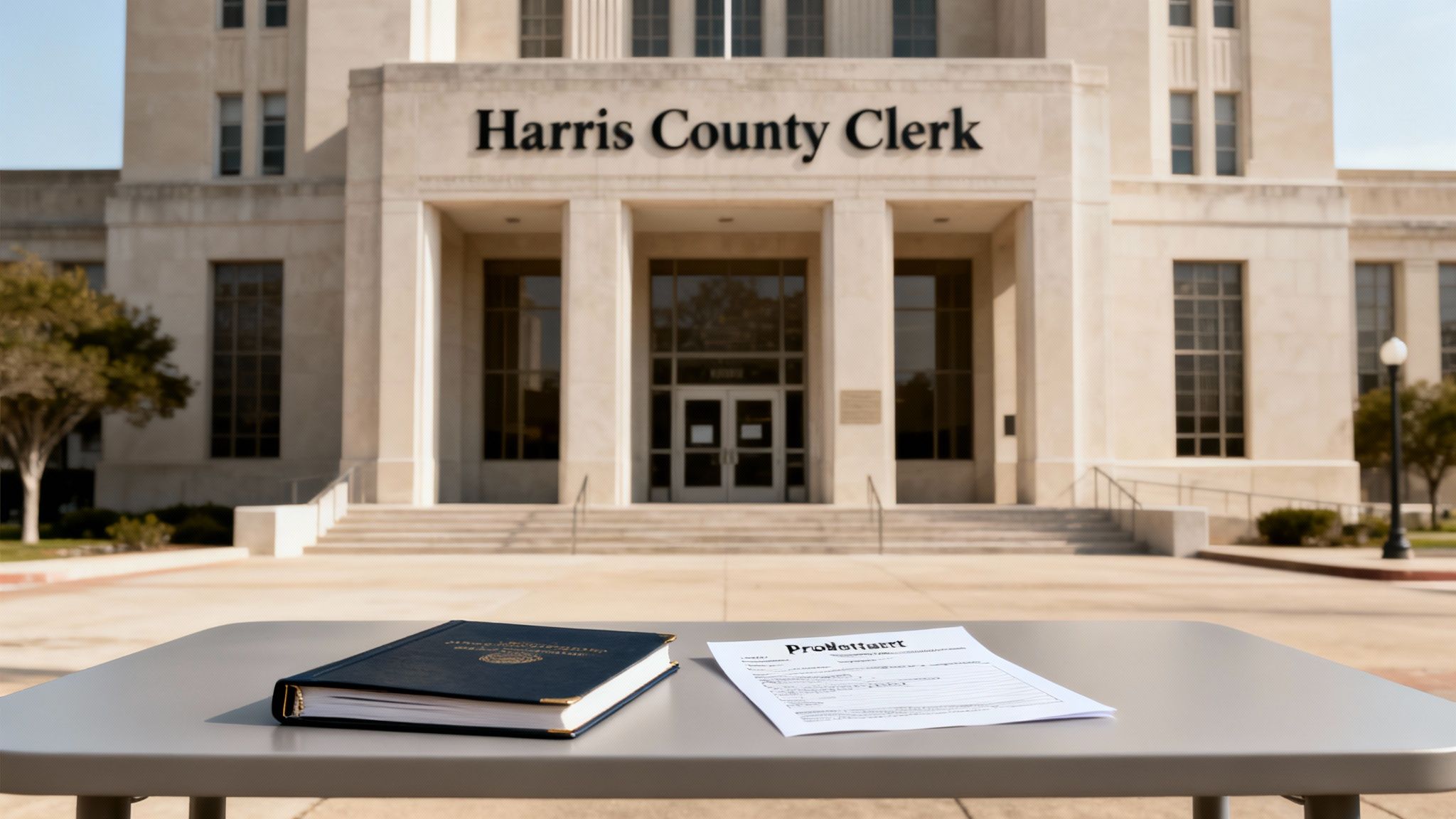
Your search of public records will almost always start with the Harris County Clerk’s Office. Think of it as the central library for all the vital legal documents in our area—it's an indispensable resource for local Kingwood clients.
Has a Will Been Filed for Safekeeping?
Sometimes, people file their original will with the county clerk for safekeeping long before they pass away. While it's not the most common practice, it's definitely worth checking. It’s a smart move that provides a secure, official location for the document, ensuring it doesn’t get lost, damaged, or even intentionally hidden.
To see if your loved one took this step, you’ll need to contact the Harris County Clerk's Office. Make sure you have a few things ready to go:
- A certified copy of the death certificate.
- Your own photo ID to prove you're an interested party.
- The deceased's full legal name and date of death.
If they do have a will on file, the clerk’s office will walk you through the specific procedures for its release. This usually involves opening a formal probate case, which officially moves the entire process into the court system.
Searching Harris County Probate Court Records
If the safekeeping search doesn’t pan out, the next move is to check the probate court records. It's entirely possible that another family member or a designated executor has already kicked off the legal process and filed the will with the Harris County Probate Court.
You can actually check these records yourself to see if an estate has been opened for your loved one. The Harris County District Clerk's website has an online portal for case searches, which is a fantastic starting point for families in Northeast Houston and the surrounding areas. Just search by the deceased's name to see if any probate filings pop up.
Of course, you can also head down to the courthouse and have a clerk help you with the search in person. Finding a probate case file is a huge breakthrough—it means the will is there and you’ll know exactly who has been named as the executor.
The cost and delay of dying without a will is the main reason this search is so critical. Nationally, estates without a will can see fees eat up 3-7% of the total value, and the process often drags on for an average of nine extra months. For Kingwood families, that's a serious concern. Harris County courts handle thousands of probate cases a year, and many get bogged down simply because there's no will. You can learn more about estate planning statistics to see just how common these issues are.
What Happens When No Will Can Be Found?
So, you’ve looked everywhere. You’ve gone through the house, checked with banks and lawyers, and scoured the county records… and still, nothing. This is a tough spot to be in, but it happens more often than you’d think.
When a person dies in Texas without a valid will, they are said to have died “intestate.”
In this situation, Texas law—specifically the Texas Estates Code—steps in and dictates how the person's property gets divided. These rules of intestate succession are rigid and based strictly on family relationships. What you believe your loved one would have wanted, unfortunately, doesn't factor in.
Let’s imagine a family in Humble. A husband passes away without a will, leaving his wife and their two children. Here is a simple explanation of how Texas intestacy law applies:
- His half of the community property (anything acquired during the marriage) goes to his wife.
- His separate property (assets he owned before the marriage or received as a gift/inheritance) is split. His wife gets one-third, and the remaining two-thirds are divided equally between their two children.
This outcome might be the last thing the husband would have wanted. He may have intended for his wife to get everything to ensure she was financially secure. But without a will, the state's formula takes over. This scenario is a stark reminder of why finding a will is so important; it's the only way to make sure a person's final wishes are actually honored.
If you’ve truly exhausted your search and believe no will exists, the next step is likely to start an intestate probate proceeding. This process is more involved than probating a will, as it requires the court to officially determine the legal heirs. At this point, getting experienced legal guidance isn’t just a good idea—it’s essential. The Law Office of Bryan Fagan is right here in Kingwood, and we offer a free consultation to help you understand your options and confidently navigate this challenging legal path.
What to Do When the Search Gets Complicated
Let's be honest—the search for a will isn't always straightforward. For families here in Porter and across Northeast Houston, hitting an unexpected snag can pile even more stress onto an already emotional time. Knowing what to watch out for, and how to navigate these challenges under Texas law, can make a world of difference.
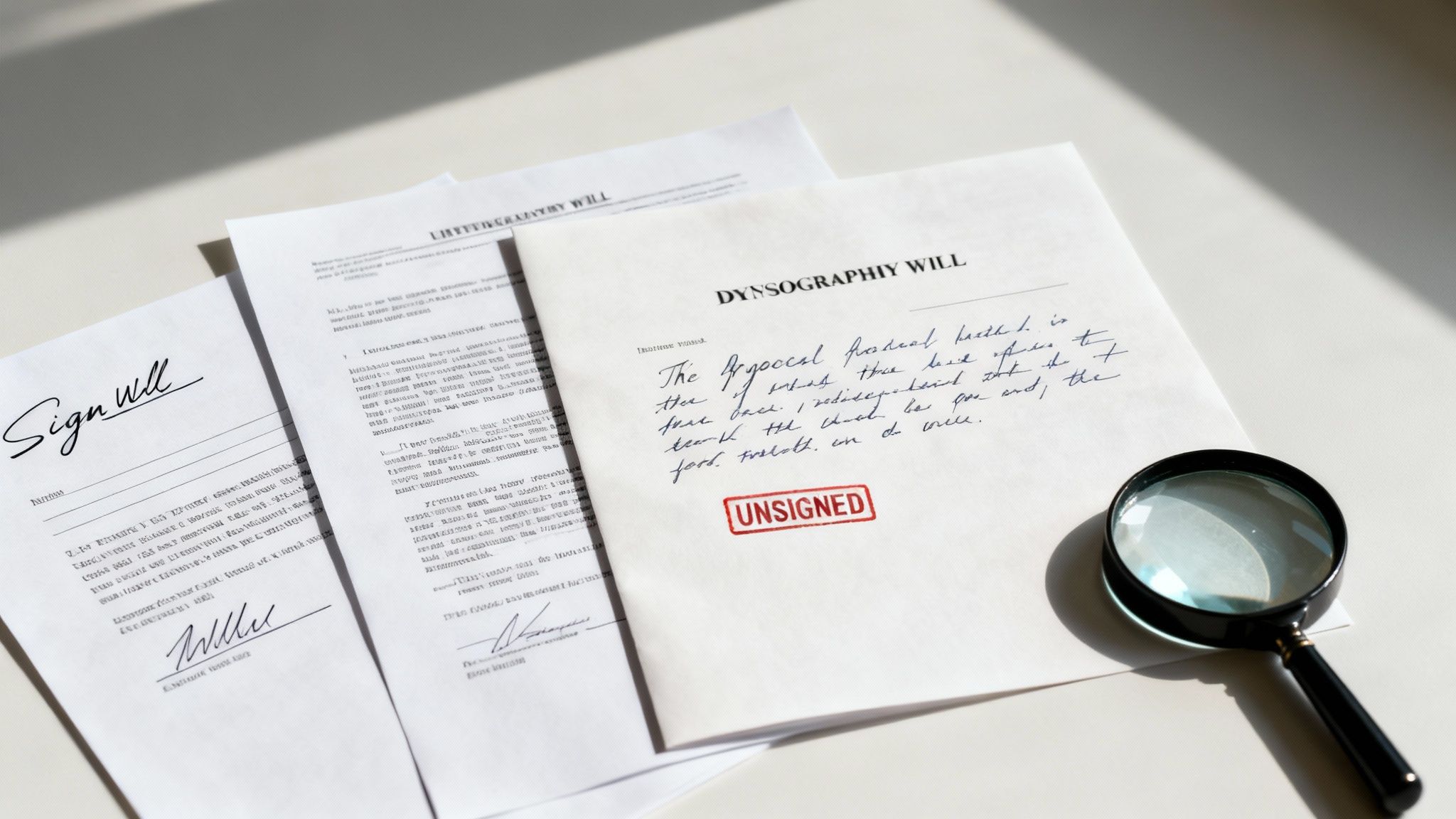
It’s one thing to not find a will at all, but what if you find several versions? Or you find what looks like a will, but it's not signed? These situations are more common than you'd think, and thankfully, Texas law gives us a clear path forward.
You've Found More Than One Will
It’s not at all unusual to uncover a few different wills, especially if your loved one was diligent about updating their plans over the years. So, which one is the real one?
The rule in Texas is pretty simple: the most recent, properly executed will is the one that matters. This is why you always hear the term "last will and testament." When a new, valid will is created, it automatically cancels out all the old ones. The first thing you should do is check the dates on each document you find.
But what if the newest will seems questionable? Maybe it was signed under strange circumstances, or you have doubts about your loved one's state of mind when they signed it. This is where things can get messy and family disputes ignite. Having an experienced Kingwood probate attorney review everything is your best move here.
The Will Isn't Signed or Witnessed Correctly
This one is a heartbreaker. You find a document that perfectly lays out your loved one's wishes, but it's missing their signature or the signatures of witnesses. It feels like you’re so close, yet so far.
For a standard Texas will to be legally binding, it generally needs to be:
- In writing.
- Signed by the person making the will (the testator).
- Attested to by two credible witnesses who sign it in the testator's presence.
If a document you find is missing any of these elements, it’s usually considered invalid. But don't give up just yet—Texas has a unique exception.
A "holographic will" is a will written entirely in the testator's own handwriting. In Texas, a holographic will does not require any witness signatures to be valid.
If you come across a handwritten document that lays out their final wishes, it could absolutely be accepted by the probate court. The court will need to verify the handwriting, but this special provision in Texas law has been a lifesaver for many families.
A Family Member Won't Cooperate
Of all the potential roadblocks, this is often the most frustrating and emotionally draining. You're pretty sure a specific family member has the will, but they refuse to hand it over—usually because they aren’t happy with what it says.
Let me be very clear: this isn't just a family squabble. It's a serious legal problem. You are not allowed to hide or intentionally conceal someone’s will in Texas.
If you're in this situation, you have legal recourse. A probate attorney can file a motion in the Harris County court to compel production of the will. This is a formal legal action that results in a court order demanding that the person produce the document. If they still refuse, they could face stiff penalties, including hefty fines and even jail time.
This legal tool is powerful for a reason—it ensures that one person's agenda can't derail the entire process. If you're dealing with this in Kingwood or Humble, taking decisive legal action is the best way to protect the estate and ensure your loved one's actual wishes are honored. And if no valid will can be produced, the next step is to understand the process for probate without a will in Texas.
When to Partner with a Kingwood Probate Attorney
While you can handle many of the initial steps of locating a will on your own, the path can quickly get tangled in legal knots. Knowing when to stop the DIY search and bring in a legal professional is crucial for protecting the estate—and your own peace of mind. For most Kingwood families, this is the moment the overwhelming burden finally starts to feel manageable.
There are a few clear red flags that signal it's time to call an experienced probate attorney. If you find yourself in any of these situations, don't hesitate.
When Legal Guidance Is Essential
The search for a will can uncover issues that are about more than just finding a piece of paper. This is when an attorney becomes your strongest advocate and guide.
It’s probably time to partner with our Kingwood office if you run into:
- A Contested Will: If a family member decides to challenge the will you’ve found, what should be a straightforward process can quickly escalate into a stressful legal battle.
- Complex Assets: Estates with a family business, commercial real estate, or extensive investment portfolios need a skilled hand to manage them properly and preserve their value.
- An Out-of-State Executor: If the person named as executor lives outside Texas, they'll need a local Kingwood attorney to act as their agent and navigate the Harris County court system on their behalf.
- Family Disputes: Unfortunately, grief can bring out the worst in family dynamics. When communication breaks down over the will or how assets should be divided, an attorney can act as a neutral third party to keep things moving forward.
At The Law Office of Bryan Fagan, our job is to shoulder the legal weight so you don't have to. We handle the court filings, the legal communications, and provide a steady hand, letting you focus on what really matters—your family.
Navigating the Harris County Probate System
The Texas probate process is a minefield of strict deadlines and rigid procedures. One missed filing can derail the entire process, causing long and frustrating delays. Our attorneys have spent years in the Harris County probate courts; we know the local rules and the people involved. We manage every legal detail to ensure it’s done right. You can get a deeper look in our guide on how to probate a will in Texas.
This becomes even more critical if no will turns up at all. The reality is, many people don't have a will. Recent studies show a massive generational gap in estate planning: while 66% of the Silent Generation has a will, that number plummets to just 22% for Millennials and a shocking 15% for Gen Z.
For younger families right here in Kingwood and Northeast Houston, this often means an unexpected death leads to a chaotic and expensive intestate probate process. An experienced attorney can also provide much-needed guidance on estate sale pricing and the proper liquidation of a loved one's assets.
Your Kingwood Legal Partner
You don’t have to face the probate process alone. The Law Office of Bryan Fagan isn't just another law firm; we're part of the Kingwood community. We're here to give your family the clear, compassionate, and skilled legal support you deserve during a tough time.
Let's sit down and talk about your family's situation. We invite you to schedule a free, no-pressure consultation at our Kingwood office so we can help you find the clearest path forward.
Common Questions We Hear About Finding a Will
Even with a good roadmap, you're bound to have questions pop up. It's completely normal. We get calls all the time from folks right here in Kingwood who are navigating this process for the first time and just want to make sure they're doing everything right. Here are some of the most common questions we answer, along with some straightforward advice.
How Long Do I Have to File a Will for Probate in Texas?
This is a big one, and the timeline can be a real surprise. In Texas, you generally have four years from the date of death to file a will for probate.
If you miss that four-year window, it doesn't mean it's impossible, but it gets much, much harder. You'll have to convince the court that you weren't negligent in waiting so long. This deadline is a major reason why starting the search for the will right away is so critical for families in our area, from Humble to Porter. Missing it can throw a serious wrench into settling the estate as your loved one intended.
What if I'm the Executor but Don't Live in Texas?
It happens all the time—the person chosen as executor lives in another state. If you find yourself in this situation, don't worry. You can absolutely serve as the executor for an estate in the Kingwood area.
The main thing to know is that Texas law requires you to appoint a "resident agent." This is simply someone who lives in Texas and can officially receive legal notices on your behalf. A Kingwood probate attorney often steps into this role, becoming your official local point of contact for the Harris County probate court. They can also handle all the local legwork—the filings, the court appearances—making your life a whole lot easier.
Being an out-of-state executor doesn't have to be a burden. With the right local legal partner, you can fulfill your duties efficiently without constant travel, ensuring the estate is managed correctly under Texas law.
What’s the Difference Between an Executor and an Administrator?
People often mix these two up, but they have very specific legal roles.
- An executor is the person personally named in the will by the decedent to manage the estate and follow the will's instructions.
- An administrator is appointed by the court when there is no will (this is called dying "intestate"), or if the will fails to name an executor. The court chooses an administrator based on legal priority, which usually starts with the surviving spouse, then adult children.
Think of it this way: the executor was chosen, while the administrator is appointed.
Do I Really Need a Lawyer if the Will Seems Simple?
Even for what looks like a straightforward will with no family drama on the horizon, we almost always advise working with a probate attorney. The Texas probate system has its own language and a minefield of procedural deadlines that are incredibly easy to miss if you're not doing this every day.
A simple clerical error on a court filing can cause frustrating delays and cost the estate more money in the long run. Having an experienced attorney in Northeast Houston on your side ensures everything is filed correctly with the Harris County Clerk, protects you from personal liability as the executor, and just gets the whole thing done faster and with less stress.
Can I Get a Copy of the Will if I’m Not the Executor?
Yes, you can. Once a will is officially filed with the probate court, it becomes a public record.
This means anyone—an heir, a beneficiary, or even a curious neighbor—can go to the Harris County Clerk’s office and ask for a copy of the will and any other documents related to the estate case. This transparency is built into the Texas legal system to make sure everyone involved has access to the same information.
Finding a will and settling an estate is a heavy responsibility, especially when you're grieving. But you don't have to carry that weight by yourself. Our team at The Law Office of Bryan Fagan – Kingwood TX Lawyers is here to offer the clear, compassionate legal guidance your family needs. Schedule a free consultation with us today to talk about your situation and see how we can help you move forward with confidence.