Skip to content
When a loved one in your Kingwood family can no longer handle their own affairs, it’s easy to get lost in legal jargon. The main difference between guardianship and conservatorship in Texas law comes down to this: a guardian cares for the person, while a conservator manages their money.
However, Texas has its own way of naming things. We use the term “Guardianship of the Person” for decisions about healthcare and daily life. For financial matters, we use “Guardianship of the Estate”—this is what most other states simply call a conservatorship. Understanding this distinction is the first step toward protecting your family members here in Northeast Houston.
Understanding the Key Roles in Texas Law
For families in Kingwood and Humble, understanding these two distinct roles is the first real step toward protecting someone you care about. When a court finds that a person is legally “incapacitated” and can’t look after themselves or their property, it can appoint a guardian to step in. The court’s goal, however, is always to provide support only where it’s truly needed. That’s why Texas law separates personal and financial duties.
This separation is incredibly important for local families. Think about an elderly parent in Northeast Houston who is still sharp and knows exactly where they want to live but struggles with paying bills on time or managing their retirement accounts because of memory lapses. In a situation like that, a Guardianship of the Estate might be all that’s needed, leaving their personal freedom completely intact.
Let's break down what each role actually does for your loved one:
Guardianship of the Person: This is all about the individual's well-being. The guardian is in charge of decisions about medical treatments, where the person lives (the “ward”), their daily activities, and making sure they are safe. Their core duty is to ensure the ward is healthy, safe, and properly cared for right here in our community.
Guardianship of the Estate: This is the Texas equivalent of a conservatorship. This guardian steps into the ward's financial shoes—managing their property, bank accounts, investments, and paying their bills. The main job here is to protect the ward’s assets from being wasted, mismanaged, or stolen.
"The core principle in Texas guardianship law is to protect the incapacitated person in the least restrictive way possible. Separating personal and financial duties allows the court to tailor a solution that fits the specific needs of your family member right here in Kingwood." — The Law Office of Bryan Fagan
Getting this fundamental split is essential before you take any next steps. It's possible for one person to be appointed to both roles, or the court might decide to appoint two different people, depending on who has the right skills for the job.
For a quick overview, this table clarifies the primary roles and responsibilities under Texas law for families in the Kingwood area.
Guardianship vs Conservatorship Functions in Texas At a Glance
| Area of Responsibility | Guardianship of the Person | Guardianship of the Estate (Texas Conservatorship) |
|---|---|---|
| Primary Focus | Personal welfare, health, and safety of the ward. | Financial security and asset management for the ward. |
| Key Decisions | Medical treatments, where the ward lives, and daily care. | Paying bills, managing property, investments, and income. |
| Main Goal | Ensuring the ward's quality of life and personal needs are met. | Protecting the ward's estate from financial loss or fraud. |
Seeing the roles laid out side-by-side makes it clear how the court can customize its support—either by appointing a guardian for just the person, just the estate, or both.
A Detailed Comparison of Legal Roles and Authority
To really get to the heart of the difference between guardianship and conservatorship in Texas, we have to look past the textbook definitions. While both are designed to protect someone who is vulnerable, their legal authority, scope, and purpose are worlds apart. For families here in Kingwood and Northeast Houston, understanding these nuances isn't just academic—it's essential for choosing the right path for your loved one.
The easiest way to think about it is to split a person's life into two major domains: their personal well-being and their financial assets. One legal tool handles the person, and the other handles their property.
This visual breaks it down nicely: a guardianship is for the person (think of the heart), while a conservatorship—which Texas law calls a guardianship of the estate—is for their finances (the money).
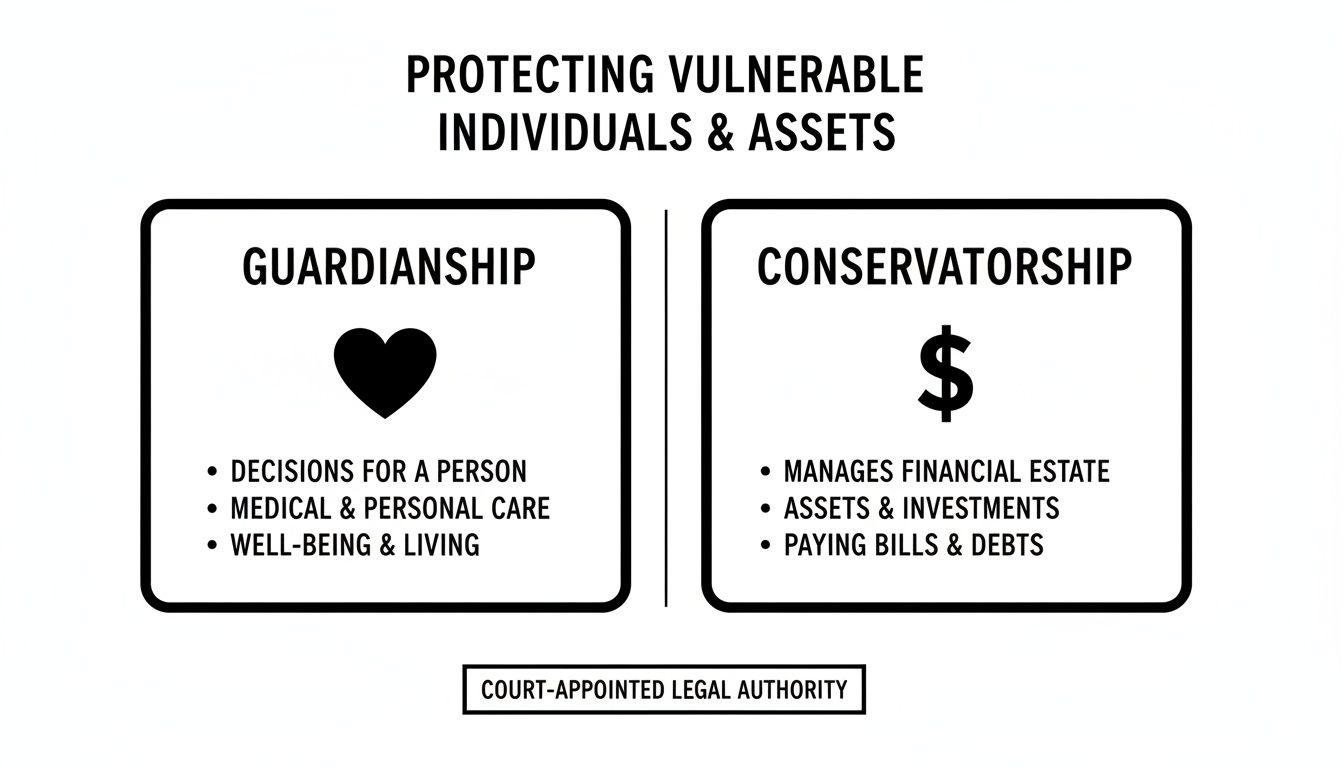
As you can see, the core difference between guardianship and conservatorship boils down to the type of decisions the appointed person can legally make. This separation is intentional, allowing Texas courts to create a support system that is as least restrictive as possible for the individual.
Scope of Decision-Making Authority
The most significant distinction is what the appointed person can and cannot do. This is where the two roles diverge completely, affecting everything from daily routines to long-term financial security.
A Guardian of the Person in Texas holds authority over personal and healthcare matters. Their responsibilities typically include:
- Deciding where the ward will live, whether that’s at home, in an assisted living facility in Humble, or a nearby nursing home.
- Giving consent for medical, dental, and psychological treatments.
- Making the day-to-day calls about the ward’s social life, diet, and personal care.
On the other hand, a Guardian of the Estate (our state's version of a conservator) has absolutely no power over personal or medical decisions. Their role is strictly financial, and their duties involve things like:
- Managing the ward's bank accounts, real estate, and investments.
- Paying bills, filing taxes, and collecting any income, like Social Security or a pension.
- Creating a budget and making smart financial choices to protect the ward's assets.
Here’s a practical example for our Kingwood community: a guardian of the person could decide their elderly parent needs to move into a memory care facility. However, only the guardian of the estate would have the legal authority to sell the parent's Kingwood home to pay for that care.
The Legal Standard for Appointment
The evidence needed to establish each role is also different. Before a court grants this kind of authority, it needs solid proof of a specific type of incapacity. This is a critical safeguard to ensure a person's rights are only limited in the areas where they genuinely cannot make decisions for themselves.
To appoint a Guardian of the Person, a court must be convinced that the individual is incapacitated and can no longer provide for their own food, clothing, or shelter, or care for their physical health. This is usually proven with a formal Certificate of Medical Examination filled out by a physician.
In Texas, the entire court process is built to protect individual autonomy. The burden of proof is high, demanding clear and convincing evidence that a person cannot manage their personal life before a guardian is ever appointed.
For a Guardian of the Estate, the court looks for evidence that the person is unable to prudently manage their own financial affairs. This could be due to cognitive decline, a developmental disability, or simply because they are a minor who has come into a large inheritance. The court’s focus is exclusively on their ability to handle money and property.
Rights Retained by the Protected Person
There's a common misconception that getting a guardian means a person loses all their rights. That’s not how it works in Texas. Our laws strongly favor limited guardianships, which means the court only grants the specific powers that are absolutely necessary. The goal is to let the ward keep as much independence as they safely can.
Under a Guardianship of the Person, the ward might still hold onto the right to manage their own finances if they're capable. The legal framework is always aimed at supporting the person's best interest. This principle echoes how courts handle decisions in family law cases involving children. To see how Texas courts prioritize a child's well-being in another context, you can read our guide on joint custody in the state of Texas.
With a Guardianship of the Estate, the ward keeps all of their personal rights. They can still vote, decide where to live (assuming they can afford it), consent to their own medical treatment, and make any other non-financial life choices.
Ultimately, knowing the difference between a guardianship and a conservatorship is a crucial legal distinction. It gives Kingwood families the flexibility to provide targeted, appropriate support. Whether your loved one needs help with daily care, financial management, or both, our team at The Law Office of Bryan Fagan – Kingwood TX Lawyers can help you figure out the best path forward.
When Do You Actually Need a Guardianship?

It’s one thing to know the legal definitions, but for families in Kingwood, the real question is knowing when it's time to act. Deciding to pursue a guardianship is rarely easy. It usually comes up during some of life's toughest moments, when someone you love can no longer make safe decisions for themselves and clearly needs protection.
The first step is recognizing the signs that intervention might be necessary. This isn't about taking away someone's freedom; it's about creating a legal safety net when they can no longer provide one for themselves. The ultimate goal is to ensure their well-being, protect their dignity, and safeguard their assets from exploitation or neglect.
Common Scenarios for Guardianship of the Person
A Guardianship of the Person becomes critical when someone’s health and personal safety are at risk because they simply can't make sound decisions anymore. We see this frequently in situations involving cognitive decline, like dementia, or a sudden, severe illness.
For example, think of an elderly parent in Northeast Houston with an advanced Alzheimer's diagnosis. They might start forgetting to take critical medications, wandering away from home, or refusing medical care they obviously need. At this point, they likely lack the legal capacity to consent to treatment or make informed choices about where to live to get the care they require.
In this kind of heartbreaking but all-too-common scenario, a guardianship of the person gives a trusted family member the power to:
- Consent to medical treatments and procedures on their behalf.
- Decide to move them to a safer place, such as a memory care facility.
- Oversee their daily needs, making sure they have proper food, clothing, and hygiene.
This legal appointment gives you the authority to make sure your loved one gets the compassionate care they need when they can no longer speak for themselves.
When a Guardianship of the Estate is Crucial
A Guardianship of the Estate—what Texas law calls its version of a conservatorship—is all about financial incapacity. This need can pop up in a variety of situations, impacting everyone from young children to seniors across our Humble and Porter communities.
A very clear example involves a minor. Let’s say a teenager tragically loses their parents in a car accident and is set to receive a large life insurance payout or inheritance. Even if they are mature for their age, Texas law says they are not legally capable of managing that kind of money.
A Guardianship of the Estate acts as a financial shield. It ensures a minor's inheritance or a vulnerable adult's life savings are managed responsibly and protected from misuse until they are able to handle it themselves.
Without this legal structure, those funds could be stuck in limbo or mismanaged. A court-appointed guardian has the legal authority to invest the money, pay for the child's education and living costs, and file detailed accountings with the court, proving every dollar is spent for the minor’s benefit.
Another common case is an adult who, because of a sudden injury or illness, can no longer manage their finances—paying the mortgage, handling investments, filing taxes—even if they’re still sharp enough to make personal decisions.
Supporting an Adult with Special Needs
For many Kingwood families, a top priority is planning for the lifelong care of a child with special needs. As that child turns 18, they legally become an adult, and this is where both types of guardianship often come into play.
Even if a young adult with a developmental disability can express their personal wants and needs, they may not have the capacity to make complex medical or financial choices. A Guardianship of the Person allows parents to continue making healthcare decisions. At the same time, a Guardianship of the Estate lets them manage their child’s finances, which often includes government benefits like SSI or Medicaid.
Putting these legal protections in place provides a seamless transition of care. It gives parents peace of mind, knowing they can continue to advocate for their child's best interests long into adulthood.
If you find yourself in one of these challenging situations, you don’t have to figure it out alone. The Law Office of Bryan Fagan is right here in Kingwood to offer the compassionate, experienced guidance you need. We invite you to schedule a free consultation with our team to talk through your family’s unique circumstances.
The Human Side of Guardianship for Wards and Families
Appointing a guardian isn't just a legal maneuver; it's a profoundly personal and life-changing decision. For families in Kingwood, Porter, and Humble, this journey often begins with deep love and concern for a vulnerable loved one. But we can't downplay the emotional weight and the very real impact these arrangements have on everyone involved—especially the person being protected, known as the "ward."
When a court appoints a guardian, it fundamentally changes a person's life by removing their autonomy. Imagine spending your entire life making your own choices, only to have that right taken away. It can feel like a loss of identity and control, which is understandably distressing. For the family, the feeling is often a complicated mix of relief that their loved one is safe and a deep sorrow watching their independence fade.
The Guardian's Ethical Duty of Care
Being a guardian is far more than just managing a checklist. It's a role that demands absolute integrity, empathy, and respect for the ward’s dignity. This is what the law calls a fiduciary duty—the highest standard of care recognized. Simply put, the guardian must always put the ward's best interests ahead of their own, acting as both a protector and an advocate.
This responsibility goes way beyond paying bills or making doctor's appointments. It's about:
- Preserving Dignity: Making choices that reflect the ward’s known values, beliefs, and past wishes.
- Encouraging Independence: Involving the ward in decisions as much as they are able, not just making choices for them.
- Ensuring Quality of Life: Focusing on their social, emotional, and physical well-being, not just covering the basics.
We've seen how a dedicated guardian can bring incredible stability and comfort to someone's life. But the potential for that power to be misused is very real, which is why the courts have so many safeguards in place.
The Critical Need for Protection Against Exploitation
The hard truth is that the very people these legal tools are meant to protect are also the most vulnerable to being exploited. And the scale of this issue is massive. In 2018, there were an estimated 1.3 million active adult guardianship or conservatorship cases nationwide, with women, the elderly, and individuals with disabilities being disproportionately affected. Research has shown that exploitation is a serious risk, often carried out by those in positions of trust. You can learn more about these national guardianship statistics and the call for better data.
Choosing a guardian is one of the most important decisions a family can make. It demands a person of unwavering moral character who will honor their ethical duties and fiercely protect the ward from any form of financial or personal harm.
This is exactly why the court process in Montgomery and Harris Counties is so rigorous. It’s designed to thoroughly vet potential guardians and establish ongoing oversight to prevent abuse. The system is built to ensure the person appointed is truly acting in the ward’s best interests.
Choosing the right legal partner is a key part of this protective shield. An experienced Kingwood attorney does more than file paperwork. We help families navigate the immense ethical responsibilities of guardianship, guide them in selecting the right person for the role, and make sure the legal framework is set up correctly to protect the dignity and rights of the person you love.
If you are facing this difficult decision, please know you don't have to go through it alone. The team at The Law Office of Bryan Fagan – Kingwood TX Lawyers is here to provide the compassionate, experienced counsel you need. Schedule a free, confidential consultation at our Kingwood office to discuss how we can help you protect your family member with integrity and care.
Exploring Less Restrictive Alternatives in Texas

Jumping into a guardianship proceeding is a serious move. It fundamentally changes a person’s legal rights, and at The Law Office of Bryan Fagan, we've always seen it as a last resort, never the first move. For our clients here in Kingwood, Humble, and across the area, the real goal is to find the path of least resistance—the one that provides the necessary support while protecting as much of your loved one's independence as possible.
The good news is that Texas law offers some powerful tools that can often accomplish the same goals without a court having to step in and take away someone's rights. These alternatives are all about being proactive, letting your loved one decide who will step up to help them before a crisis ever hits.
Financial and Healthcare Planning Tools
The most common and effective alternatives are legal documents you can create through solid estate planning. These instruments simply let a person name someone they trust to make decisions for them if they ever become unable to.
Durable Power of Attorney: This is the workhorse of financial planning. It allows an individual (the "principal") to appoint a trusted "agent" to handle their financial life. What makes it "durable" is key—it stays active even if the principal becomes incapacitated. It’s an incredibly useful tool for everything from paying the bills to managing investments, all without ever seeing the inside of a courtroom.
Medical Power of Attorney: This works just like its financial cousin but for healthcare. It lets a designated agent make medical decisions for the principal when they can't speak for themselves. This simple document ensures that medical care aligns with their personal values and helps avoid painful family arguments during an already stressful time.
Revocable Living Trust: A trust offers a more structured way to handle property and assets. By putting assets into a trust, a person can name a "successor trustee" who takes over management if they become incapacitated. It’s a completely private and efficient way to bypass the need for a guardianship of the estate.
For many families in Northeast Houston, figuring out what a power of attorney can do is the natural first step. You can get a much deeper understanding by reading our guide on what a Power of Attorney is and how it functions in Texas.
Preserving Autonomy with Supported Decision-Making
Sometimes, the issue isn't a complete inability to make decisions. For many people, especially those with intellectual or developmental disabilities, it’s more about needing some help to process complex information. Texas law recognizes this distinction and provides a fantastic alternative that champions personal autonomy.
A Supported Decision-Making Agreement is a formal plan where an individual picks trusted advisors—family, friends, professionals—to help them understand information, think through their options, and communicate their own choices.
This is a world away from guardianship. Instead of a guardian making decisions for the person, supporters help the individual make decisions for themselves. It keeps the power exactly where it should be—with the individual.
This model is a game-changer, particularly for young adults with disabilities who are stepping into adulthood right here in our Kingwood community. It empowers them to learn self-advocacy and keep control over their own lives, from deciding where to live to what medical care they want to receive.
By taking the time to explore these less intrusive options first, you're honoring your loved one’s dignity and making sure their voice is the one that matters most. If you're not sure which path is right for your family, our team is here to help you figure it out. We invite you to schedule a free consultation at our Kingwood office to talk through the best way to protect the person you care about.
Navigating the Guardianship Process in Montgomery County
When you’ve explored all the less restrictive options and concluded that guardianship is the only path forward for your loved one in Kingwood or Humble, the legal road ahead can look intimidating. The process itself, handled in Montgomery or Harris County courts, is deliberately structured to safeguard the rights of the person you're trying to help. Let’s walk through it step-by-step to demystify the process and ease some of that stress.
This practical process begins with a private conversation to understand your family's unique circumstances. Once we have a clear picture, the legal journey officially begins when we file an Application for Appointment of Guardian with the court. This is the formal document that kicks everything off, making the request and explaining exactly why a guardian is needed.
Key Steps in the Court Process
After the application is on file, several crucial things need to happen. Each step is designed to give the court a complete and unbiased view of the situation, from medical evidence to independent legal counsel for your loved one.
One of the most important pieces of evidence is the Physician’s Certificate of Medical Examination. This isn't just any doctor's note; it's a specific legal form that a doctor must complete within the last 120 days. It provides a detailed account of the proposed ward's medical state and mental capacity, giving the court the expert opinion it needs to confirm incapacity under Texas law.
The court’s absolute top priority is protecting the person at the center of the case. To make sure their interests are fully represented, the judge appoints an independent lawyer called an Attorney Ad Litem. This attorney’s only job is to advocate for your loved one, meeting with them, explaining their rights, and reporting their independent findings directly to the judge.
The Court Hearing and Final Decision
The culmination of all this work is the court hearing. In the courtroom, the judge will meticulously review the application, the doctor's report, and the findings from the Attorney Ad Litem. You’ll likely need to provide testimony, explaining in your own words why you believe the guardianship is essential. For a deeper dive into the specific legal standards, you can read more about how to get a guardianship in Texas in our detailed guide.
If the judge is convinced that your loved one is legally incapacitated and that appointing a guardian is in their best interest, an order will be signed. From there, you will take an oath and be issued your "Letters of Guardianship"—the official document that grants you the legal authority to act on their behalf.
It’s a detailed process, but you don't have to navigate it on your own. From the first filing to the final hearing in Northeast Houston, The Law Office of Bryan Fagan – Kingwood TX Lawyers is here to handle every detail. Schedule a free consultation at our Kingwood office and let us provide the steady legal support your family deserves.
Common Questions We Hear About Texas Guardianship
When you're thinking about guardianship, a lot of practical questions naturally come to mind. It’s a big step. We've compiled answers to some of the most frequent concerns we address for families right here in Kingwood, Porter, and our neighboring communities.
What's the Real Cost of a Guardianship in Texas?
The honest answer is, it depends. The total cost to set up a guardianship can vary quite a bit based on how complex your situation is, the court's filing fees, and the necessary attorney involvement. An uncontested case, where everyone is on the same page, will always be more straightforward and less expensive than a contested one where family members are in disagreement.
Here at The Law Office of Bryan Fagan – Kingwood TX Lawyers, we believe in complete transparency. During our initial free consultation, we'll give your Kingwood family a clear breakdown of all potential costs so you can move forward with confidence and clarity.
Does a Person Lose All Their Rights in a Guardianship?
Absolutely not. In fact, Texas law is designed to prevent that. The courts strongly favor what’s called a limited guardianship, which is carefully crafted to fit the individual's specific needs and limitations.
This approach is all about letting them keep their rights and independence in areas where they are still capable. A judge will only grant a full, or total, guardianship if there's clear evidence of complete incapacitation. Our goal is always to find the right balance: protecting your loved one while preserving as much of their personal freedom as possible.
How Long Does It Take to Get a Guardianship?
The timeline can run anywhere from a few weeks to several months. The main factors are the court's own schedule—whether you're in Montgomery or Harris County—and whether another family member or party decides to contest the guardianship.
The process itself involves filing the right petitions, making sure all required family members receive official notice, and then scheduling the necessary hearings. Our Kingwood legal team knows how to navigate the local court systems efficiently, and we make it a point to keep you informed every step of the way.
Walking through the complexities of guardianship requires a legal partner who isn’t just experienced but is genuinely committed to your family’s well-being. The attorneys at The Law Office of Bryan Fagan – Kingwood TX Lawyers are here to offer the compassionate, practical guidance you deserve. Schedule a free, confidential consultation today to talk about your specific situation and learn how to best protect the people you love.