
When you're going through a major family change, the phrase "shared custody" gets thrown around a lot here in Kingwood. But what it actually means under Texas law can be surprising. The core idea is simple: Texas courts want both parents to stay deeply involved in their children's lives. We understand this is a stressful time, and our goal is to provide practical, clear guidance for families in our community.
However, that doesn't automatically translate to a perfect 50/50 split of time. The real focus for judges in Harris and Montgomery Counties is on what’s best for the kids, creating a stable and loving environment for them to thrive in.
How Texas Law Defines "Shared Custody"

For families in Kingwood, Humble, and all over Northeast Houston, getting the language right is the first step. What most of us call "custody," the Texas Family Code calls conservatorship. Think of it as the legal blueprint for how you'll co-parent moving forward. It’s our job at The Law Office of Bryan Fagan to translate this legal language into a practical plan for your family.
There's a strong presumption in Texas law that naming parents as Joint Managing Conservators is in the child's best interest. This setup gives both parents the power to share in the big decisions that shape their child's future.
But it's critical to understand that every custody order has two distinct parts that work together.
Decision-Making vs. The Calendar
First, you have the conservatorship itself. This part is all about the rights and responsibilities each parent has. It’s like being the co-CEOs of your child's life, and it covers crucial decisions about:
- Education: Where your child goes to school and what academic programs they're in, whether that’s in Humble ISD or another local district.
- Medical Care: Choosing doctors and dentists and making other healthcare choices.
- Mental Health: Agreeing on counseling or psychiatric care if it’s ever needed.
- Religious Upbringing: Deciding how to guide your child's spiritual life.
The second part is the possession and access schedule. This is the nitty-gritty calendar that lays out exactly when the child will be with each parent. So, while conservatorship is about the authority to make decisions, the possession order is about the practical, day-to-day schedule you'll live by.
To make things clearer, let's break down these key terms.
Texas Custody Terms at a Glance
Navigating the legal jargon can feel overwhelming. This quick reference table is designed to help our Kingwood-area clients understand the core concepts at a glance.
| Legal Term | Simple Explanation | What It Covers |
|---|---|---|
| Conservatorship | The legal relationship between a parent and child. | Rights and duties, like making major life decisions. |
| Joint Managing Conservator | A parent appointed by the court to share rights and duties. | Both parents have decision-making power on key issues. |
| Possession and Access | The actual parenting time schedule. | The calendar dictating when the child is with each parent. |
This table helps illustrate the difference between having the right to make decisions and the schedule for when you have the child.
Understanding this distinction is the single most important step for any parent in the Kingwood area. It helps clarify that even if one parent has the child more often, both parents usually keep their right to co-manage their child’s upbringing. The team at The Law Office of Bryan Fagan offers specific guidance on navigating Texas child custody laws with a focus on local families.
If you're facing a tough custody situation, you don't have to figure it all out on your own. Our Kingwood office is here to provide clear, compassionate advice. Schedule a free consultation with us today to talk about your family's next steps.
How Texas Courts Decide What Is Best for Your Child
Every single custody decision a Texas judge makes, whether it’s in a Kingwood courthouse or downtown Houston, comes down to one core principle: the “best interest of the child.” This isn't just a legal catchphrase; it’s the entire framework a court uses to build a safe, stable, and supportive future for a child.
For parents in Northeast Houston going through this, "best interest" can feel incredibly vague and a little scary. What does a judge actually look for? It’s not about one or two things. A judge will carefully weigh a set of factors, famously known as the Holley Factors, to get a 360-degree view of the family's life.
The Key Factors a Judge Considers
Imagine a judge trying to assemble a puzzle of your child's life. They need to find all the right pieces to see which home environment will best support their emotional, physical, and mental well-being. While the Texas Family Code doesn't hand them a simple checklist, courts consistently dig into these crucial areas:
- Emotional and Physical Needs: Who has been the one getting the kids ready for school, packing lunches, or taking them to the doctor? The court looks at which parent is most in tune with the child's daily needs and routines.
- Parental Abilities: A judge wants to see which parent can offer a stable, loving, and consistent home. This isn't about who has more money, but about emotional maturity, solid parenting skills, and the ability to put the child’s needs first.
- Stability of the Home: Kids thrive on routine. The court values consistency and will look at the current home situation to see which parent can provide the most stable path forward with the least amount of disruption for a child in Kingwood.
- The Child’s Preference: Once a child is 12 or older, the judge can meet with them privately to hear their wishes. It’s an important piece of the puzzle, for sure, but it’s not the deciding vote. The final call always rests with the judge.
- Any Present or Future Danger: The court's primary duty is to protect the child. Any evidence of domestic violence, neglect, substance abuse, or criminal behavior will weigh very heavily on the final decision.
For many families, sorting out custody is just one part of a much bigger life transition. If you're at the beginning of this journey, it helps to understand the first few steps. You can learn more in our guide on how to file for divorce in Texas.
A Real-World Example in Northeast Houston
Picture a family living in Humble. Both parents have jobs and are very involved in their kids' lives. When their custody case gets to court, the judge is going to look beyond who has the bigger house or the better-paying job.
The judge might hear testimony that one parent manages all the doctor's appointments and parent-teacher conferences, while the other is the weekend soccer coach and the go-to for homework help. A good judge will see that both of these roles are incredibly valuable and will aim for a solution that lets the kids continue to get the best of both parents.
This holistic approach is exactly why it's so critical to present an honest, complete picture of your role in your child's life.
Understanding Custody Statistics in Texas
It’s also helpful for parents to know what the general trends look like. While Texas law is completely gender-neutral, statistics show that mothers often end up with a larger share of parenting time.
On average, fathers in Texas receive about 33% of parenting time after a custody decision, which is right in line with the national average. This isn't because the law is biased; it often reflects traditional family dynamics where mothers may have been the primary caregiver. But courts today are more open than ever to creative, balanced schedules when it truly serves the child's best interest.
Ultimately, the court isn't trying to pick a "winner." The goal is to create a court order that gives your child the best chance to maintain a strong, healthy relationship with both parents.
Trying to navigate this process and present your case effectively is a lot to handle on your own. At The Law Office of Bryan Fagan, our Kingwood attorneys are here to give you the support and clear guidance you need. We invite you to schedule a free consultation, no-obligation consultation to talk about your family’s unique situation and map out a path forward.
Making Sense of the Texas Standard Possession Order
When Texas judges decide on a parenting schedule, they don't start from scratch every time. They have a default blueprint called the Texas Standard Possession Order, or SPO. This is the go-to schedule for parents who live within 100 miles of each other, and it's designed to provide a consistent, predictable routine for the kids.
For many families in Kingwood and the surrounding areas, the legal jargon in an SPO can feel cold and confusing. You're just trying to figure out who gets the kids this weekend, not decipher a legal document. Let's translate it into plain English.
Think of the SPO as the minimum amount of time the non-primary parent will have with their child. It lays out a clear calendar for weekends, holidays, and summer vacation, all with the goal of ensuring the child maintains a strong and healthy relationship with both parents.
The Basic Weekend Schedule: What "First, Third, and Fifth" Really Means
The heart of the SPO is the weekend schedule. The non-primary parent is given possession of the children on the first, third, and fifth weekends of the month. This simple phrase is probably the biggest source of confusion for newly separated parents in Kingwood.
It's actually simpler than it sounds:
- The First Weekend is the one that starts on the first Friday of the month.
- The Third Weekend is the one that starts on the third Friday of the month.
- The Fifth Weekend only happens in months with five Fridays. When it does, that weekend also belongs to the non-primary parent.
This rhythm gives children a sense of predictability. They know that once a new month starts, their weekend with their other parent is just around the corner.
This schedule is rooted in the court's primary goal: ensuring a child's fundamental needs are met.
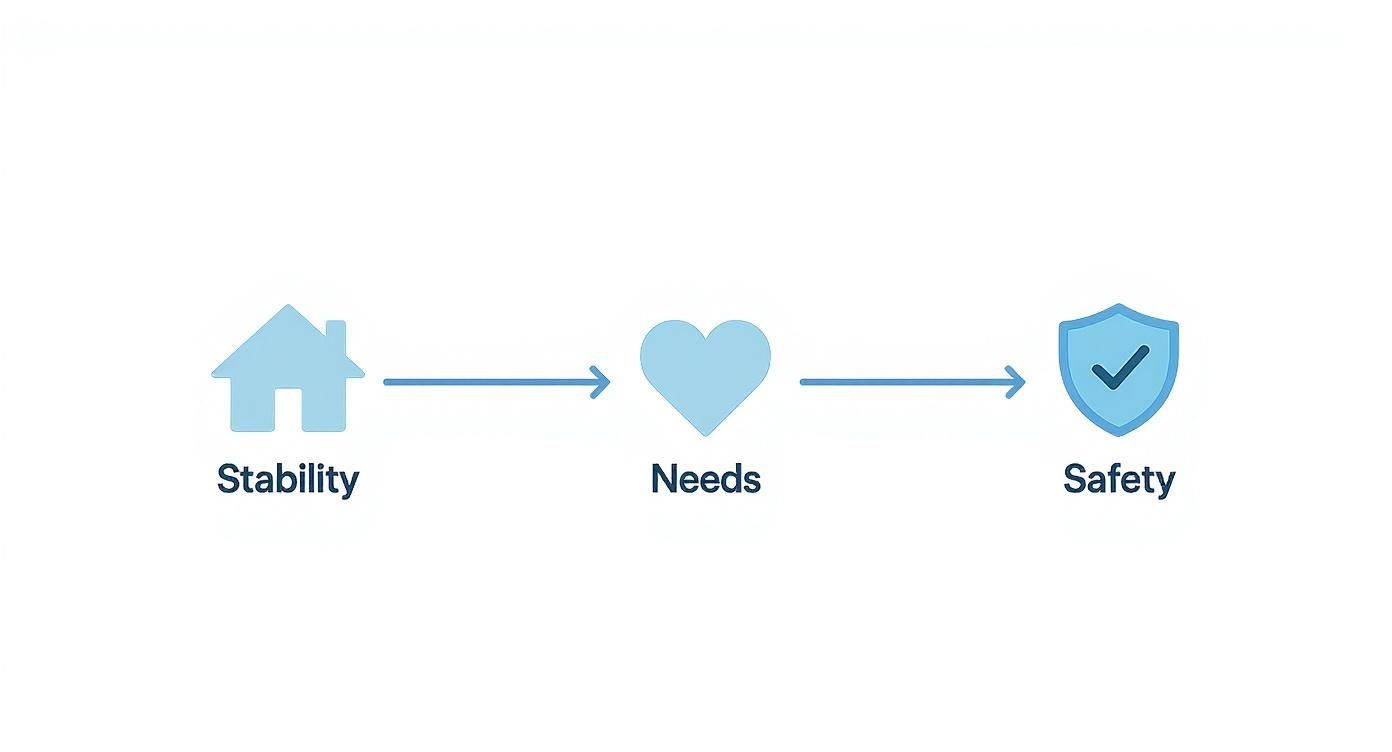
As you can see, everything starts with a stable home. The SPO is the court's tool for creating that stability and safety, even when parents live apart.
The Expanded SPO: Getting More Quality Time
For a lot of parents, the standard weekend visit just doesn't feel like enough. The good news is that Texas law agrees. Today, the Expanded Standard Possession Order (ESPO) is actually the default, and courts will order it unless there's a good reason not to.
The Expanded SPO is a game-changer. It adds crucial time to the non-primary parent's schedule, turning a simple weekend visit into a much more integrated part of the child's life.
Under an Expanded SPO, the parent's weekend possession starts when school lets out on Thursday and ends when school begins on Monday morning. It also includes an overnight visit during the week in the weeks they don't have a weekend visit.
This means you’re not just the "fun weekend parent." You’re there for homework on Thursday night, the morning rush to school on Friday, and getting them ready for the week on Monday. It fosters a much deeper connection.
Standard vs Expanded Standard Possession Order
To see the difference clearly, let's compare the two schedules side-by-side. The Expanded SPO adds two extra overnights to each weekend visit, plus an additional overnight during the "off" weeks.
| Schedule Aspect | Standard Possession Order (SPO) | Expanded SPO |
|---|---|---|
| Weekend Start | Friday, typically at 6:00 PM | Thursday, when school is dismissed |
| Weekend End | Sunday, typically at 6:00 PM | Monday, when school resumes |
| Mid-Week Visit | Typically a 2-hour dinner visit (e.g., 6-8 PM) | An overnight visit, ending when school resumes the next day |
For families in Kingwood, Humble, and Porter, the Expanded SPO can significantly cut down on stressful exchanges and time spent in traffic, giving you more quality time with your kids.
Holiday and Summer Schedules Explained
The SPO also has a plan for holidays and summer break, so both parents have a chance to build lasting memories. The schedule is designed to be fair and alternates year to year.
Holiday Possession:
- Thanksgiving: The parents alternate having the kids for the entire holiday break each year. The non-primary parent gets them in even-numbered years.
- Christmas/Winter Break: The school break is split right down the middle. In even-numbered years, the non-primary parent gets the first half. In odd-numbered years, they get the second half, which includes New Year's Day.
Summer Visitation:
- The non-primary parent is entitled to 30 days with the children during summer break.
- They can take this time in one 30-day block or break it up, but they have to give the other parent notice of their selected dates, usually by a deadline in April.
It’s always a smart move to customize your possession order to match the specific school calendar for Humble ISD or New Caney ISD. This avoids any confusion about when holidays or summer break officially begin and end.
Figuring out the ins and outs of a possession order can be overwhelming, but you don't have to tackle it on your own. At the Law Office of Bryan Fagan, we are a local Kingwood firm focused on helping families find practical solutions. We invite you to schedule a free consultation to talk about what kind of schedule will truly work best for your child.
How Child Support Works with Shared Custody
One of the biggest misconceptions we have to clear up for clients in our Kingwood office is the idea that a 50/50 schedule automatically means no one pays child support. It seems like it should be that simple, right? But in Texas, that's not the case.
The court's main priority is the child's well-being, which includes making sure their standard of living is consistent between both homes. Child support and parenting time are two separate legal issues. Even when parents share time equally, a judge will almost always order support if there's a meaningful gap in their incomes.
Think of it this way: child support is a tool to level the financial playing field for your child, ensuring their needs are met comfortably no matter whose house they're at in Northeast Houston.
The Texas Child Support Formula
Judges don't just pull a number out of thin air. Texas law provides specific guidelines for calculating child support, which creates a predictable starting point. The calculation is based on the paying parent's net monthly resources.
This isn't just take-home pay. It includes income from all sources—salary, commissions, overtime, rental income—minus a few key deductions like federal taxes and the cost of the child's health insurance.
Once the court has that net income figure, it applies a set percentage based on the number of children:
- One Child: 20% of net resources
- Two Children: 25% of net resources
- Three Children: 30% of net resources
- Four Children: 35% of net resources
- Five or More Children: 40% of net resources
Even in a 50/50 arrangement, the court technically still names one parent as the "primary" conservator. This is often just a legal distinction used for things like deciding where the child enrolls in school. The parent who isn't named primary is typically the one whose income is used for this initial calculation.
So, How Does This Work with a 50/50 Schedule?
This is where a judge's discretion comes into play. While the standard formula provides the baseline, Harris and Montgomery County judges often use a more tailored approach for true 50/50 cases. It’s often called an "offset" method.
Essentially, they calculate what each parent would pay if the other had primary custody.
For example, let's say Parent A's guideline support amount would be $1,000 per month, and Parent B's would be $600. The court would likely order Parent A, the higher earner, to pay the difference—$400 per month—to Parent B.
This approach acknowledges that both parents are shouldering the day-to-day costs that come with equal parenting time, but it still helps balance the households financially for the child's benefit.
A Practical Example in Humble
Let's put this into a real-world context. Imagine a family in Humble with one child on a 50/50 schedule.
- Parent 1 is a teacher with a net monthly income of $4,000.
- Parent 2 is an engineer with a net monthly income of $8,000.
Here’s how a court would likely calculate the offset:
- Teacher's Guideline Support: 20% of $4,000 = $800
- Engineer's Guideline Support: 20% of $8,000 = $1,600
The judge would then subtract the smaller amount from the larger one: $1,600 – $800 = $800. The engineer would be ordered to pay the teacher $800 per month in child support. This payment helps ensure the child experiences a similar lifestyle in both homes.
It's also important to know that Texas law puts a cap on how much income is subject to child support guidelines. In 2025, the maximum support for one child is capped at $1,840 per month, though this number is adjusted periodically to account for inflation. You can learn more about the updated Texas child support guidelines for 2025 and see how these changes might affect you.
The financial side of a shared custody case can get complicated quickly. Every family's finances are different, and the details matter. At The Law Office of Bryan Fagan, our Kingwood attorneys can give you clear, practical advice on your specific situation. Schedule a free consultation with us today to understand your rights and obligations.
Creating a Parenting Plan That Actually Works

While the Texas Standard Possession Order gives you a solid framework for your schedule, a truly successful co-parenting relationship needs a more detailed roadmap. That roadmap is your parenting plan. Think of it as the custom-built operating manual for raising your child across two households—a document you create together that outlines how you’ll handle all the decisions, big and small, that come with parenthood.
A well-thought-out parenting plan is one of the most effective tools you have for preventing future conflict. For families here in Kingwood and Northeast Houston, having this guide can turn potential arguments into productive conversations. Most importantly, it provides the stability and predictability children desperately need when splitting their time between two homes.
Moving Beyond the Basic Schedule
A possession schedule tells you when each parent has the child. A parenting plan tells you how you will parent together, even when you're apart. It’s a proactive agreement that forces you to think through the critical decision-making areas that often become flashpoints for disagreement down the road.
The goal is to get ahead of the problems. Instead of reacting to a crisis, you're building a framework to handle it calmly and collaboratively when it arises.
Essential Components of a Strong Parenting Plan
To create a plan that holds up under pressure, you need to cover the key aspects of your child's life. Here are the absolute must-haves every Kingwood parent should include:
- Educational Decisions: This is more than just naming a school district. Your plan should clarify how you'll jointly decide on things like tutoring, special education services (like an IEP), and even who attends parent-teacher conferences.
- Healthcare Choices: You'll need to agree on who carries the child’s health and dental insurance. Just as important, you need a process for deciding on non-emergency medical procedures, getting braces, or starting therapy.
- Extracurricular Activities: How many activities are too many? Who pays for the soccer uniform and league fees? Your plan should set clear guidelines for how you'll choose, schedule, and pay for sports, music lessons, and other activities.
- Communication Protocols: This is a game-changer. Agree on the best way to communicate—a dedicated co-parenting app is often a great choice—and set realistic expectations for response times. This simple step can prevent countless arguments over texts and missed calls.
Thinking through these issues now will save you—and your child—an immense amount of stress later.
A parenting plan is more than just a legal document; it’s a promise to your child. It shows the court, and each other, that your primary focus is on providing a stable, cooperative environment where your child can thrive.
The Power of Mediation for Kingwood Parents
The good news is you don't have to hammer out these details in a contentious courtroom battle. In fact, the most effective parenting plans are almost always created through mediation. Mediation is a confidential process where a neutral professional helps you and your co-parent negotiate the terms of your agreement.
For families in Humble, Porter, and Kingwood, mediation offers a local, less combative path to a solid agreement. It puts the power back in your hands, allowing you to create a customized plan that actually fits your family’s unique situation, rather than having a judge impose a generic solution. This collaborative approach often produces a better outcome and sets a much more positive tone for your future co-parenting relationship.
Ultimately, crafting a detailed parenting plan is a powerful investment in your child’s well-being. It’s your best tool for managing expectations, minimizing conflict, and making sure you can both stay active, involved parents.
If you’re ready to build a parenting plan that provides lasting stability for your family, we're here to help. The attorneys at The Law Office of Bryan Fagan are experienced in guiding Kingwood-area parents through this process. Schedule a free consultation with our Kingwood team today to get started.
Your Next Steps with a Kingwood Custody Lawyer
We’ve covered a lot of ground here, from the legal nuts and bolts of conservatorship to how local judges make decisions. It’s one thing to read about shared custody, but it’s another thing entirely to figure out how it applies to your family.
If you’re in Kingwood, Humble, or anywhere in Northeast Houston, your best move is to get advice tailored to your specific circumstances.
Let's Talk It Through
The first step is always the simplest: a conversation. Our team is here to give you straightforward, practical advice that puts you back in control of your family’s future.
We invite you to schedule a confidential consultation at our Kingwood office. This isn’t a sales pitch; it's your chance to sit down with a seasoned attorney who knows Texas family law inside and out. We’ll listen to your story, answer your questions, and start building a clear plan that protects you and your kids.
Choosing the right lawyer is a huge decision. You need an expert, but you also need someone you can trust. Our guide on how to choose a divorce attorney has some great tips that are just as relevant for custody cases.
Your family's well-being is our priority. We're a local team committed to giving Kingwood-area families the strong representation and genuine support they deserve.
Every family deserves an advocate in their corner. Let us help you create the stability and peace your children need to thrive.
Contact The Law Office of Bryan Fagan today to book your free consultation and take that first step.
Common Questions We Hear About Shared Custody
When you’re navigating a shared custody situation in Texas, a million questions can pop into your head. Here in Kingwood, we’ve heard just about all of them from parents just trying to figure out the best path forward for their kids. Let's tackle some of the most frequent ones we see.
Can My Child Decide Which Parent to Live With?
This is probably one of the most asked questions, and the answer isn't a simple yes or no. In Texas, once a child turns 12 years old, the judge can meet with them in private to hear their thoughts on where they’d prefer to live.
But here's the crucial part: the child's preference isn't the final word. While the judge is required to listen, it's just one of many factors they consider. The court's decision will always come down to what's in the child's overall best interest, weighing their wishes against things like each parent’s stability and the home environment they can provide.
What if We Live in Different School Districts like Kingwood and Humble?
This is a very real-world problem for co-parents in our area. When parents live in separate school districts—say, one in Kingwood ISD and the other in Humble ISD—the court has to establish a clear plan. Typically, the judge will name one parent as the "primary" conservator.
This parent is given the exclusive right to decide where the child lives, usually within a set geographic area. To prevent any arguments down the road, your final custody order must specify which parent's address will be used for school enrollment. A good family lawyer can help you negotiate a geographic restriction that keeps your child's education stable.
How Do We Change a Custody Order if Our Situation Changes?
Life happens, and custody orders aren't meant to be permanent fixtures that can never be changed. However, you can't just decide to change it on your own; there's a legal process. To modify a custody order in Texas, you have to prove there has been a “material and substantial change” in circumstances since the judge signed the original order.
So, what counts as a "material and substantial change"? It could be a number of things:
- One parent loses their job or gets a big promotion that completely alters their schedule.
- A parent has a good reason to relocate for a new job.
- New, legitimate concerns arise about a child's safety or well-being in one of the homes.
If you believe your situation fits the bill, you'll need to file a formal Petition to Modify. The bar for this is pretty high, so it’s always a good idea to get legal advice to see if your circumstances qualify before you start the process.
Does a 50/50 Schedule Mean No One Pays Child Support?
This is easily one of the biggest myths out there. Many parents assume that if they have a 50/50 possession schedule, child support is off the table. That's simply not true in Texas.
Even with perfectly equal parenting time, the court will still run the child support calculation based on both parents' net incomes. If there's a significant difference in what you and the other parent earn, the higher-earning parent will almost certainly be ordered to pay an "offset" amount of child support. The goal is to ensure the child’s needs are met and they have a similar standard of living in both homes, regardless of who they're with on any given day.
Figuring out the details of shared custody can be tough, but you shouldn't have to do it by yourself. The experienced team at The Law Office of Bryan Fagan – Kingwood TX Lawyers is here to offer the clear advice and steady support your family needs. Let's talk about your situation. You can schedule a free, no-pressure consultation at our Kingwood office to find a way forward. Visit us online at https://kingwoodattorneys.com.